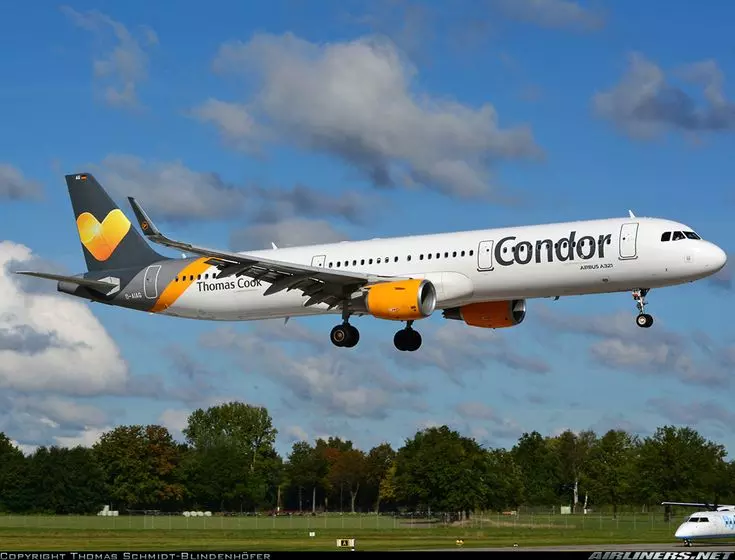
Who Are Condor Airlines? Team, Fleet, and Mission
If you've recently come across Condor while searching for flights to Europe and found yourself wondering who exactly is behind this colorful carrier, you're not alone.
A lot of American travelers are discovering Condor for the first time and have real questions before committing to a booking. So let's break it all down in a straightforward way.
Corporate Structure and Executive Leadership
Who Are Condor Airlines at the corporate level? Condor is a German leisure airline headquartered in Frankfurt, Germany.
After its former parent company Thomas Cook collapsed in 2019, Condor went through a significant ownership change.
In 2021, the London-based investment firm Attestor Capital acquired the airline and gave it the financial backing to rebuild and grow independently.
The airline is led by CEO Ralf Teckentrup, who has been a steady hand at the top through some genuinely turbulent years.
Teckentrup has been with Condor for a long time and played a central role in keeping the airline alive after the Thomas Cook fallout.
Under his leadership, Condor has leaned into a clear strategy: modernize the fleet, refresh the brand, and compete more aggressively on transatlantic routes.
The executive team around him is focused primarily on growth in the leisure travel segment, particularly for travelers flying between North America and Europe.
Number of Employees and Crew Across the Airline
Condor employs roughly 4,000 people across its operations. This includes pilots, cabin crew, ground staff, maintenance teams, and corporate employees. For an airline of its size and route network, that number reflects a lean but functional operation.
The cabin crew in particular has become a recognizable part of the Condor experience. Flight attendants are known for being approachable and friendly, which fits well with the overall personality the airline has been building since its rebrand.
For leisure travelers who just want a comfortable, low-stress flight, the crew culture matters more than people often give it credit for.
Fleet Size and Composition as of 2025
Who Are Condor Airlines when it comes to their actual planes? As of 2025, Condor operates a fleet of around 40 aircraft. The long-haul operation is anchored by Boeing 767s, which have served the airline reliably for years on transatlantic routes. Alongside those,
Condor has been actively bringing in Airbus A330neo jets, which are newer, quieter, and considerably more fuel-efficient than the older planes they're replacing.
For shorter European routes, Condor uses the Airbus A320 family, which are standard narrowbody jets well-suited for regional flying within Europe.
The A330neo additions are probably the most exciting development for passengers. These aircraft come with updated cabin interiors, better air quality systems, larger windows, and improved overall comfort on long flights.
For anyone who has ever arrived at a destination feeling exhausted after a long haul, flying on a newer jet genuinely makes a difference.
Primary Mission as a Leisure-Focused Carrier
Condor's mission has always centered on leisure travel, and that focus has only sharpened in recent years. The airline is not trying to be a full-service carrier competing directly with Lufthansa or American Airlines for business travelers.
Instead, it positions itself as the go-to option for people who want to take a real vacation, whether that's a beach trip, a European city tour, or an island getaway.
This focus shapes everything from the routes they choose to the way they price their seats. Condor Airlines review feedback consistently points to the value for money on leisure routes as one of the biggest draws. The airline understands its lane and stays in it, which is actually a strength in a competitive market where many carriers try to do too much.
Destinations Served Across Continents
Who Are Condor Airlines in terms of global reach? Condor flies to over 90 destinations across Europe, North America, Africa, and the Caribbean.
From the United States, the airline offers direct transatlantic service from cities including Seattle, Portland, Anchorage, Denver, Las Vegas, and New York.
On the European end, Condor connects passengers to popular German cities like Frankfurt and Düsseldorf, and from there, it spreads out to vacation hotspots like Mallorca, Crete, the Canary Islands, Madeira, and parts of Turkey and North Africa.
The Caribbean routes, including flights to destinations like Punta Cana and Varadero, round out a network that is clearly built around where people actually want to go on vacation.
For American travelers in particular, the direct flights from secondary cities are a standout feature. Most international carriers skip cities like Portland or Anchorage entirely.
Condor's willingness to serve those markets gives travelers in those areas real options they simply didn't have before.
Condor's Sustainability and Fleet Renewal Goals
Condor has made fleet renewal a central part of its forward strategy, and sustainability is a big reason why.
The Airbus A330neo burns significantly less fuel per passenger than older widebody aircraft, which directly reduces carbon emissions on long-haul routes.
This transition is not just good PR. It's a practical business move that also happens to align with where the aviation industry as a whole is heading.
The airline has committed to continuing its fleet modernization over the coming years. As older Boeing 767s are gradually phased out and replaced with more efficient jets, the environmental footprint of each flight shrinks.
Condor has also explored the use of sustainable aviation fuel on certain routes as part of broader industry efforts to reduce aviation's overall impact.
For travelers who think about their environmental footprint when choosing flights, Condor's direction here is worth knowing about. It won't cancel out the emissions of a transatlantic flight, but it does reflect a genuine shift in how the airline is planning for the long term.
Read: How to Book Your Flight Tickets at the Best Prices?
What Makes Condor's Team and Culture Distinctive
Who Are Condor Airlines as a workplace and as a brand? That's a fair question, and the answer says a lot about the passenger experience too. Condor has cultivated a culture that feels noticeably different from large legacy carriers.
The vibe is more relaxed and vacation-oriented, which makes sense given what the airline is designed to do.
Employees have spoken positively about the sense of purpose that comes with working at an airline that genuinely survived a crisis and came out the other side with a clear identity.
When a company goes through something as difficult as its parent group collapsing overnight, the people who stick around tend to be genuinely committed to what they're doing.
That kind of loyalty and stability in a team often shows up in small but meaningful ways during a flight.
The colorful stripe livery that Condor introduced during its rebrand was not just an exterior makeover.
It reflected an internal culture shift too, one that embraced being bold, approachable, and focused on the traveler experience rather than the corporate image. For passengers, that translates into a flying experience that feels a little more human than you might expect.
FAQs
Is Condor Airlines a budget carrier or a full-service airline?
Condor sits between the two. It's not an ultra-low-cost carrier, but it's also not a full-service legacy airline. It offers tiered cabin classes including Economy, Premium Economy, and Business Class, giving travelers real options at different price points.
Where does Condor fly from in the United States?
Condor operates transatlantic routes from several U.S. cities including Seattle, Portland, Anchorage, Denver, Las Vegas, and New York. Route availability can vary by season, so checking early is always a good idea.
How long has Condor Airlines been operating?
Condor was founded in 1955, originally as a German charter airline. It has been operating for nearly seven decades, making it one of the more established leisure carriers in Europe despite not being a household name in the United States yet.