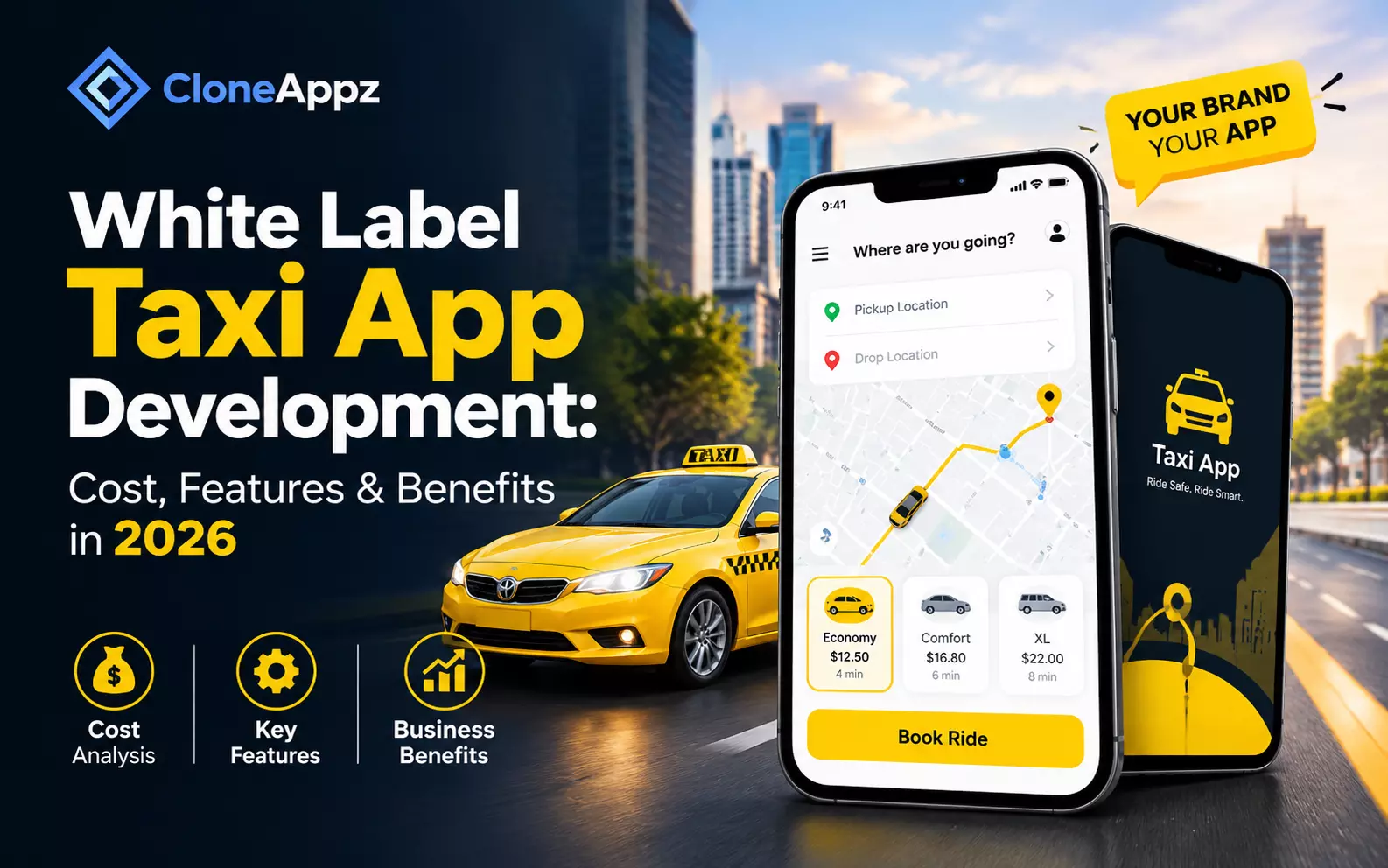
White Label Taxi App Development: Cost, Features & Benefits in 2026
The taxi industry has changed significantly with the growth of mobile booking platforms. Customers now expect quick bookings, transparent pricing, live driver tracking, digital payments, and reliable support from the same app.
For entrepreneurs, building all of these features from scratch can take considerable time and resources.
This is where a White Label Taxi App can be useful. Instead of developing an entire taxi platform from the ground up, businesses can start with a ready-made solution and customize it according to their brand, market, and business model.
In 2026, white label technology is becoming increasingly relevant for startups and established transportation companies that want to enter the ride-booking market without spending months building basic infrastructure.
What Is a White Label Taxi App?
A White Label Taxi App is a pre-built taxi booking platform that can be customized and launched under a company's own brand. The solution generally includes separate interfaces for passengers, drivers, and administrators.
Businesses can customize elements such as the app name, logo, colors, payment methods, pricing rules, service areas, and selected features.
Instead of starting development from zero, a company can use an existing technical foundation and focus more on customer acquisition, operations, partnerships, and business growth.
Why Choose White Label Taxi App Development in 2026?
The biggest advantage is speed. Developing a taxi platform from scratch requires planning, UI/UX design, backend development, API integration, testing, deployment, and ongoing maintenance.
A white label solution can reduce the amount of development work required because many core components are already available.
Other reasons businesses consider this approach include:
- Faster market entry
- Lower initial development requirements
- Brand customization
- Scalable technology
- Ready-made passenger and driver applications
- Easier feature expansion
- Support for multiple payment options
- Centralized admin management
For a startup, launching sooner can also provide an opportunity to test the business model before making larger technology investments.
Key Features of a White Label Taxi App
A successful taxi platform needs more than a simple booking screen. The passenger, driver, and admin sides should work together smoothly.
1. Passenger Registration and Profiles
Passengers should be able to create accounts using email, phone numbers, or social login. Their profiles can contain saved locations, booking history, payment preferences, and other relevant information.
2. Taxi Booking
The main function is straightforward: users enter their pickup and destination locations, select an available vehicle or service category, review the estimated fare, and request a ride.
A simple booking flow can make a significant difference to the overall user experience.
3. Real-Time GPS Tracking
GPS integration allows passengers to see the driver's location and estimated arrival time. Drivers can also receive navigation assistance to reach pickup and destination points.
4. Multiple Ride Categories
Businesses can offer different vehicle categories based on their target market. For example:
- Economy rides
- Premium cars
- SUVs
- Shared rides
- Corporate transportation
- Airport transfers
The categories can be configured according to local demand.
5. Driver App
The driver application should allow drivers to manage availability, accept or reject requests, navigate to passengers, view earnings, and check completed trips.
A well-designed driver interface can make daily operations easier for both drivers and platform administrators.
6. Digital Payments
Modern taxi platforms generally need flexible payment options. Depending on the market, businesses can integrate cards, digital wallets, bank-based payments, or cash.
Payment processing should be designed with appropriate security measures and compliance requirements.
7. Fare Management
The admin can configure pricing based on factors such as distance, duration, vehicle type, minimum fares, or demand.
Dynamic pricing can also be implemented when appropriate for the business model and local regulations.
8. Ratings and Reviews
After completing a ride, passengers and drivers can provide ratings and feedback. This helps businesses monitor service quality and identify recurring issues.
9. Push Notifications
Notifications can keep users updated about booking confirmation, driver arrival, trip status, payment receipts, promotions, and other important events.
10. Admin Dashboard
The admin panel acts as the control center of the platform. Administrators can manage users, drivers, rides, payments, pricing, promotions, reports, and customer support.
How Much Does White Label Taxi App Development Cost in 2026?
The cost depends heavily on the level of customization and the features included.
A basic white label taxi solution may require a relatively smaller investment, while a fully customized platform with advanced analytics, AI features, multiple payment systems, complex pricing, and third-party integrations will cost more.
The major factors affecting development cost include:
- UI/UX customization
- Passenger and driver app development
- Admin dashboard
- Backend infrastructure
- GPS and map integration
- Payment gateway integration
- Third-party APIs
- Security requirements
- Advanced analytics
- AI-powered features
- Multi-language and multi-currency support
- Cloud infrastructure
- Maintenance and upgrades
Instead of looking only at the initial development price, businesses should also consider scalability, source-code ownership, customization rights, technical support, and future development requirements.
Read: Versatile taxi solution structured for efficient mobility operations
White Label vs. Custom Taxi App Development
Both approaches can work, but they suit different business situations.
With custom development, the company has greater control over the product architecture and can build a platform specifically around its requirements.
However, it generally requires more time and resources.
A White Label Taxi App starts with an existing foundation. This can make it easier for a startup to launch a branded platform and validate its business model.
The right approach depends on factors such as budget, launch timeline, technical requirements, target market, and long-term product strategy.
Business Models for a Taxi App
A taxi platform can generate revenue through different channels.
Commission Per Ride
The platform can charge drivers or fleet partners a percentage of each completed booking.
Booking Fees
A fixed service or booking fee can be added to selected rides.
Surge or Demand-Based Pricing
Businesses may adjust fares based on demand, availability, time, or location, subject to local rules.
Corporate Accounts
Companies can be offered dedicated transportation accounts for employee travel and business rides.
Advertising and Promotions
Once a platform develops a meaningful user base, relevant businesses can potentially promote services through the app.
A combination of revenue models can help create a more flexible business structure.
How Other Marketplace Apps Relate to the Taxi Model
The same marketplace principles can be found in other digital platforms.
For example, a turo clone app follows a peer-to-peer car rental marketplace model where vehicle owners and customers interact through a digital platform.
Although car rental and taxi booking operate differently, both businesses depend on marketplace management, location technology, payments, user profiles, reviews, and trust mechanisms.
Similarly, a Zillow Clone focuses on property listings and real-estate discovery rather than transportation.
However, it demonstrates another important marketplace concept: connecting supply and demand through search, location-based information, profiles, listings, and digital communication.
These examples show why scalable marketplace architecture can be valuable when developing an on-demand transportation platform.
Can Fintech Features Be Added to a Taxi Platform?
Payments are becoming an increasingly important part of digital transportation businesses.
A White Label Fintech App can provide a broader financial technology model, while a taxi platform may integrate selected financial features relevant to transportation.
These could include digital wallets, automated payouts, transaction tracking, refunds, promotional credits, or driver earnings management.
The exact financial features should depend on the target market, payment partners, regulatory requirements, and business model.
Steps to Launch a White Label Taxi App
Launching the platform involves more than purchasing software. A practical process can include:
1. Define the business model: Decide whether the platform will focus on local taxis, private drivers, fleet operators, airport transfers, corporate rides, or multiple services.
2. Select the required features: Identify essential features before adding advanced functionality.
3. Customize the platform: Apply the company's branding, design, pricing structure, service categories, and market-specific settings.
4. Integrate essential APIs: Connect mapping, payment, notification, analytics, and other required services.
5. Test the applications: Test booking flows, GPS tracking, payments, notifications, driver operations, and admin controls.
6. Launch in a focused market: Starting with a specific city or service area can make operations easier to manage.
7. Track performance: Monitor bookings, customer retention, driver activity, revenue, cancellations, and support requests.
Final Thoughts
A White Label Taxi App can give transportation startups a practical way to enter the ride-booking market with a ready-made technological foundation.
The real value, however, comes from choosing the right features, creating a smooth customer experience, and building reliable driver operations.
In 2026, businesses can also learn from other marketplace models such as the Zillow Clone and turo clone app, while financial technology concepts from a White Label Fintech App can influence payment and payout experiences.
For companies planning long-term growth, the focus should not only be on launching quickly. The platform should also be flexible enough to support new services, locations, integrations, and customer requirements as the business expands.