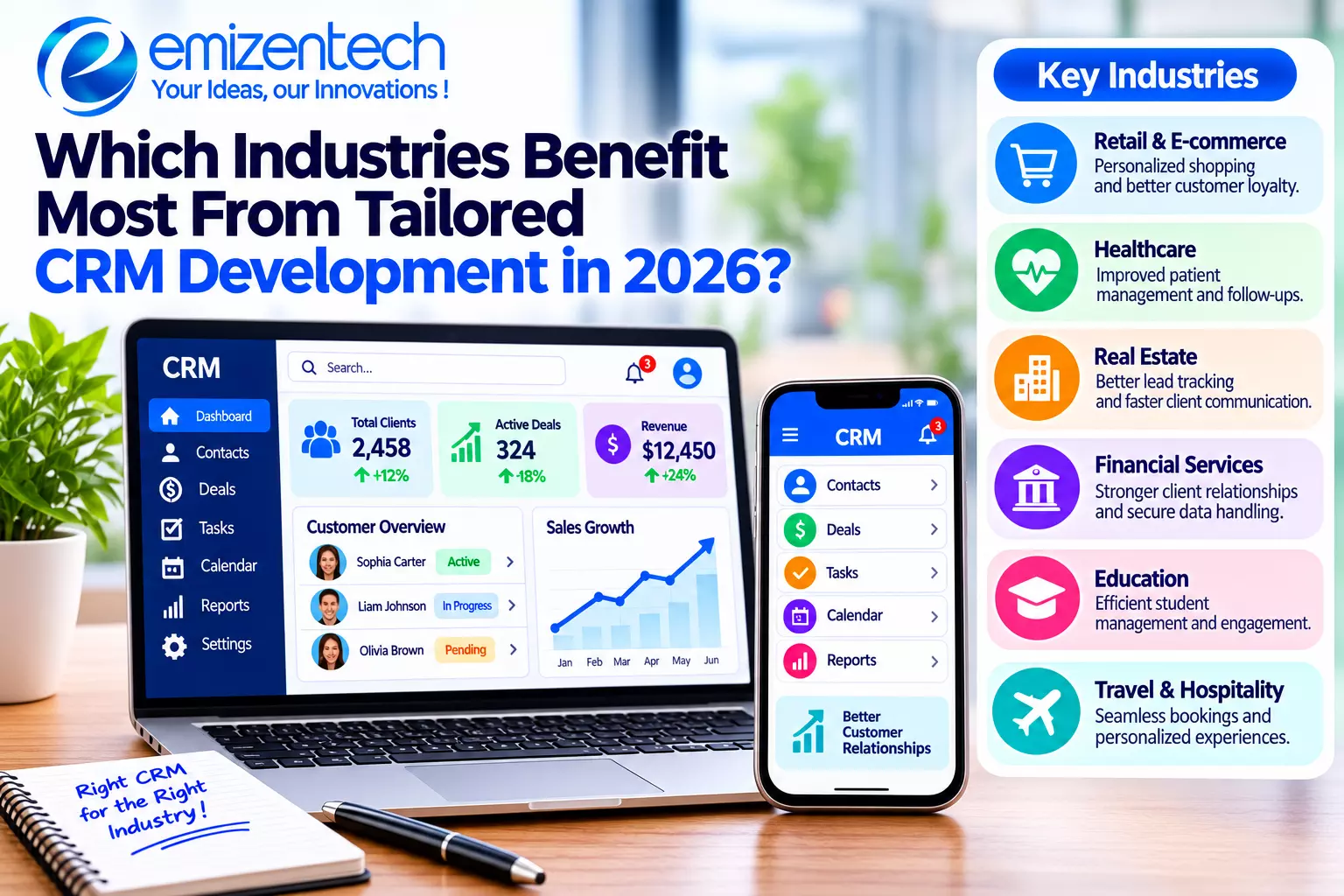
Which Industries Benefit Most From Tailored CRM Development in 2026?
Most CRM platforms are built for a general sales process: add a lead, track a deal, close it.
That works for many companies. But a hospital managing patient follow-ups, a lender tracking loan stages, or a distributor handling dealer pricing works very differently.
When the software does not match the workflow, teams create workarounds, and data ends up in spreadsheets again. This article looks at which industries gain the most from a tailored approach.
What Is Tailored CRM Development?
Tailored CRM development means building or heavily customizing a CRM around a company's own processes, data, and compliance needs. Instead of adapting the team to the software, the software is shaped around the team.
This can range from adding custom modules to an existing platform to building a system from scratch. For a closer look at the build process, this guide on CRM app development covers the planning and technical steps involved.
Why Some Industries Need Custom CRM Solutions?
Some industries deal with strict regulations, long sales cycles, or unusual data structures that standard tools handle poorly. A clinic must protect patient records under HIPAA. A manufacturer may track thousands of products with different pricing for each buyer.
In these cases, standard platforms often need expensive add-ons or manual fixes. A custom build can include those requirements from the start, reducing errors and saving staff time.
Industries That Benefit Most From Tailored CRM
Not every business needs a custom system, but some sectors benefit more than others because of regulations, data volume, or customer journeys. The industries below are where tailored CRM tends to make the clearest difference in daily operations.
Healthcare
Clinics and hospitals need to manage appointments, patient history, referrals, and follow-ups while staying compliant with privacy laws. A tailored CRM can connect with electronic health records and send reminders, so patients do not fall through the cracks after treatment.
Real Estate
Agents handle many leads at once, each at a different stage of a long buying process. A custom CRM can match leads with property listings, track site visits, and schedule follow-ups based on a buyer's budget and location preferences.
Banking and Finance
Lenders and advisory firms work with sensitive data and strict audit requirements. A tailored system can track loan applications, document checks, and client risk profiles in one place, with detailed access controls and activity logs.
Manufacturing and Distribution
These businesses often manage dealers, bulk orders, and contract-based pricing. A custom CRM can link with inventory and ERP systems, so a sales rep sees stock levels and pricing before promising a delivery date.
Education
Colleges and training institutes manage inquiries, applications, admissions, and alumni contact. A tailored CRM can follow a student from first inquiry to enrollment and later engagement, replacing separate tools that rarely share data.
Retail and E-commerce
Retailers collect data from stores, websites, and apps. A custom CRM can combine this into one customer profile, which helps with loyalty programs and personalized offers based on actual purchase history rather than guesswork.
Logistics and Transportation
Logistics firms handle shipment tracking, contracts, and client communication across many locations.
A tailored CRM can show shipment status alongside account details, so support teams answer delivery questions without searching through multiple systems.
Read: How Can AI Sales CRM Software India Improve Lead Conversion?
Key Features Industries Often Need in a Custom CRM
Features differ by sector, but a few needs appear again and again. Knowing them in advance helps businesses explain their requirements clearly and avoid paying for functions that will never be used.
Industry-Specific Workflows
Custom stages, approvals, and fields that match how work actually moves, such as claim processing or order approval.
Deep Integrations
Connections to ERP, accounting, billing, or patient management software, so data flows without manual entry.
Compliance and Security Controls
Role-based access, audit trails, and encryption aligned with rules like HIPAA, GDPR, or financial regulations.
Custom Reporting
Dashboards built around the metrics a specific industry tracks, such as occupancy rates or delivery times.
Off-the-Shelf CRM vs Tailored CRM: Which Fits Better?
Neither option is always better. The right choice depends on how unusual your processes are and how much budget and time you can commit. These points show where each approach usually works best.
Off-the-shelf CRM
- Faster to set up, often within days or weeks
- Lower starting cost, usually subscription-based
- Suits businesses with standard sales processes
- Limited flexibility for unusual workflows
Tailored CRM
- Takes longer to plan and build
- Higher upfront investment
- Fits complex, regulated, or niche processes
- Easier to adjust as the business changes
How AI and Automation Are Shaping Custom CRM in 2026?
AI features are now common in both ready-made and custom systems, but a tailored build lets companies train them on their own data. A real estate firm, for example, can score leads using its own past sales, not generic patterns.
Automation also handles routine work, such as sending appointment reminders, flagging overdue invoices, or routing support requests to the right team. These tools still depend on accurate data, so clean records matter more than the technology itself.
How to Know If Your Industry Needs a Custom CRM?
A few warning signs suggest a standard tool is no longer enough. Your team may keep data in spreadsheets alongside the CRM, pay for several add-ons that barely connect, or struggle to meet compliance rules using default settings.
If these problems sound familiar, review your process before choosing a path. Document what your team does each day, list the gaps in your current tool, and estimate the cost of workarounds.
Businesses that need unusual integrations or strict data controls often look into a CRM development service in usa to build features that standard platforms cannot support. Ask providers for examples from your industry and check how they handle security, testing, and long-term support.
Conclusion
Tailored CRM development pays off most for industries with complex workflows, strict regulations, or heavy integration needs, such as healthcare, finance, manufacturing, and logistics. For simpler sales processes, a ready-made platform is often enough and costs less.
The best approach is to map your needs first, then decide how much customization is truly necessary. EmizenTech works with businesses on CRM planning and development, and the same principle applies: understand the process before choosing the tool.