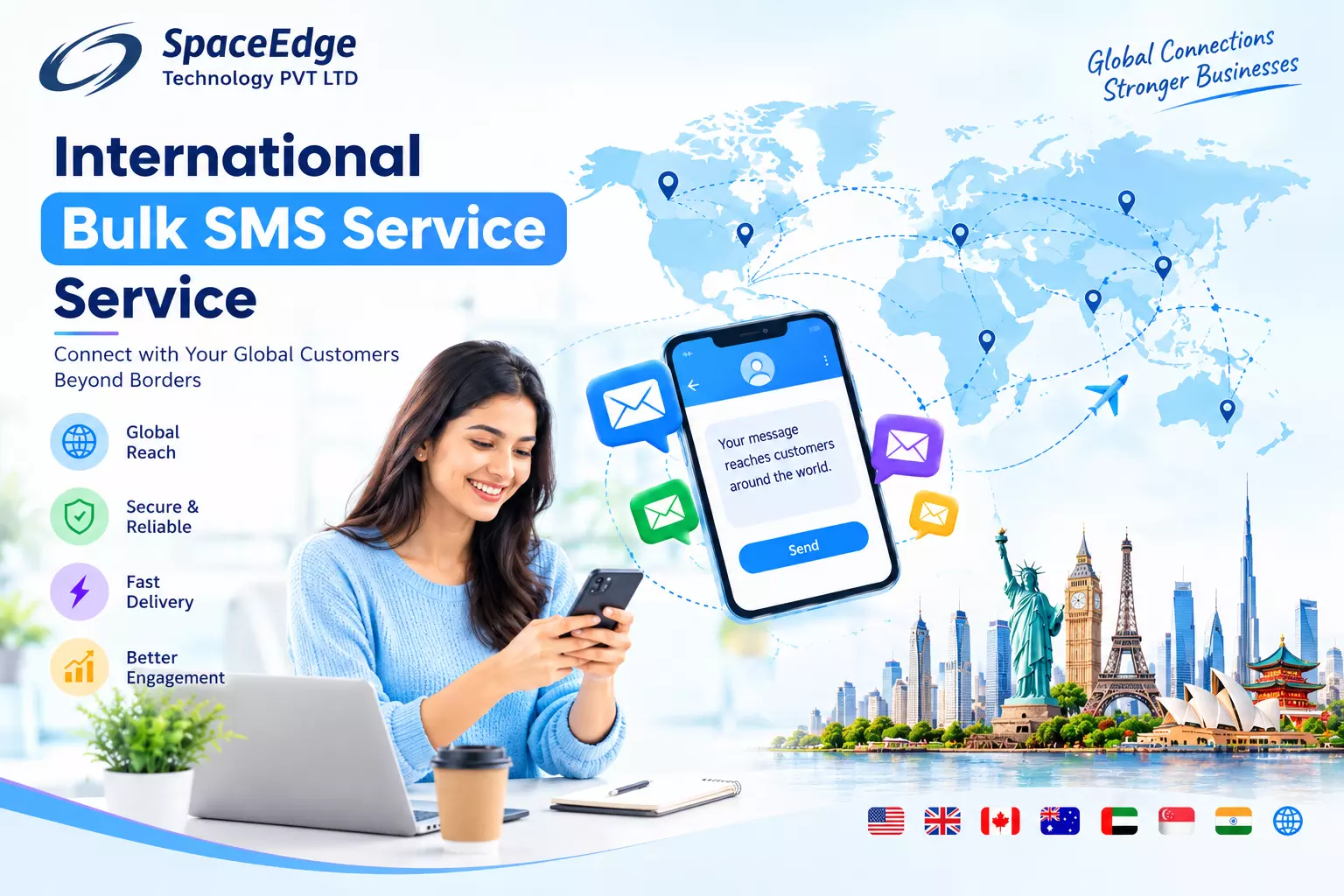
Which Countries Can You Reach With an International Bulk SMS Service From India?
The cheap international sms gateway solutions help Indian businesses send text messages to customers in supported countries around the world.
By choosing a suitable provider, businesses can reach overseas customers with order updates, booking alerts, verification codes, and promotional messages, depending on destination rules and network coverage.
For companies planning to expand beyond India, a cheap international sms gateway can make it easier to manage messages across multiple markets from one platform. The key is to check country coverage, delivery options, local regulations, sender ID requirements, and pricing before starting a campaign.
TL;DR
Indian businesses can reach customers in many international markets through an international bulk SMS service, including the United States, United Kingdom, Canada, Australia, Singapore, the United Arab Emirates, and other supported destinations.
Exact availability depends on the SMS provider, destination mobile networks, message type, sender ID approval, and local regulations, so businesses should confirm coverage for each target country before sending messages.
Key Takeaways
- International bulk SMS can help Indian businesses communicate with customers in many countries through one messaging platform.
- Common target markets include North America, Europe, Asia, the Middle East, Africa, and Oceania, but coverage varies by provider.
- A country's availability does not guarantee that every mobile operator, sender ID, or message type is supported.
- SMS costs depend on the destination, message length, route, volume, and applicable provider fees.
- Businesses should check consent, privacy rules, sender identification, and promotional messaging restrictions in every target market.
- Testing delivery and reviewing reports can help businesses choose a suitable international messaging service.
Which Countries Can You Reach With an International Bulk SMS Service From India?
The countries you can reach depend on the messaging provider you choose. Many global SMS providers support destinations across more than 200 countries and territories, while others offer a smaller list of supported markets.
For example, Sinch reports coverage across more than 200 destinations, and Twilio provides country-specific SMS guidelines for its supported markets.
An international SMS service does not always offer the same features in every country. Some destinations support branded sender IDs, while others require registration or use different sender formats. Two-way messaging, promotional traffic, and delivery rules can also vary.
1. Can You Send International Bulk SMS From India to the United States?
The United States is an important market for Indian software companies, online retailers, exporters, travel businesses, and international service providers.
Businesses may need to send account alerts, order updates, appointment reminders, verification codes, and permitted promotional messages to American customers.
Before choosing a cheap international sms gateway for the US market, check the provider's supported routes and sender options. US messaging has specific rules for different sender types and application-to-person messaging.
For example, Twilio's US guidance states that alphanumeric sender IDs are not supported through its service in the United States. This means a business should not assume that its company name can appear as the sender on every US message.
Common business uses in the United States
- E-commerce order confirmations and shipping updates.
- Login verification and one-time passwords.
- Appointment and booking reminders.
- Customer service notifications.
- Permitted marketing campaigns for customers who have agreed to receive them.
For best results, use valid US mobile numbers, select a supported sender type, and follow the provider's current US messaging requirements.
2. Can Indian Businesses Reach the United Kingdom Through International SMS?
The United Kingdom is a useful market for Indian businesses serving overseas customers. Companies in IT, education, travel, consulting, retail, and professional services may use SMS to communicate with UK-based clients.
Messages can include service notifications, account updates, appointment reminders, and promotional offers where permitted. The correct sender type depends on the provider and the intended message.
What should you check before sending messages to the UK?
First, confirm that the provider supports delivery to UK mobile networks. Then check sender ID requirements, message content rules, delivery reporting, and current pricing.
A branded sender name may be available under certain conditions, but businesses should confirm the rules that apply to their chosen route. They should also review the applicable UK privacy and electronic marketing rules before sending promotional messages.
3. Can You Send International Bulk SMS to Canada?
Canada is another market worth checking for businesses with international customers. Indian companies may use SMS to send order updates, booking confirmations, service notices, and verification messages to Canadian mobile users.
Before launching a campaign, confirm the provider's coverage for Canada and the type of sender supported. Check whether the planned message can be delivered through the chosen route and whether additional registration or setup is required.
Promotional messaging requires particular care. Canadian anti-spam rules may apply to commercial electronic messages, including certain SMS communications.
Businesses should confirm that they have the required permission and provide appropriate identification and unsubscribe options where required.
How can businesses improve Canadian SMS delivery?
- Keep mobile numbers accurate and in international format.
- Use a supported sender type.
- Send messages that match the recipient's expectations.
- Follow applicable consent and opt-out requirements.
- Review delivery reports after testing.
These steps help reduce avoidable errors, although they cannot guarantee delivery to every recipient.
4. Can You Reach Australia and New Zealand From India?
Australia and New Zealand are valuable markets for Indian companies serving customers in retail, education, travel, technology, and professional services.
International SMS can support practical messages such as purchase confirmations, account alerts, appointment reminders, and delivery updates. It can also support promotional communication when the campaign follows local requirements.
Australia
Before sending messages to Australian numbers, check destination coverage, sender ID support, registration requirements, and the type of traffic allowed. Sender ID rules can affect whether the recipient sees your chosen business name.
Twilio's international sender ID documentation, for example, identifies Australia as a market where registration is required for supported alphanumeric sender IDs. Requirements can vary by provider and may change over time.
Twilio Help Center+1
New Zealand
For New Zealand, confirm the provider's supported networks, sender options, and current delivery rates. If the campaign includes advertising, check applicable electronic messaging and privacy requirements before sending.
Businesses should also consider time zones when scheduling messages, especially if the audience includes customers in multiple Australian states or both Australia and New Zealand.
Read: Best Bulk SMS Service in India: Spotlight on GetItSMS
5. Can You Send International Bulk SMS to Singapore and Other Asian Countries?
Asia contains many markets with different languages, mobile operators, and messaging requirements. Indian businesses may want to reach Singapore, Malaysia, Indonesia, Thailand, Japan, South Korea, the Philippines, Vietnam, Bangladesh, Nepal, or Sri Lanka.
However, availability in one Asian country does not mean that the same service settings will work in another. Each destination should be checked separately.
Singapore
Singapore can be an important market for regional business, financial services, travel, and technology.
Before sending messages, confirm the available sender ID options and any registration requirements. Check whether the planned campaign is transactional, authentication-related, or promotional, because the permitted setup may differ.
Malaysia
Businesses sending SMS to Malaysia should review coverage, supported sender formats, and local messaging restrictions. Promotional messages should be relevant to recipients who have agreed to receive them.
Indonesia
For Indonesia, confirm supported mobile networks, sender requirements, and the provider's current delivery rules. If you plan to send large campaigns, test a small group of authorized numbers before increasing the volume.
Thailand
Thailand may be suitable for businesses in tourism, retail, education, and customer services. Before sending, review local sender ID requirements, message language, and the restrictions that apply to your chosen traffic type.
Japan and South Korea
Japan and South Korea are important markets for technology, trade, travel, and international services. Businesses should verify supported routes, message encoding, sender options, and local requirements before launching campaigns.
Bangladesh, Nepal, and Sri Lanka
These South Asian markets may be relevant to Indian businesses with regional customers, distribution networks, and service partners.
Check each country's coverage and applicable rules rather than assuming that regional proximity guarantees the same pricing or delivery performance.
Why does Asian SMS coverage vary?
Coverage depends on the messaging provider's connections, local operators, sender requirements, and the kind of message being sent. The same provider may offer different sender types and capabilities in different countries.
Sinch+1
For this reason, businesses should build a country-by-country plan instead of using one set of settings for the whole region.
6. Can You Reach the United Arab Emirates and Other Middle Eastern Countries?
The Middle East is an important region for Indian exporters, travel companies, recruitment firms, retailers, logistics businesses, and service providers. Many companies have customers, suppliers, or business partners in the United Arab Emirates, Saudi Arabia, Qatar, Kuwait, Bahrain, Oman, and Jordan.
International SMS can help these businesses share updates with customers in supported destinations. The right service depends on the destination country, the recipient's network, and the type of message.
United Arab Emirates
The UAE is a common target market for Indian companies serving customers in Dubai, Abu Dhabi, and other parts of the country.
Businesses may use SMS for booking confirmations, order updates, customer service notifications, and account alerts. Before sending messages, confirm the sender ID rules and any registration requirements that apply to the selected provider and route.
Saudi Arabia
Saudi Arabia has country-specific messaging requirements. Businesses should check supported sender IDs, local registration requirements, content restrictions, and delivery conditions before sending messages.
If you plan to send authentication codes, make sure the provider supports the intended use and that your application can handle delayed or failed messages.
Qatar, Kuwait, Bahrain, and Oman
These markets may be useful for businesses in trade, hospitality, retail, travel, and professional services. Availability and costs may differ between countries, even when they are served by the same provider.
Check whether your provider supports each destination, which sender formats are available, and whether the planned messages need approval.
Jordan and nearby markets
Businesses targeting Jordan and other Middle Eastern destinations should confirm their provider's current coverage and applicable requirements. Do not assume that a route available for one country will automatically be available for neighboring countries.
The main lesson is simple: verify the exact destination before sending. This helps businesses plan campaigns with fewer surprises and more accurate budgets.
7. Can International Bulk SMS Reach African Countries?
African markets can be important for Indian exporters, wholesalers, software companies, financial technology businesses, educational services, and logistics providers.
Depending on the provider, possible destinations to investigate include South Africa, Nigeria, Kenya, Ghana, Egypt, Morocco, Tanzania, Uganda, and other African countries.
South Africa
South Africa may be relevant to businesses selling products, software, or professional services to customers in the region. Check the supported mobile networks, sender ID requirements, and pricing before starting a campaign.
Nigeria and Ghana
These markets may be useful for businesses working with online customers, distributors, and regional partners. Verify whether the provider supports the intended message type and whether any registration or content restrictions apply.
Kenya, Tanzania, and Uganda
Companies working in East Africa may use SMS for customer updates, service notifications, and transaction alerts. Before choosing a provider, confirm destination availability and test delivery using authorized recipient numbers.
Egypt and Morocco
Businesses targeting North Africa should check the destination-specific rules and supported routes. Language may also matter. Depending on the audience, businesses may need messages in English, Arabic, French, or another suitable language.
How should businesses plan African SMS campaigns?
Start with the countries where you already have customers or clear business demand. Then confirm coverage, pricing, sender requirements, and expected delivery performance for each market.
A provider's worldwide coverage claim does not guarantee the same message quality in every country. Check individual destinations and review actual campaign reports before expanding.
8. Can Indian Businesses Send Bulk SMS to Latin America?
Latin America offers opportunities for Indian companies involved in technology, trade, online retail, education, travel, and international services.
Potential destinations to check include Brazil, Mexico, Argentina, Chile, Colombia, and Peru. Other countries may also be available through certain messaging providers.
Brazil
Brazil is a large market with its own mobile networks and messaging requirements. Confirm country coverage, supported sender types, and any local registration rules before launching a campaign.
If your customers prefer Portuguese, consider preparing a Portuguese version of your message and testing it with local recipients.
Mexico
Businesses may use international SMS to communicate with customers, partners, and service users in Mexico. Check provider coverage, local messaging rules, and the availability of the sender format required for your campaign.
Argentina, Chile, Colombia, and Peru
These countries may be useful for businesses expanding into South American markets. However, each destination should be assessed separately for message pricing, operator support, registration needs, and content requirements.
Why does language matter in Latin America?
Language can affect how clearly a customer understands a message. Spanish is widely used in many Latin American markets, while Portuguese is the main language in Brazil.
A message written in the customer's preferred language can make an instruction, order update, or promotional offer easier to understand.
Businesses should also test special characters because some characters can change SMS encoding and increase the number of billable message segments.
9. Can You Reach Caribbean Countries Through International SMS?
Some international SMS providers support Caribbean markets, including Jamaica, Trinidad and Tobago, the Bahamas, and the Dominican Republic. Coverage varies, so businesses should check the exact destination before starting a campaign.
These destinations may be relevant to travel agencies, hotels, online retailers, logistics firms, and companies serving international customers.
Before sending, confirm:
- Whether the provider supports the specific country and mobile network.
- Which sender types are accepted.
- Whether two-way messaging is available if customers need to reply.
- Which promotional and transactional messages are permitted.
- What delivery reports and support options are available.
For travel and hospitality businesses, SMS can help communicate booking confirmations, check-in reminders, and schedule updates. Marketing campaigns should follow the relevant consent and opt-out rules.
10. How Can You Check Whether a Country Is Supported?
The most reliable way to confirm international SMS availability is to check the provider's current destination information.
Global messaging companies often maintain country-specific documentation. For example, Twilio provides SMS guidelines for individual countries, while Sinch provides country information covering features and restrictions.
These resources can help businesses check sender ID support, message restrictions, and other local requirements.
Twilio+1
Use the following checklist before selecting a destination.
Step 1: Name the target country
Prepare a list of every country where you want to contact customers. Avoid using a general term such as “worldwide” as the only coverage requirement.
Step 2: Confirm mobile network coverage
Ask whether the provider supports the country and the mobile networks your recipients use. If possible, request details about any unsupported operators or traffic types.
Step 3: Check sender ID requirements
Find out whether you can use your business name, a registered sender ID, a long number, a short code, or another supported sender format.
Some destinations require registration, and some do not support certain sender types
Twilio+1
Step 4: Check the message category
Tell the provider whether you plan to send promotional offers, account alerts, verification codes, or service notifications. Different categories may have different rules and delivery options.
Step 5: Review pricing
Ask for the current price per message or segment for each destination. Confirm whether additional charges apply to registration, special routes, or platform features.
Step 6: Test delivery
Send a small number of messages to authorized test recipients in the target country. Review delivery status, sender display, message formatting, and response handling if two-way messaging is supported.
Step 7: Keep checking for changes
Messaging rules and network support can change. Review the provider's current documentation before major campaigns and whenever you enter a new market. Sinch specifically advises customers to check country information because requirements can change.
Sinch+1
11. What Types of Messages Can You Send Internationally?
The messages you can send depend on the provider, destination country, recipient network, and applicable rules. Most business messaging plans focus on several common use cases.
Transactional messages
Transactional messages provide information about an action or service. Examples include order confirmations, shipping updates, appointment reminders, and booking notices.
These messages should be timely and relevant to the customer's activity.
One-time passwords and verification codes
Businesses can use SMS to deliver verification codes when the provider supports the destination and the intended use. This may help verify a phone number during registration, login, or account recovery.
SMS is not risk-free authentication. For sensitive accounts, businesses should consider the security needs of their users and offer suitable additional protections where appropriate.
Promotional messages
Promotional messages can include discounts, product launches, event announcements, and special offers.
Businesses must follow the applicable marketing and privacy rules in the target country. They should send promotional messages only where they have the required permission and should honor opt-out requests.
Service alerts
Service alerts notify customers about important changes, such as a delivery delay, a booking change, or a planned service interruption.
These messages can help reduce confusion and give customers timely information.
Two-way SMS
Some international messaging setups support replies from recipients, while others provide one-way delivery only. If your business needs customers to reply, ask whether inbound messaging is available in the target country and whether replies incur additional charges.
12. How Much Does International Bulk SMS Cost From India?
There is no single international SMS rate that applies to every country. The price depends on the provider, destination, mobile network, message category, sender type, volume, and message length.
A cheap international sms gateway should be assessed by its overall value, not just its advertised starting price.
Main factors that affect international SMS prices
Destination country: Rates vary because international messaging providers use different routes and network arrangements.
Message length: A longer message may be split into multiple SMS segments. Special characters and non-Latin scripts can also change encoding and segment limits.
- Message type: Promotional, transactional, and authentication messages may have different availability and pricing.
- Sender ID: Registration or approval may involve extra steps and costs in certain markets.
- Message volume: Some providers offer volume-based rates, while others use pay-as-you-go pricing.
- Additional features: API access, reporting, support, and other platform services may affect the total cost.
How to compare providers fairly
Request destination-specific prices for the countries you plan to reach. Ask whether the quoted rate is per message or per segment and whether failed messages are charged.
Compare delivery reports, support, routing options, and sender ID requirements alongside price. A low headline rate may not be the best option if the service lacks the features you need.
13. How Does an International SMS Gateway Work?
An international SMS gateway connects a business messaging system to supported messaging networks. It accepts messages from a business platform and routes them toward the intended mobile destination.
The process usually follows these steps:
- The business prepares a message and a valid recipient number.
- The business submits the message through a web dashboard or API.
- The provider checks the request and applies its routing rules.
- The message travels through supported messaging infrastructure toward the destination network.
- The receiving network attempts to deliver the message to the recipient.
- The provider returns a status report when reporting information is available.
The exact process varies by provider and route. A message accepted by the gateway is not necessarily delivered to the handset. Delivery reports should be checked to understand the final status.
Why businesses use an SMS gateway
A gateway can help a business manage messaging from one system instead of sending every message manually. It may also support automated workflows, bulk submissions, reporting, and integration with other software.
For example, an e-commerce platform can trigger an order confirmation after a purchase. A booking system can send a reminder before an appointment. A software application can request a verification code when a user registers.
The provider's supported features determine which workflows are possible in each country.
14. What Should You Look for in a Cheap International SMS Gateway?
The right provider should meet your business needs and support your target markets. Price matters, but it should not be the only factor.
Country coverage
Choose a provider that supports the countries where your customers are located. Confirm the exact destinations rather than relying only on a global coverage claim.
Delivery reporting
Look for clear status reports that help your team understand which messages were submitted, delivered, or unsuccessful. Ask what each status means and how long reports may take.
API and integration support
If you plan to automate messages, check the API documentation, authentication options, error handling, delivery callbacks, and technical support.
Sender ID options
Confirm whether the provider supports the sender type you need in each country. Ask about registration requirements and expected setup time.
Transparent billing
Understand the billing unit, message segmentation, destination rates, failed-message charges, and any additional fees before sending large volumes.
Security and privacy
Review how the provider protects contact lists and message data. Use suitable access controls, avoid exposing sensitive information in messages, and follow applicable privacy requirements.
Customer support
Choose a provider that can help you investigate delivery problems and explain country-specific restrictions. This is especially important when you send messages to several markets.
15. How Can SpaceEdge Technology Support International SMS Needs?
SpaceEdge Technology PVT LTD provides business communication services. For companies planning international messaging, the first step is to define the countries, message types, volumes, and integration needs involved.
A suitable international SMS setup should match the business's actual use case. A company sending order updates may need different features from a business sending verification codes or promotional campaigns.
When discussing an international bulk SMS requirement, businesses should identify:
- The countries and mobile networks they want to reach.
- The estimated number of messages per month.
- Whether the messages are promotional, transactional, or authentication-related.
- Whether a branded sender ID or another sender type is needed.
- Whether messages will be submitted manually or through an API.
- The reporting, support, and integration features required.
The provider should then confirm which destinations and features are available, what registration is needed, and how pricing works. Coverage and sender options should be verified before a campaign is launched.
This approach helps businesses avoid selecting a service based on a broad promise that may not match their target markets.
16. Common Mistakes to Avoid When Sending International SMS
Businesses can face delivery problems when they assume international messaging works the same way in every country.
Assuming every country supports every sender ID
A business name may be accepted in one market but restricted or require registration in another. Always confirm sender support before launching a campaign.
Using one price for every destination
International rates vary. Build a destination-wise budget and confirm the billing rules for each market.
Sending promotional messages without checking consent
A contact list does not automatically provide permission for marketing. Follow applicable consent rules and honor opt-out requests.
Ignoring local time zones
A message sent at a convenient time in India may arrive late at night for a customer overseas. Schedule non-urgent messages based on the recipient's local time and applicable regulations.
Sending long messages without checking segments
A message that exceeds the supported single-segment length may be split into multiple segments. This can increase costs and affect how the text appears.
Treating every submitted message as delivered
Submission and delivery are different events. Use available delivery reports and investigate unsuccessful messages.
Skipping test campaigns
Testing helps identify formatting, sender, and routing problems before a large campaign begins. Test with authorized recipients in each priority destination.
17. How to Build an International SMS Strategy for Business Growth
A good international SMS strategy starts with the customer, not the number of countries a provider claims to cover. Businesses should focus on markets where they have customers, products, services, or a clear plan for expansion.
Start with your most important markets
Choose a small group of countries first. For example, an Indian software company may start with the United States, the United Kingdom, Singapore, and the UAE. An exporter may focus on countries where it already has buyers and distribution partners.
Confirm coverage and pricing for each destination before expanding the list.
Choose the right message for each audience
Different customers need different information. An online shopper may need an order update, while a software user may need a login verification code. A travel customer may need a booking confirmation.
Keep messages relevant to the customer's relationship with your business. Avoid sending the same promotional message to every international contact without considering consent, language, and local rules.
Plan for local languages
English may be suitable for some audiences, but other customers may prefer a local language. Consider translation when it improves clarity and customer experience.
Test translated messages before sending them at scale. Check special characters and encoding because they can affect message length and cost.
Track results and improve
Monitor available delivery reports, campaign costs, customer responses, and useful business outcomes. If delivery failures increase in a particular country, check the provider's guidance and investigate the route or sender configuration.
Use these findings to improve future campaigns. Expand to additional countries when the existing process works well and the new destinations have been checked.
18. Final Checklist Before Sending International Bulk SMS From India
Use this checklist when preparing an international messaging campaign.
- Confirm that the provider supports every target country.
- Check coverage for the intended mobile networks.
- Verify sender ID and registration requirements.
- Confirm that the intended message type is permitted.
- Review destination-specific pricing and message segmentation.
- Check recipient consent and applicable opt-out requirements.
- Validate mobile numbers and international country codes.
- Test message content, language, and sender display.
- Review delivery reports after the test.
- Confirm how the provider handles failed messages and support requests.
- Check data protection and access controls.
- Review current destination requirements before launching a large campaign.
Completing these checks can help businesses select a service that fits their needs and reduce avoidable delivery and compliance problems.
Conclusion
Indian businesses can use international bulk SMS to communicate with customers in many countries across North America, Europe, Asia, the Middle East, Africa, Latin America, and Oceania.
The exact destinations available depend on the selected provider, mobile network, sender configuration, message type, and local rules.
A cheap international sms gateway can be useful for companies that need to manage overseas customer notifications, verification messages, booking updates, and permitted marketing campaigns.
However, businesses should compare more than price. Country coverage, delivery reporting, sender ID support, API integration, transparent billing, and customer support all matter.
SpaceEdge Technology PVT LTD can be considered when exploring business messaging requirements. Before selecting a service, confirm the specific countries you want to reach, the features available for those destinations, and the applicable costs and restrictions.
The best approach is to start with your priority markets, test delivery, review the results, and expand gradually. With careful planning, businesses can build an international messaging process that supports customer communication and long-term growth.
FAQs: International Bulk SMS From India
1. Which countries can I reach with international bulk SMS from India?
Depending on the provider, you may be able to reach the United States, the United Kingdom, Canada, Australia, Singapore, the UAE, and many other countries. Confirm individual destination coverage before sending messages.
2. Can I send international bulk SMS from India to the USA?
Yes, providers that support US messaging can deliver SMS to eligible US mobile numbers. Sender type, message category, network support, and US messaging rules must be checked first.
3. Is international bulk SMS available in the UK and Canada?
Many international SMS providers support the UK and Canada. However, available sender types, pricing, and messaging rules differ, so check the provider's current country guidelines.
4. Can I send international SMS to multiple countries at once?
Yes, a suitable platform may let you manage messages for several supported destinations. You should confirm each country's coverage, pricing, sender requirements, and content rules before launching a multi-country campaign.
5. How much does international bulk SMS cost from India?
The cost depends on the destination, message length, volume, route, sender type, and provider pricing. Request country-specific rates and check whether messages are billed per segment.
6. How do I choose a cheap international SMS gateway?
Compare destination coverage, delivery reports, sender ID options, API support, customer service, security, and transparent pricing. Test the service before committing to a large campaign.
7. Can international bulk SMS be used for OTP verification?
Yes, where the provider and destination support authentication messages. Confirm sender requirements, delivery performance, and security needs before using SMS for account verification.
8. Do I need to register a sender ID for international SMS?
Some countries require sender ID registration, while others support different sender formats. Check the current requirements for each destination and provider.
9. Can I send promotional SMS to international customers?
Promotional SMS may be allowed when applicable consent, privacy, content, sender identification, and opt-out rules are followed. Requirements vary by country, so review them before sending.
10. How can I check international SMS delivery status?
Use your provider's delivery reports or API callbacks, if available. These tools can show message statuses and help you investigate failed deliveries, although reporting detail and timing vary by provider and destination.