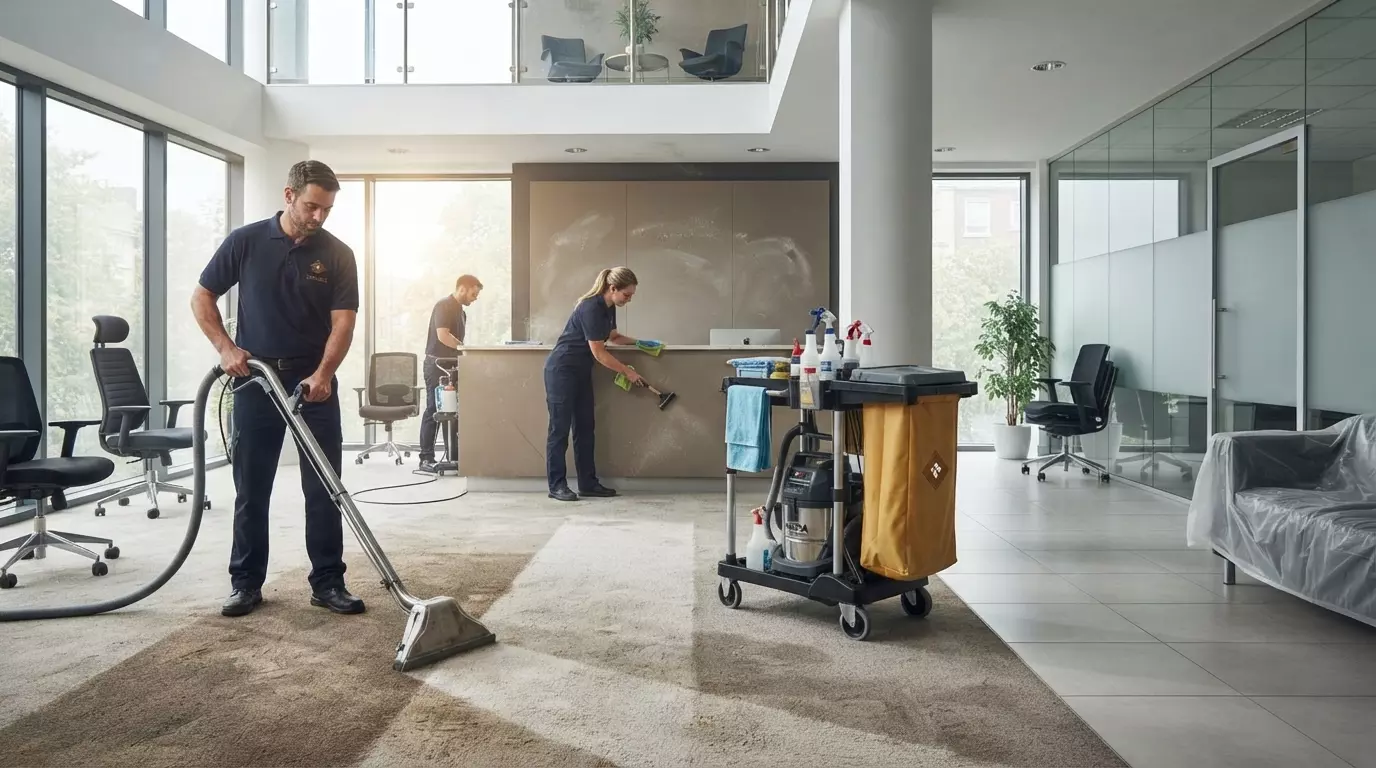
When Does a Property Need Deep Cleaning?
Regular cleaning keeps visible surfaces under control, but it cannot address every area of a property.
Dirt gradually collects behind furniture, around fittings, inside corners, on detailed surfaces, and in places that routine visits may not cover.
When standard cleaning stops producing the expected result, adding more of the same may not solve the problem. A planned deep clean can reset the property and restore neglected areas.
Regular Cleaning and Deep Cleaning Serve Different Purposes
Routine cleaning maintains everyday standards.
It may include floor cleaning, surface wiping, washroom care, waste removal, dusting, and other recurring tasks.
Deep cleaning goes further.
The exact scope depends on the property, but the process usually targets accumulated dirt and areas that do not need intensive attention during every normal visit.
The two approaches should support each other.
Deep cleaning cannot replace regular maintenance, and daily cleaning cannot always replace periodic detailed work.
Visible Build-Up Is an Obvious Signal
The clearest sign comes when normal cleaning no longer restores the desired appearance.
Edges may remain dusty. Grout may look discolored. Hard-to-reach surfaces may show build-up. Fixtures may need more detailed attention.
At this point, simply repeating routine cleaning may waste time.
A targeted deep-cleaning plan allows the team to work through neglected areas systematically.
People evaluating deep cleaning services riyadh should therefore ask what the proposed scope actually covers rather than assuming every provider defines deep cleaning in the same way.
A Move Can Create the Right Opportunity
Moving into or out of a property creates a natural opportunity for detailed cleaning.
Empty rooms provide easier access to corners, walls, floors, cabinets, fixtures, and other areas that furniture usually blocks.
For an incoming occupant, cleaning before unpacking can create a better starting condition.
For an outgoing occupant, the process can help leave the property orderly for handover.
The cleaning team should understand whether the property is occupied, partially empty, or completely vacant because this affects the work plan.
Renovation Work Often Leaves Fine Dust
Renovation can leave dust in unexpected places.
Even when contractors remove visible debris, fine particles may remain on ledges, fittings, doors, cabinets, floors, and surrounding surfaces.
Cleaning after renovation requires a different approach from everyday housekeeping.
Teams should first confirm that construction work has finished and that contractors have removed major waste.
They can then plan detailed cleaning according to surface types and the remaining condition.
Facility managers should also clarify whether specialist treatment falls inside or outside the agreed cleaning scope.
Read: Commercial Cleaning Services for Offices, Retail & Industrial
Kitchens Need Detailed Periodic Attention
Kitchens accumulate a combination of food residue, grease, dust, and everyday marks.
Routine cleaning handles daily mess, but detailed work may need greater attention around cabinets, appliances, corners, backsplashes, and less accessible surfaces.
Residential and commercial kitchens have different requirements, so providers should assess the environment before starting.
The cleaning method must also suit each surface.
Aggressive products can damage materials when workers use them incorrectly.
Professional teams should follow suitable product instructions and avoid assuming that one chemical works safely on every finish.
Washrooms Require More Than Surface Wiping
Washrooms receive frequent use and contain several detailed areas that need regular attention.
Fixtures, edges, joints, partitions, mirrors, floors, and less accessible spaces may require more thorough cleaning at planned intervals.
A deep-cleaning visit gives workers time to address areas that daily routines may cover only briefly.
However, facility managers should not wait for visible deterioration before acting.
A good cleaning program combines daily washroom care with periodic detailed work according to usage levels.
Furniture Can Hide Significant Dust
- Large furniture creates areas that routine cleaning teams may not access during every visit.
- Dust can collect behind cabinets, under movable items, along walls, and around equipment.
- A deep clean can include moving appropriate lightweight items where safe and agreed.
- For heavier furniture or equipment, teams need a safe plan.
- Cleaning staff should never move items that could cause injury or property damage without proper preparation.
- The scope should clearly explain what the team will and will not move.
High-Level Surfaces Are Easy to Miss
- People naturally notice floors and surfaces at eye level.
- Dust can still collect above cabinets, on accessible vents, high ledges, light fittings, and other elevated areas.
- These locations may require different tools and safety precautions.
- A professional provider should assess access before promising to clean them.
- Workers should not improvise unsafe access methods.
- If specialist equipment or trained personnel are required, the provider should identify that requirement during the site assessment.
Deep Cleaning Needs a Room-by-Room Scope
- The phrase “deep clean everything” sounds clear until work begins.
- Different people interpret it differently.
- Create a room-by-room checklist instead.
- For each area, define which floors, fixtures, furniture surfaces, fittings, doors, glass, cabinets, and other items the team will address.
- Also record exclusions.
- Clear documentation prevents disagreements after the work finishes.
- It also allows the cleaning supervisor to inspect each zone against an agreed standard.
Prepare the Property Before the Team Arrives
- Clients can help the process by removing unnecessary clutter and securing personal or sensitive items.
- Commercial sites should communicate access restrictions and operating hours in advance.
- Residential customers should identify rooms or possessions that cleaners should not handle.
- If parking, building access, service lifts, or security approvals apply, organize them before the scheduled start.
- Good preparation gives cleaners more time to focus on cleaning rather than waiting for access decisions.
Inspect the Work Before Closure
- A supervisor should inspect completed areas before the team closes the job.
- The inspection should follow the agreed scope.
- If the team missed a defined item, correcting it immediately usually works better than discovering the problem later.
- Clients can also walk through the property where practical.
- A final review creates a clear end point and gives both sides the opportunity to discuss anything that still needs attention.
Use Deep Cleaning as Part of a Wider Plan
- Deep cleaning delivers the best value when it supports an ongoing maintenance routine.
- After the detailed work, establish regular cleaning frequencies that protect the improved condition.
- High-use areas may require more attention. Lower-traffic spaces may need less.
- Commercial properties can incorporate detailed cleaning into annual or periodic facility schedules.
- Homes can plan it around occupancy, seasonal needs, moving, renovation, or periods when routine cleaning no longer reaches the desired standard.
- A well-planned deep clean should not simply make a property look better for one day.
- It should create a cleaner baseline that regular housekeeping can maintain more easily.