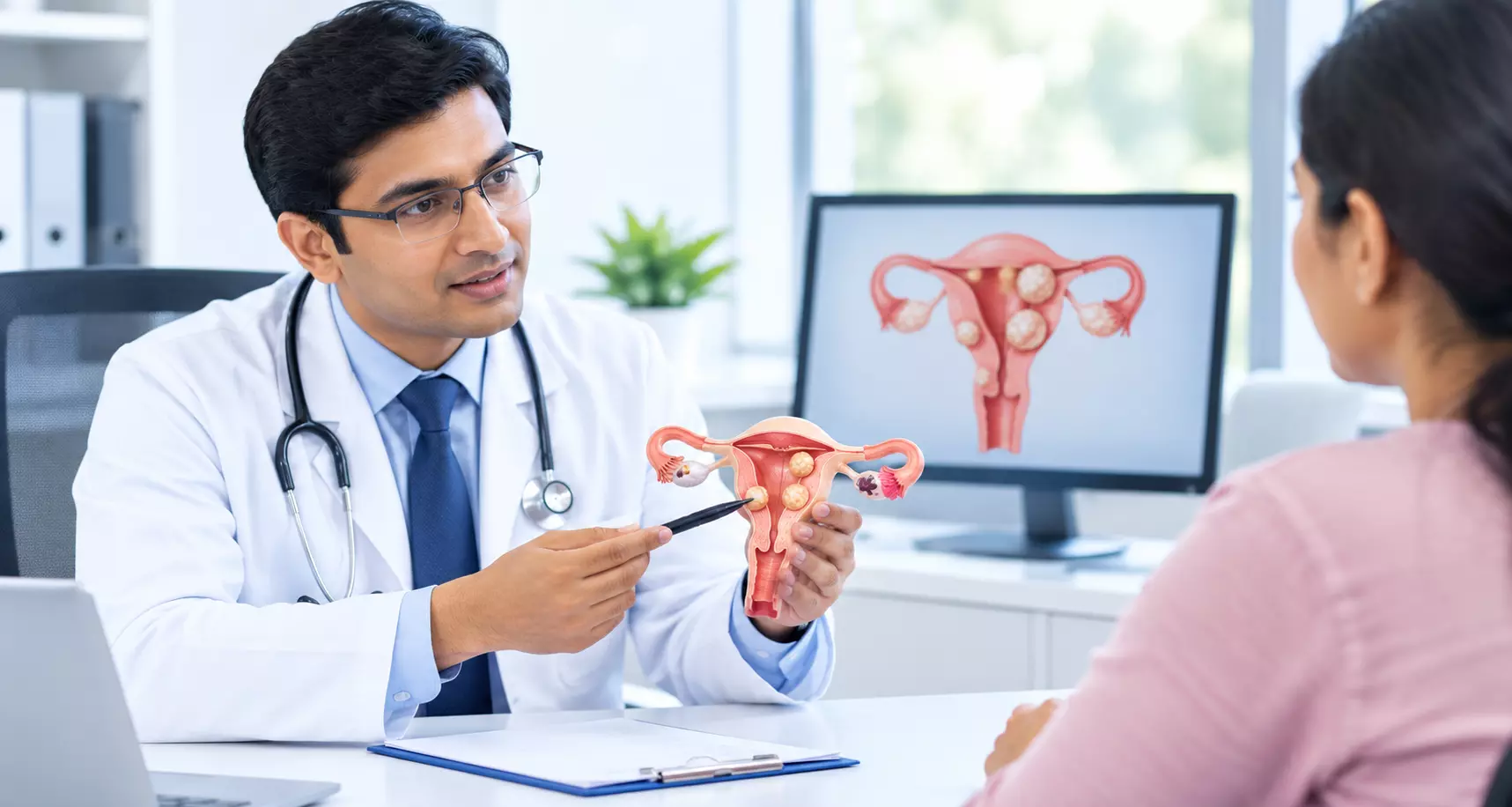
When Can Uterine Fibroid Treatment Without Surgery Be Considered?
Most women who hear the word "fibroid" immediately think of surgery. That fear keeps many from seeking help even when symptoms are affecting their daily life. But surgery isn't always the first — or only — answer anymore.
Here's a practical look at fibroids, why they form, and when a non-surgical path genuinely makes sense.
What Exactly Are Uterine Fibroids?
Fibroids are benign muscular growths that develop within or on the uterus. They're extremely common — some estimates suggest up to 70-80% of women develop at least one by age 50, though many never know it because they cause no symptoms.
Doctors classify them by where they sit:
- Intramural fibroids – grow inside the uterine muscle wall; the most frequently diagnosed type
- Submucosal fibroids – sit just beneath the uterine lining; tend to cause heavier bleeding
- Subserosal fibroids – form on the outer surface; can press against the bladder or bowel
- Pedunculated fibroids – attach via a thin stalk, either inside or outside the uterus
Size and location matter far more than the fibroid count when deciding on treatment.
Symptoms Worth Paying Attention To
A small, quiet fibroid may never announce itself. A larger one usually does.
Watch for:
- Periods that soak through pads or tampons within an hour
- Bleeding that lasts longer than seven days
- A persistent heavy or bloated feeling in the lower abdomen
- Pain during sex
- Needing to urinate frequently, even at night
- Lower back ache that doesn't respond to usual remedies
- Fatigue or breathlessness from unrecognized iron-deficiency anemia
None of these symptoms confirm fibroids on their own — but together, they're a reasonable prompt to get scanned.
Read: Head & Neck Cancer Treatment in Rajasthan
What Causes Fibroids to Develop?
There's no single trigger. Research points to a mix of factors:
- Estrogen and progesterone – both hormones appear to fuel fibroid growth, which explains why fibroids often shrink after menopause
- Family history – having a mother or sister with fibroids raises personal risk
- Age – most diagnoses occur between the mid-30s and mid-40s
- Body weight and diet – higher BMI is linked to increased risk in several studies
- Vitamin D deficiency – early research suggests a possible connection, though this isn't conclusive
None of these factors are within a patient's control in isolation, which is why regular gynecological checkups matter more than lifestyle blame.
Getting an Accurate Diagnosis
Treatment decisions hinge entirely on accurate imaging — guessing isn't an option here.
- Pelvic exam – often the first clue, based on uterine shape and size
- Transvaginal ultrasound – the standard first-line imaging test
- MRI – used when precise mapping of fibroid location and blood supply is needed, particularly before a minimally invasive procedure
- Blood tests – check for anemia caused by chronic heavy bleeding
- Hysteroscopy – occasionally used to directly view submucosal fibroids
When Is Uterine Fibroid Treatment Without Surgery a Realistic Option?
This is the question most patients actually want answered.
Uterine Fibroid Treatment Without Surgery tends to be worth discussing when:
- Symptoms are present but not an emergency (no severe hemorrhage requiring immediate surgical intervention)
- The uterus needs to be preserved, whether for fertility, personal preference, or other medical reasons
- The patient wants to avoid weeks of surgical recovery
- Imaging shows the fibroid's blood supply is accessible through a catheter-based approach
- The patient isn't a strong candidate for general anesthesia due to other health conditions
The leading non-surgical option here is Uterine Artery Embolization (UFE). An interventional radiologist threads a thin catheter through the blood vessels supplying the fibroid and injects tiny particles that block that blood flow.
Deprived of blood, the fibroid gradually shrinks over the following weeks and months.
Compared to a hysterectomy or myomectomy:
- It's done under local anesthesia, not general
- Most patients go home within a day
- Recovery typically takes about a week, versus several weeks for open surgery
- The uterus itself is left intact
Medication-based management — hormonal therapy to control bleeding, for instance — can also serve as a Uterine Fibroid Treatment Without Surgery option for patients who want to delay or avoid procedural intervention altogether.
That said, non-surgical treatment isn't universal. Very large fibroids, certain locations near the cervix, or any suspicion of malignancy usually still call for a surgical opinion. This decision should never be made without a proper scan and a specialist consultation.
A Broader Shift Toward Minimally Invasive Care
This isn't isolated to gynecology. Across interventional radiology, image-guided treatments are steadily replacing procedures that once required open surgery.
Someone searching for the Best Thyroid Nodule Specialist Chennai, for example, is often looking for the same principle applied to the neck — heat-based ablation that shrinks a nodule without removing the thyroid gland itself.
Dr. Arjunlokesh Netaji, an interventional radiologist trained at JIPMER and AIIMS, works across both these areas — offering catheter-based fibroid embolization as well as ablation techniques for thyroid nodules.
Patients researching the Best Thyroid Nodule Specialist Chennai and those exploring fibroid alternatives often end up asking the same underlying question: is there a way to treat this without losing an organ or facing a long recovery?
Final Thoughts
Fibroids don't automatically mean surgery. For many women, a proper diagnosis opens the door to less invasive options that preserve the uterus and shorten recovery time.
If your symptoms are pointing toward fibroids, a consultation with Dr. Arjunlokesh Netaji can help you understand whether a non-surgical route fits your specific case, based on your imaging and health history.