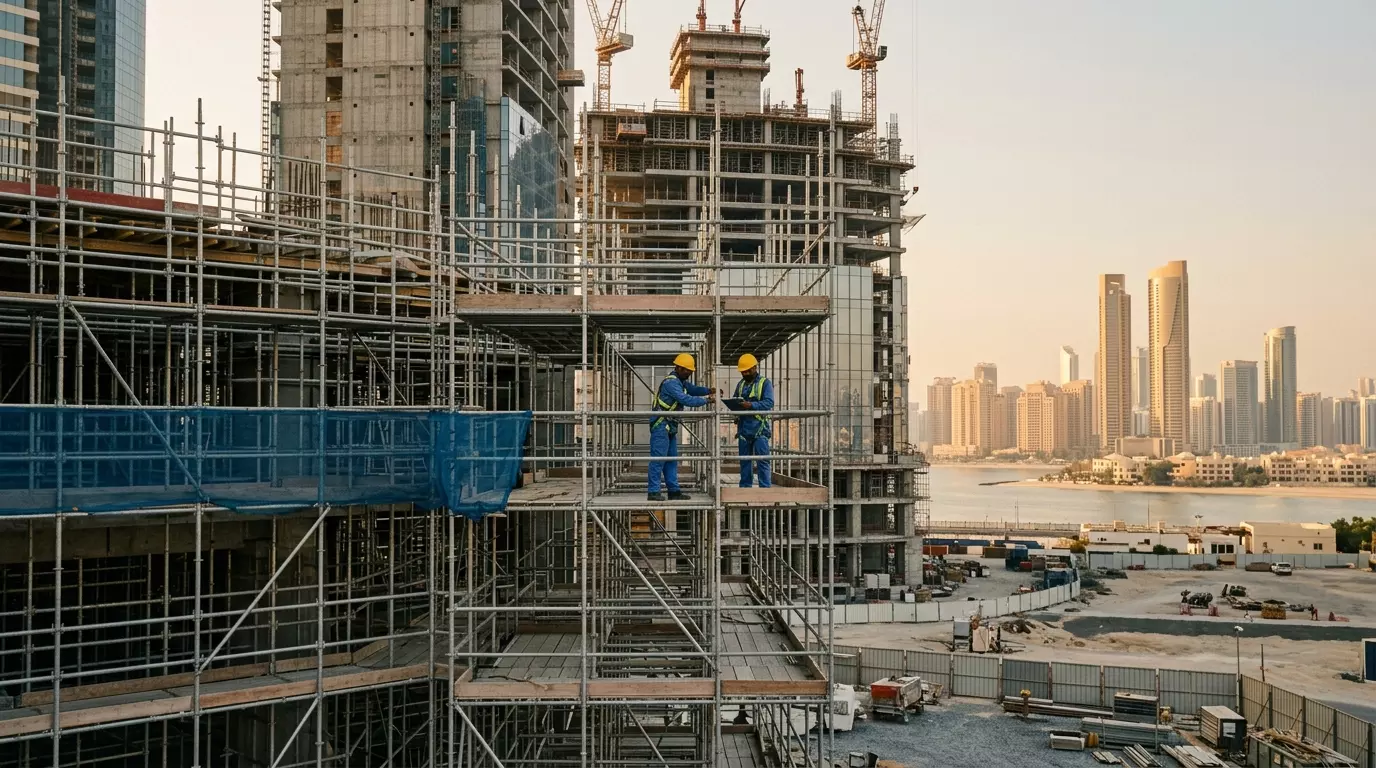
What I Wish I'd Known Before Choosing a Scaffolding Supplier in Abu Dhabi
The first time I had to source scaffolding for a project in Mussafah, I made every mistake in the book.
Called three suppliers, took the cheapest quote, and by day four we had missing couplers, mismatched standards, and a foreman who wouldn't sign off on the erection. We lost a week. On a fit-out schedule, a week is not a small thing.
I've been on the construction side of things in the UAE for over a decade now, and if there's one decision I see project managers underestimate again and again, it's picking their scaffolding supplier. People treat it like a commodity purchase — steel is steel, right? Except it isn't. Not really.
And in Abu Dhabi specifically, where sites range from towering Saadiyat developments to tight villa renovations in Khalifa City, the wrong choice can quietly kill your programme before you've even poured the first slab.
So this is the piece I wish someone had handed me back then. If you're evaluating a scaffolding supplier in Abu Dhabi — for a new build, a facade job, a shutdown at ICAD, or anything in between — here's what actually matters.
Stock Depth Beats Sales Pitch Every Time
Ask any supplier about their fleet and they'll tell you it's massive. Ask them to walk you through their yard and things get interesting.
I've walked into places in Mussafah where the "50,000 metres of stock" turned out to be maybe fifteen thousand — and half of it was out on hire. That's not a supplier, that's a broker with a shed.
When your site calls in for an emergency top-up because the client suddenly wants to extend the drop by two lifts, you need a company that can throw a truck at you the same day. Not one that has to sub-hire from someone else and mark it up 30%.
Ask a specific question: "How many tonnes of cuplock do you have available, right now, in your Abu Dhabi yard?" Watch how quickly they answer. Vague answers mean vague stock.
Certified Steel, Not Recycled Guesswork
The UAE market has a habit of quietly recirculating scaffolding that should've been condemned three years ago. Bent standards, cracked ledgers, couplers with worn threads — I've seen all of it show up on site in a delivery truck.
A serious supplier will have their materials certified to BS EN 12810/12811 or equivalent, with mill certificates on request, and a proper reject-and-rework process for damaged components.
When you're hanging a working platform 40 metres above a live yard, this isn't paperwork nonsense. It's the difference between a safe job and an OSHAD incident report that lands on your MD's desk on a Sunday morning.
If a supplier can't produce material certifications when asked, that's your answer. Move on.
Read: Accredited NEBOSH Institutes in World Explained
Local Delivery Reality
Abu Dhabi is deceptively spread out. Getting a load from a Mussafah yard to a site on Saadiyat during morning traffic can eat two hours if the driver hasn't done the run before.
And if you're on the outskirts — Al Wathba, Al Samha, or up toward the Ghantoot border — you need a supplier who genuinely knows the route restrictions, the security clearance quirks at industrial gates, and which trucks can and can't enter certain Free Zones without a permit.
The scaffolding supplier in Abu Dhabi who quotes you AED 200 less per tonne but shows up at 3 PM instead of 8 AM has cost you a full crew day. Do the math on that before you get seduced by unit rates on a spreadsheet.
Engineering Support (or the Lack of It)
Here's a test I use now. Send a prospective supplier a rough sketch of a slightly awkward requirement — a cantilever off a mezzanine, or a birdcage inside a warehouse with a live conveyor running through it — and ask for a proposal.
The good ones will come back with a marked-up drawing, a bill of materials, a rough tonnage, and a note about which tie configuration they'd propose. The mediocre ones will come back with a per-day rate and a shrug.
If you're doing anything more complex than a straight-line facade run, that engineering support is worth its weight in galvanised steel. Especially in high-rise work, where the tie-in details matter more than the scaffolding itself does.
Erection Crews Matter More Than You Think
You can rent perfect stock from a good supplier and still watch a job go sideways because the erection crew is untrained.
In Abu Dhabi, the market is flooded with crews of varying ability, and the top suppliers keep their own permanent teams — trained, badged, and rotated through their own yard so quality stays consistent.
Ask who's erecting. Ask if they hold CISRS or equivalent training. Ask about supervisor ratios on site. If the supplier subcontracts erection to whoever's available that week, you're taking on their quality control problem as your risk.
I've had jobs where I insisted on the supplier's own crew, paid a small premium, and finished the erection two days ahead of programme because they actually knew the system inside out. It pays back, every time.
The Paperwork You'll Actually Need
Not glamorous, but it's what wakes you up at 2 AM before an inspection. In Abu Dhabi, most main contractors will ask you for third-party inspection reports at handover, weekly tag inspections during use,
OSHAD-compliant scaffolding tags on every structure, insurance certificates for the supplier's operatives, and method statements and risk assessments that match the actual erection on the ground — not a generic template with a different logo pasted on.
A supplier who provides all of this without being chased is worth 10–15% more than one who doesn't. I say this with the tired eyes of someone who's spent too many Thursday nights chasing tag registers over WhatsApp.
Red Flags I'd Walk Away From
Cash-only pricing. No physical office you can actually visit. Reluctance to give you references from live sites. Trucks that arrive without a delivery note. Erectors without ID badges. Sales reps who promise anything to close the deal and then vanish once the first invoice is disputed.
None of these on their own are fatal. All of them together mean you'll be firefighting for the length of the project.
What I'd Do Now
If I were starting a new project tomorrow and needed to appoint a scaffolding supplier in Abu Dhabi, I'd do three things. First, visit two yards in person — walk through, look at the stock condition, talk to the yard foreman, not the sales guy.
Second, call two current customers of each supplier and ask about invoicing disputes and site issues, not just quality. And third, send a slightly awkward technical query to see who actually thinks before responding.
Cost matters, of course it does. But the cheapest quote on paper is almost never the cheapest project outcome once you factor in delays, safety exposure, and rework.
Scaffolding is one of those trades where you're really buying reliability, safety culture, and problem-solving — the steel just happens to come with it.
Get that decision right at the start and the rest of your programme gets a lot quieter. Get it wrong, and you'll spend the next six months explaining delays that were quietly baked in on day one.