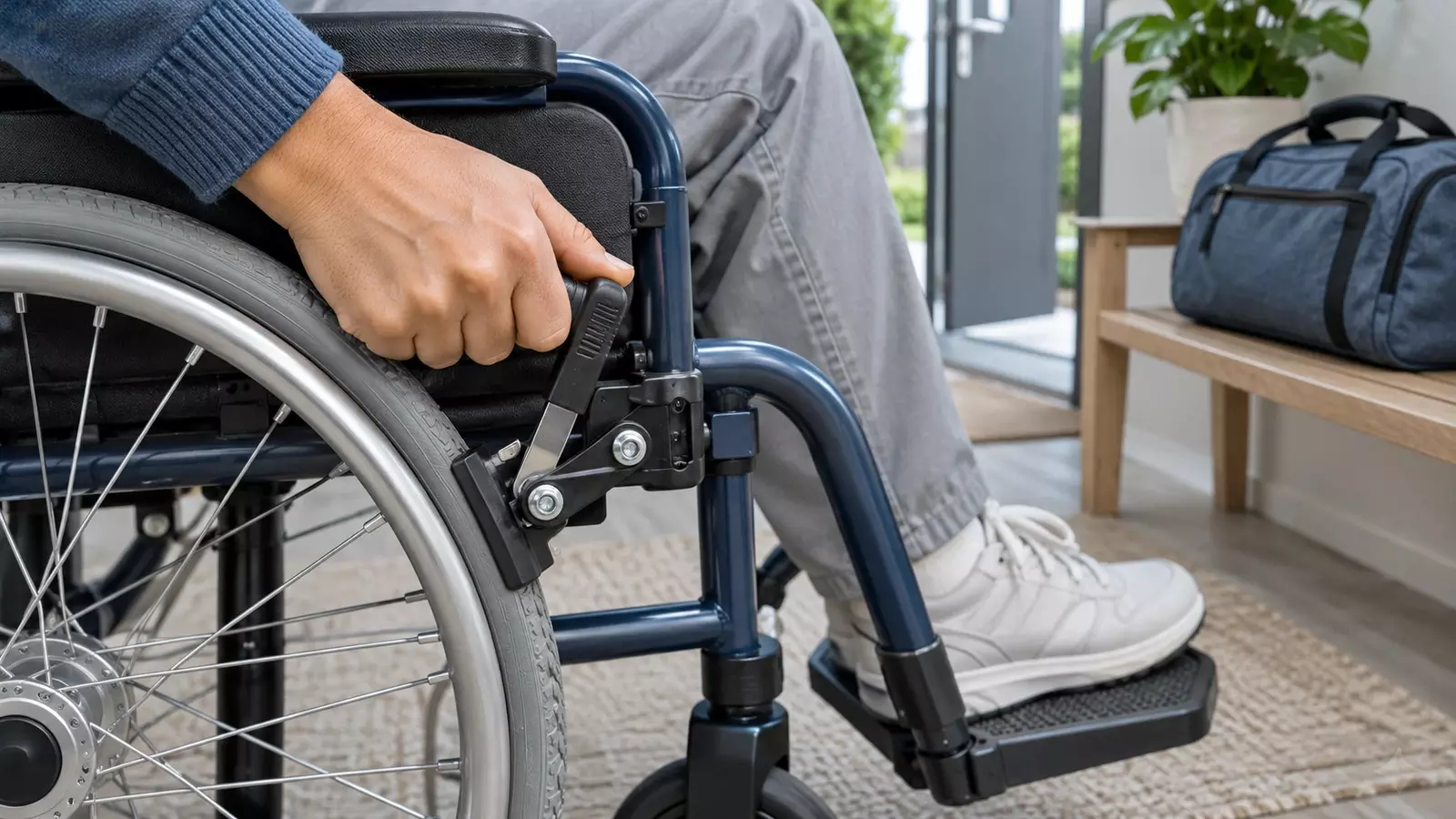
What wheelchair users should check before traveling to medical appointments
Before traveling to a medical appointment, wheelchair users should check that their chair is ready, the assigned vehicle can carry it and both addresses have a usable route to the vehicle. A named entrance and a contact number are especially helpful when pickup takes place at a large medical facility.
How to check wheelchair readiness
Follow the chair manufacturer’s pre-use checks. Check the brakes or parking function, tyres and foot supports, and check battery charge on a powered chair.
If a fault affects normal use, arrange a repair or an appropriate alternative before boarding. A checklist for a wheelchair user’s journey can help you gather the remaining travel details.
Do the pre-use check early enough to address a problem before pickup. Look at the parts that affect the way you normally travel, such as a foot support that has to lock into place or a powered chair that needs enough charge for the routes at both ends. Use the manufacturer’s instructions for your own model.
What accessibility details a provider should know
Tell the provider whether you will stay in the wheelchair or transfer. Share the chair’s model, dimensions and occupied weight when boarding seated. Mention equipment that adds height or width, and confirm the assistance needed between the entrance and vehicle.
Send the access details with the address. For example, “I travel in my powered chair, use the side entrance and need the ramp deployed on level ground” gives the dispatcher something to check. Ask who you should contact if a different vehicle is sent.
Which personal and mobility items to prepare
Pack appointment documents, a charged phone and any mobility accessories you normally need, such as a cushion or removable supports. Ask how spare or removable items will be stowed. Follow the clinic’s instructions for any personal items required for the visit.
Put appointment information, the provider’s number and the pickup point somewhere you can reach without unpacking.
Ask where bags and detachable equipment will go in the vehicle. If a companion is coming, agree who will carry what and who will stay with you while the vehicle is positioned.
How to verify pickup and destination access
Trace a step-free route from your pickup door to the vehicle and from the destination bay to reception. Ask about working lifts, door opening hours and space for a ramp or lift. Confirm the exact entrance if a facility uses separate doors for different departments.
Check whether the accessible entrance is open at your appointment time and which department it serves. A hospital’s main entrance may be accessible but lead to a long route to the clinic. Identify a usable route from the stopping bay to reception and ask where you can wait if the return vehicle is delayed.
What should be confirmed after a wheelchair journey is arranged?
Check the booking confirmation for the boarding method, vehicle, meeting points, travel times and contact person.
If the vehicle changes, ask the provider to confirm the replacement can meet the same access requirements. For a round trip, confirm who will signal that you are ready to leave.
On the day, tell the provider if your chair, support needs or entrance have changed since booking. For the return, agree on a short ready message that names the entrance and says whether you need help getting from the waiting area to the vehicle.
Should wheelchair brakes be checked before travel?
Yes. Check the wheelchair brakes or parking function before travel and follow the manufacturer’s instructions if a fault appears.
Can missing mobility details affect accessible pickup?
Yes. Missing chair measurements or assistance details can lead to a vehicle assignment that does not match the passenger’s needs.
Should the destination entrance be checked in advance?
Yes. Confirm the accessible entrance and the route from the drop-off bay to the department.