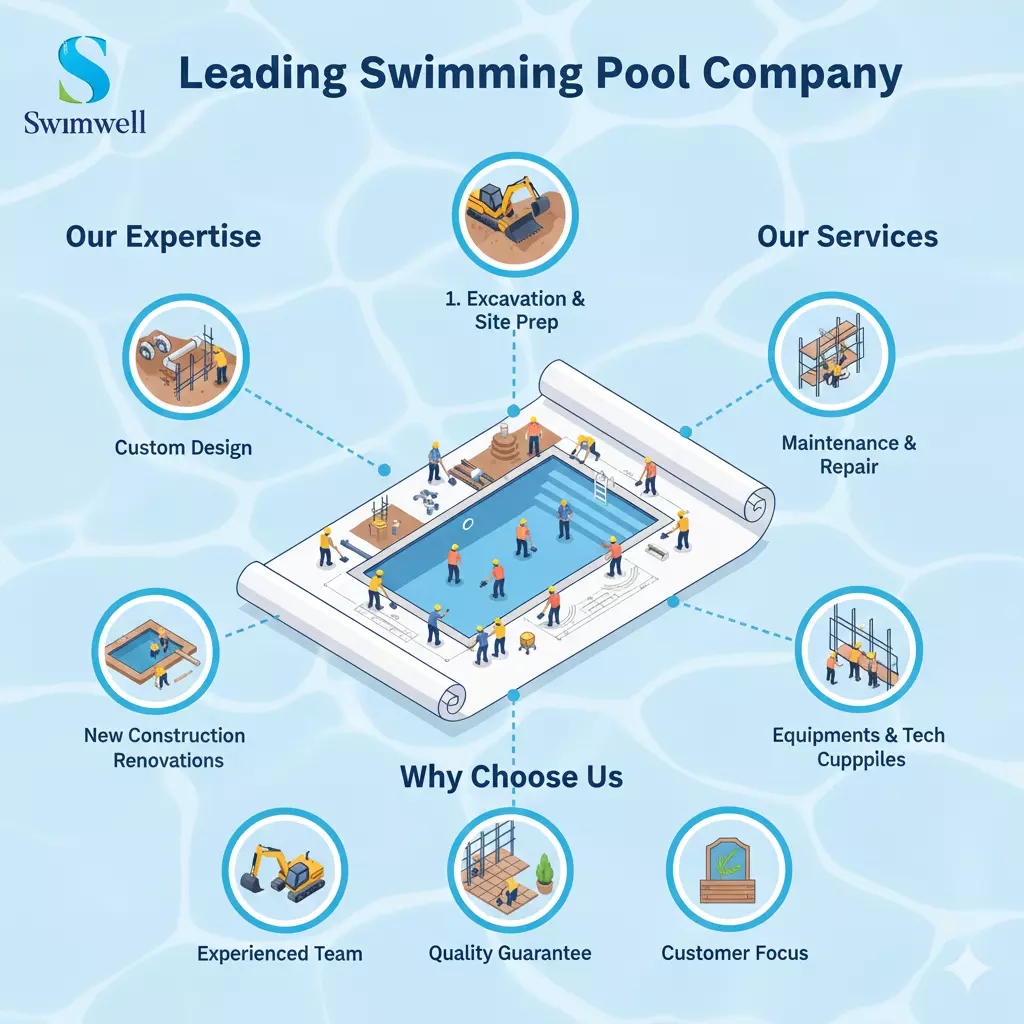
What should you know before starting a swimming pool construction project?
Building a swimming pool is an exciting investment that enhances the beauty, functionality, and value of your property. However, before beginning any Swimming pool construction project, it's essential to understand the planning, design, budget, materials, legal requirements, and maintenance involved.
Proper preparation helps avoid costly mistakes, delays, and future repairs while ensuring your pool meets your expectations.
Whether you're planning a residential, commercial, hotel, or resort pool, knowing the key factors before construction begins will help you make informed decisions and achieve a successful outcome.
Define the Purpose of Your Swimming Pool
The first step is identifying why you want a swimming pool.
Common purposes include:
- Family recreation
- Fitness and exercise
- Luxury landscaping
- Hotel or resort amenities
- Commercial use
- Children's activities
- Relaxation and entertainment
Understanding the primary purpose helps determine the ideal size, depth, features, and design.
Choose the Right Location
Selecting the correct location greatly impacts the pool's performance and lifespan.
Consider:
- Available space
- Ground conditions
- Sunlight exposure
- Drainage
- Accessibility
- Existing utilities
- Future landscaping plans
A professional site inspection ensures the chosen location supports safe and efficient construction.
Set a Realistic Budget
Your budget should include more than just construction.
Consider costs for:
- Excavation
- Structural work
- Plumbing
- Electrical systems
- Filtration equipment
- Waterproofing
- Pool finishes
- Landscaping
- Maintenance equipment
Planning your finances in advance helps avoid unexpected expenses during construction.
Select the Right Pool Design
The design should complement your property's architecture while meeting your functional needs.
Popular pool styles include:
- Rectangular pools
- Infinity pools
- Lap pools
- Freeform pools
- Rooftop pools
- Indoor pools
- Children's pools
Simple designs are generally more cost-effective and easier to maintain than highly customized layouts.
Understand the Construction Process
Knowing the construction stages helps you track project progress.
Typical stages include:
- Site survey
- Design and planning
- Excavation
- Structural reinforcement
- Plumbing installation
- Electrical work
- Waterproofing
- Tile installation
- Equipment setup
- Water filling and testing
Each stage plays an important role in creating a safe and durable swimming pool.
Choose High-Quality Construction Materials
Material quality directly affects durability and maintenance costs.
Essential materials include:
- Reinforced concrete
- Waterproofing systems
- Quality plumbing pipes
- Ceramic or mosaic tiles
- Stainless steel accessories
- Durable filtration equipment
Investing in premium materials reduces future repair expenses.
Hire Experienced Professionals
Professional contractors ensure:
- Accurate construction
- Proper engineering
- Quality workmanship
- Efficient project management
- Compliance with safety standards
Experienced builders also help prevent expensive construction mistakes.
Consider Pool Safety
Safety should be incorporated from the beginning.
Important safety features include:
- Anti-slip pool decks
- Safety railings
- Proper lighting
- Child safety barriers
- Pool covers
- Clearly marked depth indicators
A safe pool protects users while increasing long-term value.
Plan Efficient Filtration Systems
Clean water depends on an efficient filtration system.
Modern systems provide:
- Better water circulation
- Reduced chemical usage
- Cleaner water
- Lower maintenance costs
- Improved swimmer comfort
Choosing the right filtration equipment ensures long-term performance.
Think About Energy Efficiency
Energy-efficient pools reduce operating costs.
Consider installing:
- Variable-speed pumps
- LED pool lighting
- Solar heating
- Automatic timers
- Pool covers
These features help minimize electricity and water consumption.
Know Local Regulations
Before construction begins, verify local requirements regarding:
- Building permissions
- Safety regulations
- Electrical standards
- Drainage guidelines
- Property boundaries
Following applicable regulations helps prevent legal complications and project delays.
Plan for Future Maintenance
Every swimming pool requires regular maintenance.
Routine maintenance includes:
- Water testing
- Filter cleaning
- Chemical balancing
- Pump servicing
- Tile cleaning
- Equipment inspection
Planning maintenance early helps preserve the pool's appearance and functionality.
Consider Long-Term Value
A professionally built swimming pool offers lasting benefits such as:
- Increased property value
- Improved lifestyle
- Enhanced outdoor entertainment
- Greater aesthetic appeal
- Better fitness opportunities
Thinking beyond the initial investment ensures greater satisfaction over time.
Why Proper Planning Makes a Difference in Swimming pool construction
Successful Swimming pool construction is about more than excavation and concrete. Careful planning, selecting quality materials, hiring experienced professionals, and designing a pool that matches your needs all contribute to a project that performs well for many years.
Taking the time to plan every detail reduces unexpected expenses and helps ensure a smooth construction process from start to finish.
Read: What Are the Key Stages Involved in Swimming Pool
Common Mistakes to Avoid
Avoid these common errors before construction starts:
- Choosing contractors based only on price
- Ignoring soil conditions
- Underestimating maintenance costs
- Selecting poor-quality materials
- Making design changes during construction
- Overlooking waterproofing
- Installing undersized filtration systems
- Failing to plan for future upgrades
Avoiding these mistakes helps keep your project on schedule and within budget.
Benefits of Professional Swimming Pool Construction
Working with experienced professionals provides:
- Superior construction quality
- Efficient project completion
- Better material selection
- Long-lasting durability
- Reduced maintenance costs
- Improved safety
- Higher property value
- Reliable after-construction support
Conclusion
Starting a swimming pool project requires careful planning, informed decision-making, and the right construction partner.
From selecting the ideal location and design to choosing durable materials and efficient equipment, every decision influences the pool's quality, performance, and longevity. Proper preparation helps you avoid unnecessary expenses while ensuring your investment delivers lasting value.
At Swimwell Pools, we specialize in delivering high-quality swimming pool solutions tailored to residential and commercial projects. Our experienced team focuses on precision, durability, and customer satisfaction, ensuring every swimming pool is built to the highest standards and designed to provide years of enjoyment.
Frequently Asked Questions
1. What should I know before starting Swimming pool construction?
Before starting Swimming pool construction, you should determine your budget, choose the right location, finalize the design, select quality materials, hire experienced professionals, understand the construction process, and plan for long-term maintenance. Proper preparation helps ensure a durable and cost-effective swimming pool.
2. How long does swimming pool construction usually take?
The construction timeline depends on the pool's size, design complexity, weather conditions, and site requirements. Most projects take several weeks to a few months to complete.
3. What is the most durable material for swimming pool construction?
Reinforced concrete is one of the most durable and widely used materials because it offers excellent strength, flexibility in design, and a long service life when properly constructed.
4. Why is waterproofing important during pool construction?
Waterproofing prevents leaks, protects the concrete structure, reduces repair costs, and extends the overall lifespan of the swimming pool.
5. How can I reduce future swimming pool maintenance costs?
You can reduce maintenance costs by using quality construction materials, installing energy-efficient equipment, maintaining proper water chemistry, cleaning the filtration system regularly, and scheduling routine inspections.