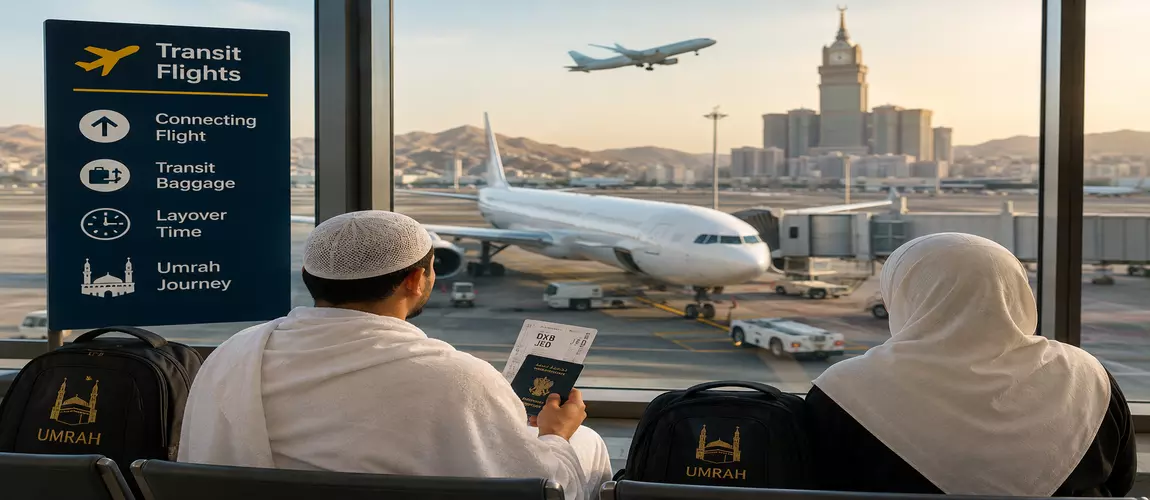
What Pilgrims Should Know About Transit Flights for Umrah
Planning an Umrah journey involves more than booking a ticket and packing your bags.
Many travelers, especially those departing from the UAE and nearby countries, choose transit flights because they are often more affordable and offer greater flexibility.
However, understanding how transit flights work can help you avoid unnecessary delays, additional expenses, or travel complications.
Before confirming your travel plans, make sure your Umrah visa and supporting travel documents are ready so you can enjoy a smooth journey to the holy cities of Makkah and Madinah.
Whether your layover lasts a few hours or nearly a day, being informed about transit rules, baggage procedures, airport requirements, and airline policies can make your pilgrimage much more comfortable. This guide explains everything pilgrims should know before booking a transit flight for Umrah.
Why Many Pilgrims Choose Transit Flights
Transit flights have become a popular option for Umrah travelers because they provide several advantages over direct flights. Depending on the season and airline, connecting flights can significantly reduce travel costs while offering more departure times.
Some of the main reasons pilgrims choose transit flights include:
- Lower airfare compared to direct flights.
- Better availability during peak Umrah seasons.
- Flexible travel schedules.
- More airline choices.
- Convenient departures from different UAE airports.
For many families and groups, these savings allow them to allocate more of their travel budget toward accommodation, transportation, or other pilgrimage expenses.
Understanding What a Transit Flight Means
A transit flight is a journey where passengers stop at one or more airports before reaching their final destination. During the layover, travelers either remain inside the airport or transfer to another flight operated by the same or a different airline.
Transit times may range from:
- Less than 2 hours
- Between 3–6 hours
- Overnight layovers
- More than 12 hours
The duration of your transit can affect baggage handling, visa requirements, and airport procedures, so always review your itinerary carefully before booking.
Check Whether You Need a Transit Visa
One of the most important things pilgrims should verify is whether their transit country requires a transit visa.
Some countries allow passengers to remain inside the international transit area without obtaining a visa, provided they do not leave the airport. Others require a transit visa even for short connections.
Requirements usually depend on:
- Your nationality
- Length of layover
- Airport regulations
- Whether you change terminals
- Whether you leave the airport
Always check the latest immigration requirements for your transit destination before finalizing your travel plans.
Choose Sufficient Layover Time
Although short layovers may seem attractive, they can increase the risk of missing your connecting flight.
When selecting a transit itinerary, consider factors such as:
- Immigration queues
- Security screening
- Terminal changes
- Flight delays
- Boarding times
For international journeys, a layover of at least three hours is generally more comfortable, especially during busy travel periods.
Understand Your Baggage Policy
Different airlines follow different baggage transfer procedures.
If both flights are booked under a single itinerary, your checked luggage is often transferred automatically to your final destination.
However, if your journey involves separate airline tickets, you may need to:
- Collect your baggage.
- Complete customs procedures.
- Check in again.
- Re-clear airport security.
Confirm your baggage arrangements with your airline before departure to avoid surprises during your journey.
Choose the Right Airline for Your Umrah Journey
Not all airlines offer the same level of convenience for pilgrims. When comparing transit flights, look beyond the ticket price and evaluate the overall travel experience.
Consider the following factors before booking:
- Total travel time
- Layover duration
- Baggage allowance
- On-time performance
- Customer support
- Meals included during the flight
- Seat comfort for long journeys
- Flexibility for schedule changes
Some airlines also provide dedicated assistance for religious travelers during the Umrah season, making the journey more comfortable for elderly passengers and families.
Be Prepared for Airport Security and Immigration
Every airport has its own security procedures, and transit passengers may need to go through additional screening before boarding their connecting flight.
To save time:
- Keep your passport easily accessible.
- Carry printed or digital copies of your travel itinerary.
- Have your boarding passes ready.
- Follow airport security instructions carefully.
- Pack liquids and electronics according to airline guidelines.
Remaining organized can help reduce stress, particularly during busy travel seasons when airports are crowded.
Stay Comfortable During Long Layovers
A lengthy transit does not have to be exhausting if you plan ahead. Many international airports offer facilities that make waiting for your next flight more enjoyable.
Useful airport amenities may include:
- Prayer rooms
- Family lounges
- Restaurants and cafés
- Charging stations
- Free Wi-Fi
- Sleeping pods or transit hotels
- Currency exchange counters
- Medical assistance
If your layover extends for several hours, take short walks, stay hydrated, and avoid carrying heavy hand luggage for extended periods.
Plan Your Transit During Peak Umrah Seasons
During Ramadan, school holidays, and other peak pilgrimage periods, airports serving Umrah travelers experience increased passenger traffic.
This means:
- Longer immigration queues
- Busy boarding gates
- Limited seating areas
- Increased flight demand
- Higher chances of schedule changes
Booking flights well in advance gives you a wider choice of routes and often helps secure better fares.
Read: Learn How Indians Can Get a Kyrgyzstan Visa Fast
Keep Essential Documents in Your Hand Luggage
Never place important travel documents inside your checked baggage. Keep them with you throughout the journey.
Your hand luggage should include:
- Passport
- Boarding passes
- Hotel confirmation
- Flight itinerary
- Emergency contact details
- Travel insurance documents (if applicable)
- Necessary medications
- Mobile charger and power bank
Having these items readily available makes airport procedures much smoother.
Health Tips for Transit Travelers
Long flights and extended waiting times can be physically tiring, especially for elderly pilgrims.
To stay comfortable during transit:
- Drink plenty of water.
- Stretch your legs regularly.
- Wear comfortable clothing and footwear.
- Eat light meals.
- Get enough rest before departure.
- Carry prescribed medicines in your cabin bag.
- Follow airline health and safety recommendations.
Taking small steps to maintain your health can help you begin your Umrah with more energy and peace of mind.
Common Mistakes to Avoid
Many first-time pilgrims unknowingly make avoidable travel mistakes when booking transit flights.
Some of the most common include:
- Choosing extremely short layovers.
- Ignoring transit visa requirements.
- Booking separate tickets without understanding baggage policies.
- Forgetting to check terminal transfer information.
- Carrying prohibited items in cabin baggage.
- Not monitoring flight updates before departure.
- Arriving late at the airport.
Careful planning helps minimize these risks and contributes to a smoother travel experience.
Frequently Asked Questions
1. Are transit flights cheaper than direct flights for Umrah?
In many cases, yes. Transit flights often cost less than direct services, especially when booked well in advance. However, compare the total travel time and convenience before making your decision.
2. Do I always need a transit visa?
No. It depends on your nationality, the country where you are transiting, the airport's regulations, and whether you leave the international transit area.
3. Can my baggage be transferred automatically?
If your flights are booked on a single itinerary, airlines often transfer checked baggage automatically. Separate bookings may require you to collect and recheck your luggage.
4. How long should my layover be?
For international travel, a layover of at least three hours is generally recommended to allow enough time for security checks, terminal transfers, and boarding.
5. Is travel insurance recommended for Umrah?
While not always mandatory, travel insurance can provide financial protection against unexpected flight delays, baggage issues, or medical emergencies during your journey.
Conclusion
Choosing a transit flight for Umrah can be a practical and budget-friendly option when planned carefully.
By understanding transit rules, checking visa requirements, allowing sufficient layover time, and preparing your travel documents in advance, you can avoid common travel challenges and focus on your spiritual journey.
For a seamless pilgrimage experience, consider planning your trip with Arooha Tours, where experienced travel consultants can assist with Umrah packages, documentation guidance, and travel arrangements, helping you begin your sacred journey with confidence and peace of mind.