What Makes Modified Bitumen Torch Down Roofing a Practical Choice for Summerlin Properties?
For many low-slope and flat-roof applications, modified bitumen torch down roofing offers a practical approach that combines layered protection with a proven membrane system.
In Summerlin, NV, where intense sun, heat, and long periods of dry weather can place considerable stress on exterior building materials, selecting an appropriate roofing system deserves careful consideration.
Modified bitumen is designed to provide a durable waterproofing layer while maintaining flexibility that can be valuable as roofing materials respond to changing temperatures.
Understanding how this roofing system works, where it fits best, and what property owners should consider before installation can make the decision much easier.
How Does Modified Bitumen Roofing Differ From Traditional Roofing Systems?
Modified bitumen is a membrane-based roofing material derived from asphalt and enhanced with polymers.
Unlike conventional asphalt shingles, which are typically installed as individual overlapping pieces, modified bitumen is supplied in rolls and installed as a continuous roof membrane.
That difference is particularly relevant for buildings with low slopes. Water does not move across a low-slope roof in the same way it moves across a steep pitched roof, so the roofing system must be designed with water resistance and proper drainage in mind.
The Role of the Membrane
A modified bitumen membrane creates a protective surface across the roof deck. Depending on the system and installation method, multiple layers may contribute to the roof assembly, including the membrane itself, insulation, a base layer, flashing, and other components.
The membrane is engineered to resist moisture penetration while providing flexibility. Polymer modification can improve characteristics such as elasticity, durability, and resistance to temperature-related movement compared with some traditional asphalt materials.
Why Low-Slope Design Matters
A roof does not need to be completely flat to be considered low-slope. Even a modest pitch changes how rainwater drains, but these roofs generally require different waterproofing strategies than steep-slope residential roofing.
Modified bitumen can be well suited to these applications because it forms a continuous membrane rather than relying primarily on overlapping individual roofing pieces.
What Happens During a Torch-Down Roofing Installation?
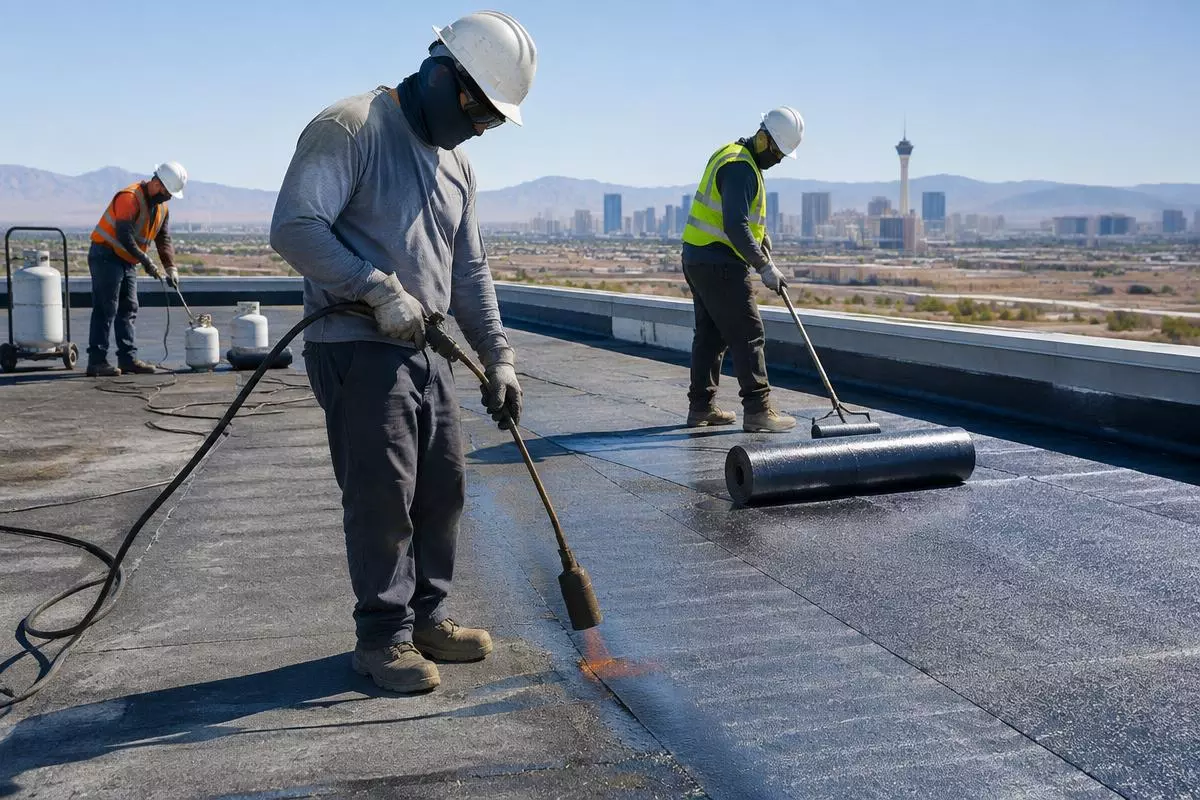
Torch-down roofing gets its name from the installation process used with certain modified bitumen membranes. Heat is applied to the underside of the membrane so that the material bonds to the prepared roofing surface.
Because the process involves open-flame equipment and high temperatures, installation requires appropriate preparation, experienced handling, and strict attention to fire-safety practices.
Before installation begins, the existing roof assembly needs to be evaluated. The condition of the roof deck, drainage components, flashing, insulation, and existing membrane can all affect the appropriate installation strategy.
Preparing the Roof Surface
A sound installation starts with preparation rather than immediately applying the new membrane.
Loose materials, damaged sections, debris, and unsuitable surfaces may need to be addressed. Any structural or moisture-related problems should also be identified before the new roofing system covers them.
This stage is important because a new membrane cannot reliably compensate for an underlying problem with the roof deck or drainage system.
Creating Reliable Seams
The seams between membrane sheets are critical areas of a modified bitumen roof. Poorly bonded seams can create pathways for moisture, even when the majority of the membrane remains intact.
Proper installation establishes consistent membrane adhesion and carefully treats transitions, penetrations, edges, and other vulnerable areas.
Flashing around roof penetrations is particularly important because vents, pipes, curbs, and similar features interrupt the otherwise continuous membrane.
Which Properties Can Benefit From Modified Bitumen Torch Down Roofing?
The suitability of a roofing system depends on the building's design, existing roof assembly, slope, structural condition, and other project-specific factors.
Modified bitumen is commonly considered for commercial buildings, additions, garages, and other structures with low-slope roof sections.
For a property owner evaluating reliable Modified Bitumen Torch Down Roofing in Summerlin, NV, the most useful starting point is an inspection of the existing roof rather than choosing a material based solely on appearance or general reputation.
A professional evaluation can determine whether the roof's configuration is compatible with the system and whether repairs or preparation work should happen first.
Commercial and Low-Slope Applications
Many commercial structures use low-slope roof designs because they can make efficient use of building space and accommodate mechanical equipment.
A membrane roofing system can provide broad coverage across these surfaces while allowing contractors to address penetrations and drainage details as part of the overall assembly.
Residential properties can also have low-slope sections, particularly on additions, garages, porches, or architecturally distinctive portions of a building.
How Does Summerlin's Climate Affect Roofing Considerations?
Summerlin's desert environment creates a distinctive set of conditions for exterior building materials.
Strong sunlight and elevated temperatures can contribute to long-term weathering, while occasional storms can produce concentrated rainfall that places demands on drainage systems.
A roofing material should therefore be evaluated according to how its complete system handles local exposure rather than judged by one characteristic alone.
Heat and Ultraviolet Exposure
Roof surfaces receive direct solar exposure for extended periods. Repeated heating and cooling can cause roofing materials to expand and contract, while ultraviolet radiation contributes to gradual surface degradation.
The performance of a modified bitumen roof depends on the specific membrane, installation quality, surfacing, detailing, and overall roof assembly. Proper specification and installation are therefore just as important as selecting the membrane itself.
Drainage During Heavy Rain
Dry climates can create a false sense that drainage is a minor roofing concern. In reality, occasional intense rainfall makes functional drainage essential.
Water should have a clear path toward drains, scuppers, gutters, or other designed discharge points.
Areas where water remains ponded for extended periods deserve attention because persistent moisture can contribute to deterioration and increase stress on roofing components.
What Should Property Owners Check Before Choosing a Torch-Down System?
A roofing project should begin with questions about the existing structure rather than assumptions about the replacement material.
Property owners should consider the roof's current condition, slope, drainage, insulation, flashing, penetrations, and expected service requirements. The history of previous repairs can also provide useful information about recurring problems.
The condition of the underlying roof deck is especially important. If moisture has already damaged structural materials, simply installing a new membrane over the affected area may not provide a sound long-term solution.
Look Beyond the Surface
Visible cracking, blistering, loose flashing, damaged edges, or interior water stains can indicate problems that extend beyond the immediately visible area.
A professional roof assessment can help distinguish between a localized repair and a broader replacement need. This prevents the common mistake of treating symptoms without addressing the source of the problem.
Consider the Complete Roof Assembly
A membrane does not function independently. Insulation, substrate, flashing, drainage, penetrations, edge details, and ventilation where applicable all contribute to overall roof performance.
The right system should therefore be selected according to the building rather than based on the membrane name alone.
How Can Proper Maintenance Extend the Value of a Modified Bitumen Roof?
Even a well-installed roofing system benefits from routine observation. Maintenance does not necessarily mean making frequent repairs. It means identifying developing issues before they become more disruptive and expensive.
Property owners should periodically look for damaged flashing, debris accumulation, blocked drainage points, exposed membrane areas, loose edge details, and signs of water intrusion.
Roof access should also be managed carefully. Repeated foot traffic, equipment movement, or careless placement of objects can damage roofing surfaces that were not designed to withstand unnecessary abuse.
Respond to Small Problems Early
A minor seam issue or damaged flashing detail can become a larger moisture problem if it is ignored. Addressing defects while they remain localized can help protect the surrounding roof assembly.
Professional inspections are especially useful after severe weather or when interior signs such as staining, dampness, or unexplained ceiling damage appear.
Modified bitumen torch-down roofing can be a practical solution for appropriate low-slope applications in Summerlin, but its success depends on more than the membrane itself.
Proper assessment, surface preparation, installation, detailing, drainage, and ongoing maintenance all contribute to the roof's long-term performance.
For property owners considering a new roof or evaluating an aging low-slope system, understanding these factors provides a stronger foundation for making an informed decision.
A roofing professional can then assess the individual building and determine whether a modified bitumen system is an appropriate fit for its structure and environmental demands.