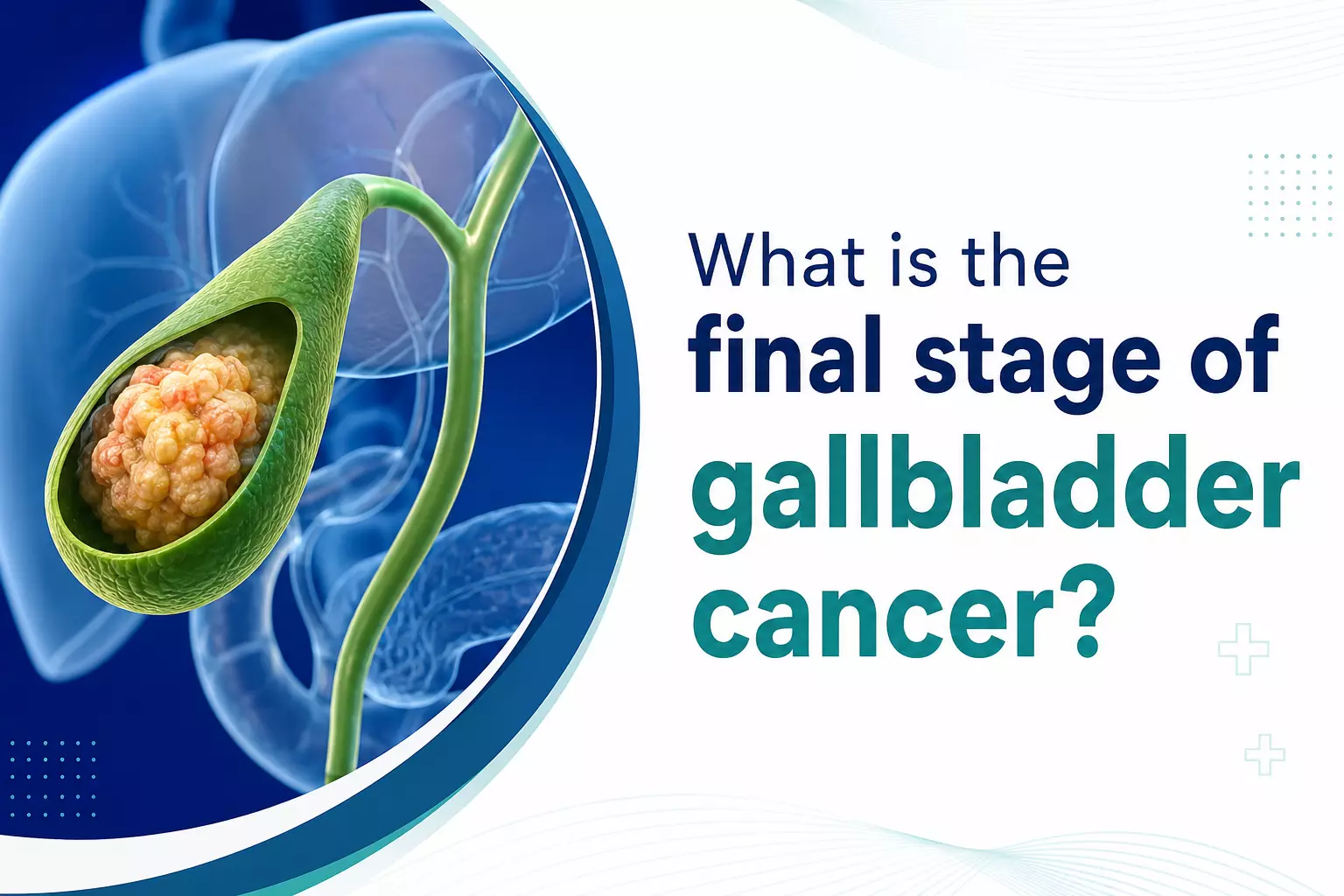
What is the Final Stage of Gallbladder Cancer?
Gallbladder cancer is often diagnosed later than other cancers because its early symptoms are vague and easy to mistake for common digestive issues.
As a result, many patients first learn about their condition only once it has progressed to an advanced stage.
Understanding the final stage of gallbladder cancer — what it means, how it's identified, and what treatment options remain — can help patients and families make sense of a diagnosis and plan the next steps with clarity.
Understanding Gallbladder Cancer Stages
Doctors use a staging system to describe how far gallbladder cancer has spread from where it started. Gallbladder cancer stages range from Stage 0 (very early, confined to the innermost lining) through Stage IV (the most advanced).
Staging is based on three main factors: how deep the tumor has grown into the gallbladder wall, whether it has reached nearby lymph nodes, and whether it has spread to distant organs.
This system helps doctors decide on the most appropriate treatment approach and gives patients a general sense of prognosis, though every case still depends on individual health, tumor biology, and how the cancer responds to treatment.
What Is Stage 4 Gallbladder Cancer?
Gallbladder cancer stage 4 — also referred to as the last stage of gallbladder cancer — is divided into two sub-stages:
- Stage 4A: The tumor has grown into nearby major blood vessels or has spread to two or more nearby organs, without yet reaching distant sites.
- Stage 4B: The cancer has spread to four or more nearby lymph nodes, or has reached distant organs such as the liver, lungs, peritoneum, or bones.
At this point, the disease is no longer confined to the gallbladder and surrounding tissue — it has moved into a systemic phase, which significantly changes both the treatment approach and the overall outlook.
Gallbladder Cancer Progression: How It Gets to This Point
Gallbladder cancer progression typically follows a pattern where the tumor first grows through the layers of the gallbladder wall, then extends into the liver (given the gallbladder's close proximity to it), followed by spread to regional lymph nodes, and finally to distant organs.
Because early gallbladder cancer often produces few or no noticeable symptoms, many cases are only detected after this progression has already advanced significantly — sometimes even discovered incidentally during gallbladder removal surgery for unrelated reasons like gallstones.
Read: Cancer Treatment Types and Options Available in India
Symptoms Associated With Advanced Gallbladder Cancer
As gallbladder cancer reaches its final stage, symptoms tend to become more pronounced and may include:
- Persistent pain in the upper right abdomen
- Yellowing of the skin and eyes (jaundice) due to bile duct blockage
- Unexplained weight loss and loss of appetite
- Nausea and vomiting
- A noticeable lump or swelling in the abdomen
- Fatigue and general weakness
These symptoms often prompt the diagnostic workup that ultimately confirms advanced gallbladder cancer, though by this point the disease has typically already spread beyond the gallbladder itself.
Treatment Approach for Stage 4 Gallbladder Cancer
Treatment for stage 4 gallbladder cancer focuses primarily on controlling the disease, relieving symptoms, and maintaining quality of life, since a complete cure becomes considerably more difficult at this stage. Depending on how far the cancer has spread and the patient's overall health, options may include:
- Chemotherapy: Often used to slow disease progression and manage symptoms, sometimes combining drugs such as gemcitabine and cisplatin.
- Palliative surgery: In some cases, procedures may be performed to relieve blockages in the bile duct or manage other complications, even when the tumor itself cannot be fully removed.
- Radiation therapy: Used selectively to reduce pain or shrink tumors pressing on nearby structures.
- Targeted and supportive therapies: Emerging treatment options and supportive care measures are increasingly used to help manage symptoms and improve day-to-day comfort.
While outcomes for stage 4 disease are generally more limited than earlier stages, individual results can vary considerably, and select patients — particularly those without distant metastasis who are able to undergo surgery — have shown notably better outcomes than the general prognosis for this stage suggests.
Why Early Detection Matters
Because gallbladder cancer is frequently diagnosed at an advanced stage, awareness of persistent digestive symptoms, unexplained abdominal pain, or jaundice is important.
Routine check-ups, especially for individuals with risk factors such as long-standing gallstones or a family history of gallbladder disease, can help catch abnormalities before the cancer has a chance to progress.
Consulting a Leading Oncologist in Jaipur for evaluation of persistent symptoms can make a meaningful difference in catching the disease at an earlier, more treatable stage.
Final Thoughts
The final stage of gallbladder cancer represents advanced disease that has typically spread beyond the gallbladder to nearby structures, lymph nodes, or distant organs.
While treatment at this stage shifts largely toward symptom control and quality of life, individual outcomes can still vary based on how the disease responds to treatment and each patient's overall health.
If you or a loved one are navigating a gallbladder cancer diagnosis, seeking specialized guidance for gallbladder cancer treatment in Jaipur can help ensure the most appropriate care plan is put in place based on the specific stage and spread of the disease.