What Is SEP Essentiality Analysis, and When Does Your Business Need It?
Your company is developing a connected product, preparing a patent licensing proposal, or reviewing a licensing request. A patent is described as “standard essential,” but what does that mean and how can you check the claim?
This is where SEP essentiality analysis helps. It examines whether a patent claim covers technology that must be used to implement a particular standard.
The findings give patent owners, manufacturers, and licensing teams a clearer basis for their next decision.
What is a standard essential patent?
A standard essential patent, or SEP, protects an invention needed to implement a particular technical standard. Standards help products from different companies work together. Familiar examples include cellular communication standards and Wi-Fi.
However, a patent discussing Wi-Fi or 5G is not automatically essential to that standard. It might describe a related technology, a particular implementation, or an improvement that the standard does not require.
The important question is whether implementing the relevant standard requires practising the invention covered by the claim.
What does SEP essentiality analysis check?
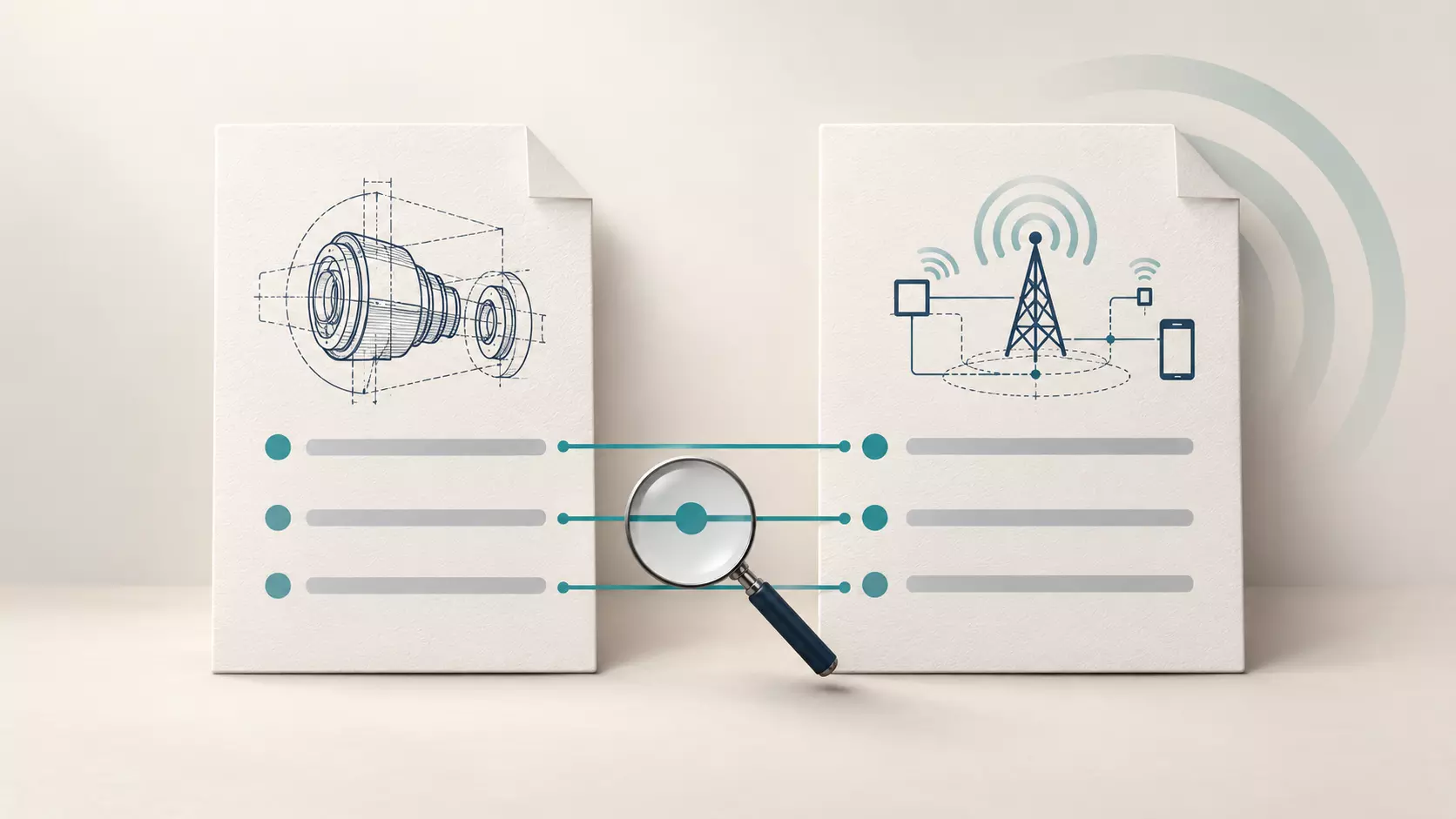
SEP essentiality analysis compares the requirements of a patent claim with the technical requirements of a standard.
The review works through each claim limitation—the individual requirements that define the invention—and looks for supporting evidence in the standard.
A patent-to-standard mapping should explain the connection, identify the relevant passages, and address any gaps.
WIPO describes claim charts that map patent claims to the relevant standard provisions and version as evidence used to assess contested essentiality.
Matching a few technical terms is not enough. The analysis must explain why the standard requires the claimed feature, rather than merely describing something similar.
Why a declaration is not enough
SEP declarations are useful starting points. They help researchers identify patents that owners have declared essential or potentially essential.
But a declaration does not provide an independent assessment of every patent claim. ETSI states that it does not investigate essentiality or confirm that the notified patents are essential to its standards.
This is why SEP essentiality assessment matters when a business needs evidence for licensing, portfolio review, or a dispute. A declaration tells you where to begin; detailed analysis helps you evaluate the underlying position.
How does the analysis work?
A focused review usually involves the following steps.
1. Define the purpose and scope
Identify the patents, claims, countries, and standards to be reviewed. Explain whether the work supports a licensing proposal, a response to an assertion, or an investment decision.
A review of one selected claim is different from an assessment of an entire portfolio. The scope should make that distinction clear.
2. Identify the relevant standard version
Standards change over time. The review should identify the specification, release, version, and relevant technical feature.
Mandatory requirements and optional features also need careful treatment. A feature being optional does not automatically end the analysis: the reviewer must examine what is required when that feature is implemented and apply the relevant essentiality definition.
3. Interpret and map the claim
Each claim limitation is compared with the appropriate standard provisions. Ambiguous wording may require examination of the patent specification and prosecution history, with legal input where needed.
4. Prepare an evidence-based claim chart
Useful SEP claim charts place the claim requirements beside the supporting standard passages. They include precise references and an explanation of the mapping, while making missing or uncertain support visible.
The report should distinguish a strong mapping from a tentative connection.
Read: Mastering Business Insights: A Deep Dive into Modern
When does your business need SEP essentiality analysis?
Before seeking licensing revenue
Patent owners need a clear explanation of why their patents matter to a standard. Analysis helps identify claims worth developing into a licensing position and directs attention to patents with stronger supporting evidence.
This can support SEP licensing analysis and patent monetization planning, although essentiality alone does not establish commercial value.
After receiving a licensing request
A manufacturer may receive a patent list or claim charts with a licensing demand. Reviewing the mapping helps its team understand the evidence, identify unsupported connections, and prepare informed questions.
Product relevance also needs attention. A product may implement only certain parts of a standard, so technical essentiality and infringement by a specific product require separate consideration.
Before buying or investing in a portfolio
SEP portfolio analysis can help an acquisition team examine whether the essentiality claims supporting a transaction are convincing.
Patent counts alone do not answer that question. Buyers also need to consider differences between family members, claim scope, relevant markets, legal status, and remaining patent life.
During FRAND licensing discussions
FRAND means fair, reasonable, and non-discriminatory. Essentiality evidence can inform discussions about a portfolio’s technical relevance, but it does not determine a FRAND royalty by itself.
Commercial and economic evidence must also be considered.
A simple example
Imagine a patent claim requires three technical features. A claim chart identifies standard passages supporting the first two, but the third appears only in a suggested example.
The reviewer needs to investigate whether that third feature is actually required or whether the standard permits another approach. Without that step, the chart may appear complete while leaving a significant gap.
This is why careful reasoning matters as much as locating documents.
What should a useful report tell you?
A practical report should make clear:
- Which claims and standard versions were reviewed.
- Where each claim limitation is supported.
- Whether the mapping depends on particular features or conditions.
- Which points remain uncertain or unsupported.
- What further technical or legal review is needed.
Essentiality analysis does not, on its own, prove patent validity, product infringement, enforceability, or a particular royalty rate. It provides evidence for a defined question within a broader business assessment.