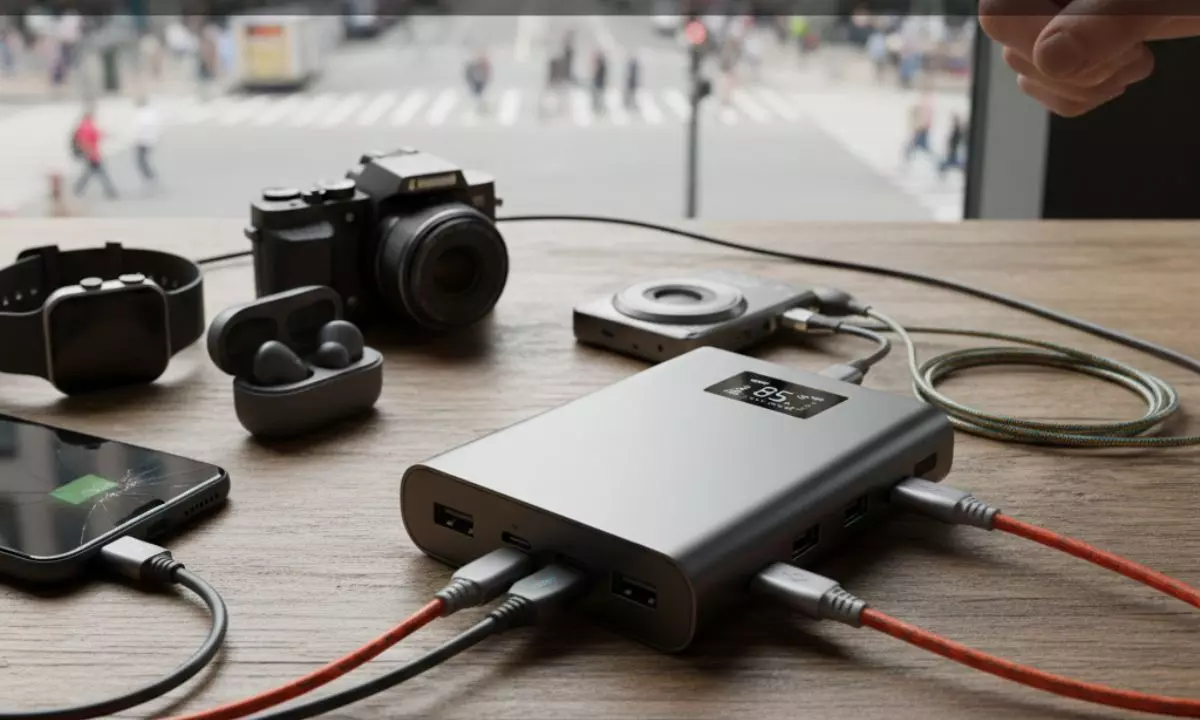
What Is a Power Bank and Why You Need One Today
In a world where smartphones, tablets, wireless earbuds, and smartwatches are part of daily life, staying powered up is no longer optional.
Battery anxiety has become common, especially for people who travel, work remotely, or rely heavily on mobile devices.
This is where a power bank plays a crucial role. A power bank is a portable charging solution designed to keep your devices running when access to a wall socket is limited or unavailable.
This article explores what a power bank is, how it works, the different types available, key features to consider before buying one, and why it has become an essential accessory in modern life.
Whether you are a frequent traveler, a student, or a professional, understanding power banks can help you make smarter choices.
Understanding What a Power Bank Is
A power bank is a compact, portable battery pack that stores electrical energy and allows you to charge electronic devices on the go. It acts as an external power source that can be recharged in advance and then used whenever needed.
Most power banks use lithium ion or lithium polymer batteries because they offer high energy density, durability, and efficiency. Once charged, a power bank can transfer stored energy to devices such as smartphones, tablets, Bluetooth speakers, cameras, and even laptops in some cases.
How a Power Bank Works
The working principle of a power bank is simple yet effective. It involves three main steps:
- Charging the power bank using electricity from a wall charger, laptop, or solar panel
- Storing energy safely inside its internal battery cells
- Delivering power to connected devices through USB or other output ports
Modern power banks also include control circuits that regulate voltage, prevent overcharging, and protect devices from overheating or short circuits. This ensures safe and stable charging performance.
Different Types of Power Bank Available
Power banks come in various designs and specifications to meet different user needs. Understanding the main types can help you choose the right one.
Standard Power Bank
This is the most common type used for charging smartphones and small gadgets. It usually has USB output ports and capacities ranging from 5000mAh to 20000mAh.
Fast Charging Power Bank
Fast charging power banks support technologies such as Quick Charge or Power Delivery. These are ideal for users who want to charge devices quickly without waiting long hours.
Wireless Power Bank
A wireless power bank allows you to charge compatible devices without cables. You simply place the phone on the power bank surface, making it convenient and clutter free.
Solar Power Bank
Solar power banks include built in solar panels that can recharge using sunlight. These are especially useful for outdoor activities such as hiking or camping.
Laptop Power Bank
Designed with higher capacity and voltage output, laptop power banks can charge devices like laptops, tablets, and gaming consoles.
Key Features to Consider When Buying a Power Bank
Choosing the right power bank depends on several important factors. Paying attention to these features can help you get better value and performance.
Battery Capacity
Battery capacity is measured in milliampere hours. A higher capacity power bank can charge your device multiple times. For example, a 10000mAh power bank can typically charge a smartphone two to three times.
Output Power and Ports
Check the number of output ports and supported charging speed. A power bank with multiple ports allows charging more than one device at the same time.
Size and Portability
While higher capacity often means larger size, a good power bank balances power and portability. Compact designs are easier to carry in pockets or bags.
Safety Features
Look for built in protections such as overcharge protection, temperature control, and short circuit prevention. These features protect both the power bank and your devices.
Build Quality and Brand Reliability
Durable materials and trusted brands ensure longer lifespan and consistent performance. A well built power bank is less likely to fail or degrade quickly.
Why a Power Bank Is Essential in Daily Life
The importance of a power bank goes beyond convenience. It has become a necessity for many people due to modern lifestyle demands.
For travelers, a power bank ensures uninterrupted navigation, communication, and entertainment during long journeys. For professionals, it supports productivity by keeping devices active during meetings or field work. Students benefit from extended device usage during classes and study sessions.
In emergencies such as power outages, a power bank can be a reliable backup power source for essential communication devices. This makes it not just a convenience tool, but also a safety accessory.
Power Bank Usage Tips for Better Performance
To maximize the lifespan and efficiency of your power bank, proper usage is important.
Avoid exposing it to extreme heat or cold. Use certified cables and chargers for recharging. Do not let the battery drain completely too often, as this can reduce long term capacity. Store the power bank in a cool, dry place when not in use.
Regular maintenance and mindful usage can significantly extend the performance of your power bank.
Environmental Impact and Sustainability
As power banks become more popular, environmental responsibility becomes important. Many manufacturers now focus on eco friendly materials and energy efficient designs.
Choosing a high quality power bank reduces electronic waste by lasting longer. Some brands also offer recycling programs to safely dispose of old or damaged units. Sustainable choices contribute to reduced environmental impact.
Read: Best Powerbank Manufacturer in India – Hive Electronics LLP
Future Trends in Power Bank Technology
Power bank technology continues to evolve. Innovations include faster charging speeds, higher energy density batteries, and smarter power management systems.
Wireless charging efficiency is improving, and integration with renewable energy sources such as solar power is becoming more common.
In the future, power banks may become even smaller, lighter, and more powerful, making them an even more essential part of everyday technology.
Conclusion
A power bank is no longer a luxury accessory but a practical necessity in a digitally connected world. It provides freedom from fixed power sources, enhances productivity, and ensures peace of mind during travel and emergencies.
By understanding how a power bank works, the different types available, and the key features to consider, users can make informed decisions that suit their lifestyle and needs. Investing in a reliable power bank means staying connected, powered, and prepared at all times.