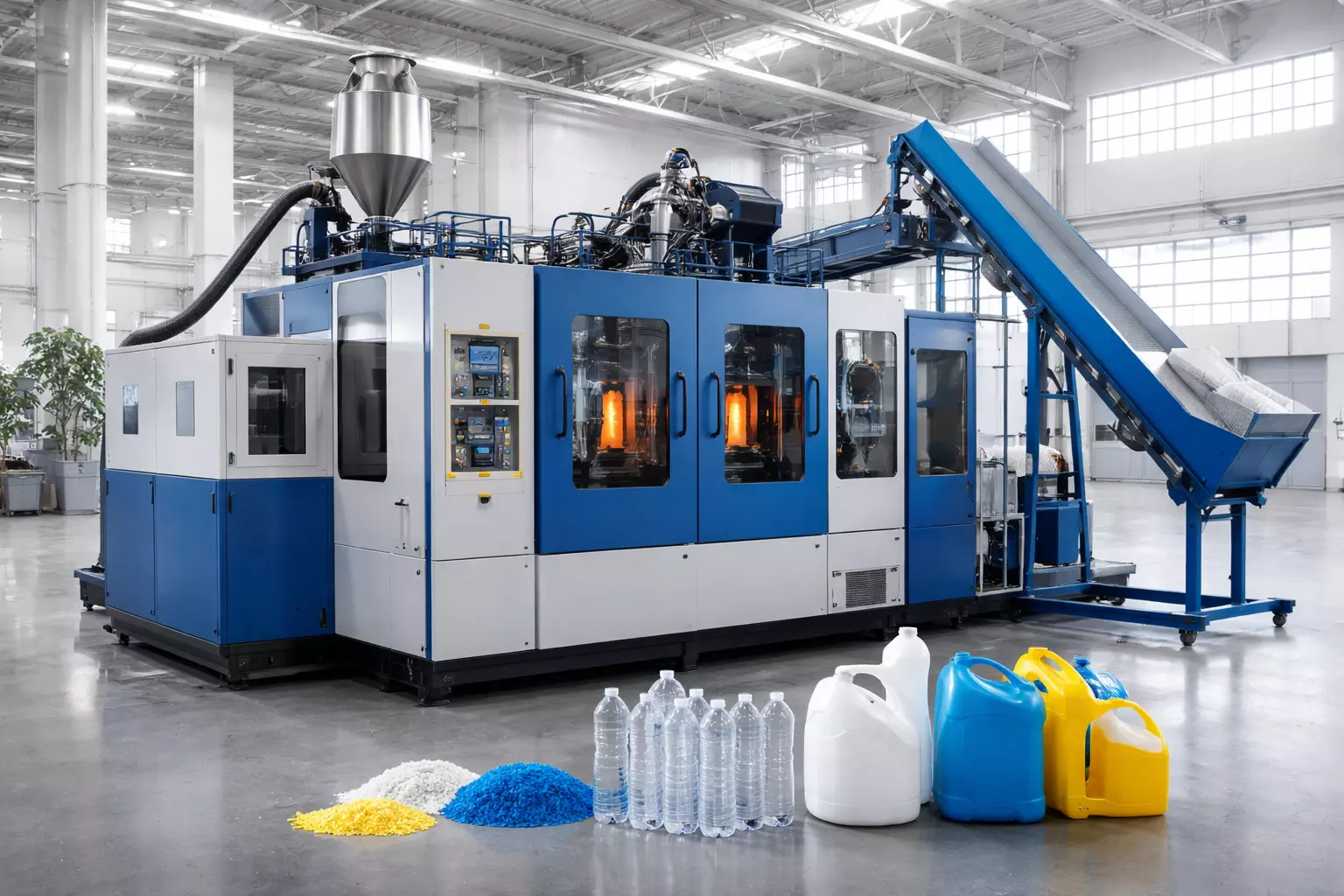
What is a Blow Molding Machine? Complete Manufacturing Guide
Plastic products are everywhere in the modern world. From the milk jugs in your refrigerator to the fuel tanks in your car, a specific industrial process makes these hollow shapes possible. At the center of this production line is the blow molding machine.
This guide explores the mechanics, types, and industrial applications of the blow molding machine. Whether you are looking to start a production line or simply want to understand how hollow plastic goods are made, this comprehensive breakdown covers everything you need to know.
Understanding the Blow Molding Machine
A blow molding machine is a specialized piece of manufacturing equipment designed to create hollow plastic parts. The process works similarly to glassblowing.
It involves melting down plastic resin and forming it into a "parison" or a "preform." This heated tube of plastic is then placed inside a metal mold. High-pressure air is forced into the tube, causing the plastic to expand and take the shape of the mold walls.
The result is a lightweight, durable, and uniform hollow object. Because the process is highly automated, a single blow molding machine can produce thousands of items per hour with minimal human intervention.
The Core Process: How It Works
The operation of a blow molding machine follows a precise sequence of events. While there are different variations of the technology, the fundamental steps remain consistent across the industry.
1. Melting the Raw Material
The process begins with plastic resin pellets, often called "nurdles." These are fed into a hopper and moved into an extruder barrel. Inside the barrel, a large rotating screw uses friction and heaters to melt the plastic into a consistent, molten state.
2. Forming the Parison
Once the plastic is melted, the machine pushes it through a die to create a parison. A parison is a tube-like piece of hot plastic with a hole at one end through which compressed air can pass. In some versions of the process, like stretch blow molding, this is called a preform.
3. Clamping and Sealing
Two halves of a metal mold close around the parison. The mold is designed with the exact exterior dimensions of the final product. As the mold closes, it seals the bottom of the plastic tube to ensure it is airtight.
4. The Inflation Phase
Compressed air is blown into the parison. This pressure forces the hot, pliable plastic outward until it hits the cold metal surfaces of the mold. The plastic assumes the shape and texture of the mold cavity.
5. Cooling and Ejection
Water lines running through the mold help cool the plastic rapidly. Once the plastic has solidified, the mold opens, and the finished product is ejected. Any excess plastic at the top or bottom, known as "flash," is trimmed off and usually recycled back into the machine.
Common Types of Blow Molding Machines
Not all plastic products are made the same way. Depending on the size, weight, and material of the product, manufacturers choose between three primary types of machines.
Extrusion Blow Molding (EBM)
This is the most common form of blow molding. In an EBM machine, the plastic is continuously extruded into a parison.
It is ideal for high-volume production of simple items like milk jugs, water bottles, and watering cans. EBM machines are versatile and can handle a wide range of plastic types.
Injection Blow Molding (IBM)
Injection blow molding is used for smaller, more precise items. In this process, the plastic is first injection-molded into a preform around a core pin.
This ensures the neck of the bottle is shaped to exact specifications before the body is blown. This method is common in the pharmaceutical and cosmetic industries for small medicine bottles and jars.
Stretch Blow Molding (SBM)
SBM is the go-to method for PET (Polyethylene Terephthalate) containers, such as carbonated soda bottles. The machine stretches the preform mechanically using a rod while simultaneously blowing air into it.
This biaxial stretching improves the strength and clarity of the plastic, allowing it to withstand the pressure of carbonated drinks.
Materials Used in Blow Molding
The choice of material affects the strength, flexibility, and transparency of the final product. A blow molding machine can typically process several types of thermoplastic resins.
- High-Density Polyethylene (HDPE): The most popular choice for blow molding. It is durable, chemical-resistant, and ideal for milk jugs and detergent bottles.
- Polyethylene Terephthalate (PET): Known for its glass-like clarity and gas-barrier properties. It is the standard for water and soda bottles.
- Polypropylene (PP): A heat-resistant plastic often used for containers that must be sterilized or used for hot-fill applications.
- Low-Density Polyethylene (LDPE): Used for squeeze bottles and more flexible applications.
Advantages of Using a Blow Molding Machine
Manufacturers favor blow molding over other methods like injection molding for specific reasons.
First, it is the most efficient way to create hollow shapes with a single piece of plastic. There are no seams to glue or weld together.
Second, the tooling costs (the cost of making the molds) are generally lower than those for injection molding. Third, the process allows for high production rates, which reduces the cost per unit.
Modern machines are also becoming more energy-efficient. All-electric blow molding machines are replacing older hydraulic models, offering better precision and lower electricity consumption.
The Role of Automation and Technology
In 2026, the industry is seeing a shift toward smart manufacturing. Many blow molding machines are now equipped with sensors that monitor wall thickness in real-time.
If a part is too thin, the machine automatically adjusts the parison thickness for the next cycle. This reduces waste and ensures high quality.
Automation also extends to the "downstream" part of the process. Modern setups include integrated trimming stations, leak testers, and robotic packaging arms.
This creates a "lights-out" manufacturing environment where the machine can run with very little supervision.
Maintenance and Longevity
A blow molding machine is a significant investment. To ensure it lasts for decades, regular maintenance is required. This includes cleaning the extruder screw to prevent carbon buildup, checking the cooling lines for mineral deposits, and lubricating the clamping units.
Proper maintenance prevents downtime and ensures the plastic remains free of contaminants.
Summary
The blow molding machine is a cornerstone of modern manufacturing. Its ability to turn raw plastic pellets into complex, hollow containers in seconds has revolutionized the packaging, automotive, and medical industries.
By choosing the right type of machine and material, businesses can produce high-quality goods that are both functional and cost-effective.
Read: Exploring the Global Market of Shot Blasting Machine
Frequently Asked Questions
1. What is the difference between blow molding and injection molding?
Injection molding is used for solid plastic parts like phone cases or toys. Blow molding is specifically designed for hollow items like bottles and tanks.
2. Can a blow molding machine use recycled plastic?
Yes. Many modern machines are designed to handle Post-Consumer Recycled (PCR) resins. This is a key part of sustainable manufacturing trends.
3. How long does a typical blow molding cycle take?
Cycle times vary depending on the size of the part. Small bottles can be produced in 5 to 10 seconds, while large industrial drums may take several minutes.
4. What is "flash" in blow molding?
Flash is the excess plastic that is squeezed out when the mold halves close. It is typically trimmed off and ground up to be reused in future production cycles.
5. Is blow molding expensive for small businesses?
While the initial cost of a machine is high, the cost per unit is very low. Small businesses often start with used or smaller-scale extrusion machines to manage initial capital costs.