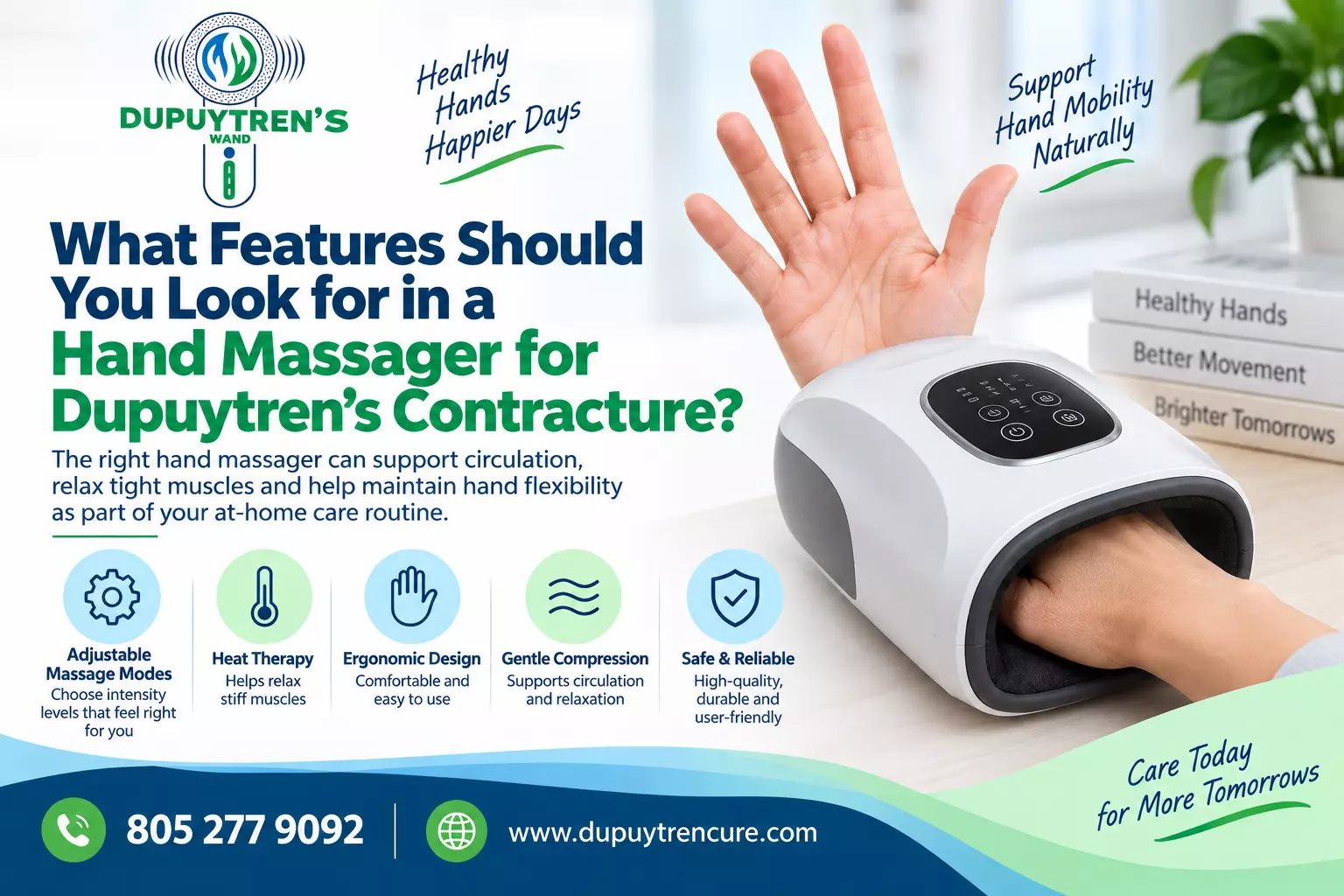
What Features Should You Look for in a Hand Massager for Dupuytren’s Contracture?
Choosing a hand-care device can be difficult when finger stiffness, tightness, or reduced hand movement affects everyday activities.
If you are looking for a hand massager for Dupuytren's contracture, it is important to focus on features that support gentle, controlled hand care rather than relying on aggressive pressure.
Dupuytren’s contracture affects the connective tissue in the palm and can gradually cause fingers to bend toward the palm. A suitable home-care device should therefore be comfortable, easy to control, and designed with hand mobility in mind.
1. Gentle and Adjustable Pressure
One of the most important features is adjustable pressure. Everyone experiences hand stiffness differently, so a device that allows you to control the amount of pressure can make a home-care routine more comfortable.
Avoid devices that require excessive force. Gentle pressure may be more appropriate for people who are beginning a hand-care routine or who have sensitive areas in the palm.
2. Comfortable Design
A hand massager should feel comfortable during use. Look for a design that is easy to hold and can be positioned around the palm and fingers without creating unnecessary strain.
A lightweight design can also make regular use more convenient. If the device is uncomfortable to hold, it may be difficult to maintain a consistent routine.
3. Support for Finger Mobility
For people with Dupuytren’s contracture, maintaining comfortable finger movement can be an important part of everyday hand care.
When comparing a hand massager for Dupuytren's contracture, consider whether its design allows you to work around the palm and fingers while incorporating gentle mobility exercises.
A device should complement movement rather than replace active hand exercises or professional guidance.
4. Easy At-Home Use
Convenience matters when choosing any home-care product. A good device should be simple to understand and use as part of a regular routine.
The Dupuytren’s Wand is designed as an at-home hand-care device and can be incorporated into a routine alongside gentle stretching and mobility exercises. Following the manufacturer's instructions is important to ensure that the device is used appropriately.
5. Suitable for a Personalized Routine
There is no single home routine that works identically for everyone. A useful hand-care device should allow you to adjust how and when you use it based on your comfort and daily schedule.
Some people may prefer using a device before gentle stretching, while others may incorporate it into their general hand-care routine. The goal should be consistency and comfort rather than applying excessive pressure.
6. Easy to Clean and Maintain
Hygiene is another practical consideration. Look for a device made from materials that are easy to clean and maintain. A simple design with fewer difficult-to-reach areas can make regular cleaning easier.
If the device includes accessories or products designed to be used with it, check the manufacturer's care and cleaning instructions.
7. Clear Instructions
A hand-care device should come with clear instructions explaining how to use it safely and appropriately. Instructions should cover recommended use, cleaning, storage, and any situations where use should be avoided.
If you are uncertain whether a device is appropriate for your particular symptoms, consider discussing it with a healthcare professional.
Can a Hand Massager Replace Medical Treatment?
A hand massager for Dupuytren's contracture should not be viewed as a replacement for medical diagnosis or treatment. Home-care tools may support a personal hand-care routine, but they cannot be assumed to stop or reverse the underlying condition.
If your finger is becoming increasingly bent, you have difficulty placing your hand flat on a table, or your hand function is declining, professional evaluation is important. A qualified healthcare professional can explain which treatment options may be appropriate based on the severity of your condition.
How to Choose the Right Hand Massager
Before buying a device, consider these questions:
- Is the pressure gentle and controllable?
- Is the device comfortable to hold?
- Can it be incorporated into a hand-mobility routine?
- Are the instructions clear?
- Is it easy to clean and maintain?
- Does the manufacturer provide appropriate usage information?
- Does the product avoid unrealistic promises or guaranteed results?
These questions can help you make a more informed choice and avoid selecting a device simply because it makes strong claims.
Frequently Asked Questions
1. What should I look for in a hand massager for Dupuytren’s contracture?
Look for a comfortable design, controllable pressure, simple operation, clear instructions, and features that can complement gentle hand mobility exercises.
2. Can a hand massager improve finger flexibility?
A hand-care device may be used as part of a routine focused on comfortable movement and flexibility. However, results can vary, and a massager should not be presented as a guaranteed treatment for Dupuytren’s contracture.
3. How often should I use a hand massager?
Follow the manufacturer's instructions for frequency and duration. Start gently and avoid increasing pressure or use time simply because you want faster results.
4. Is massage suitable for everyone with Dupuytren’s contracture?
Not necessarily. Individual symptoms and disease severity differ. If you have significant pain, swelling, worsening contracture, or concerns about using a device, seek advice from a qualified healthcare professional.
5. Can I combine a hand massager with exercises?
A hand-care device can potentially be incorporated into a broader routine that includes gentle mobility exercises. The specific exercises and techniques should be appropriate for your condition and comfort level.