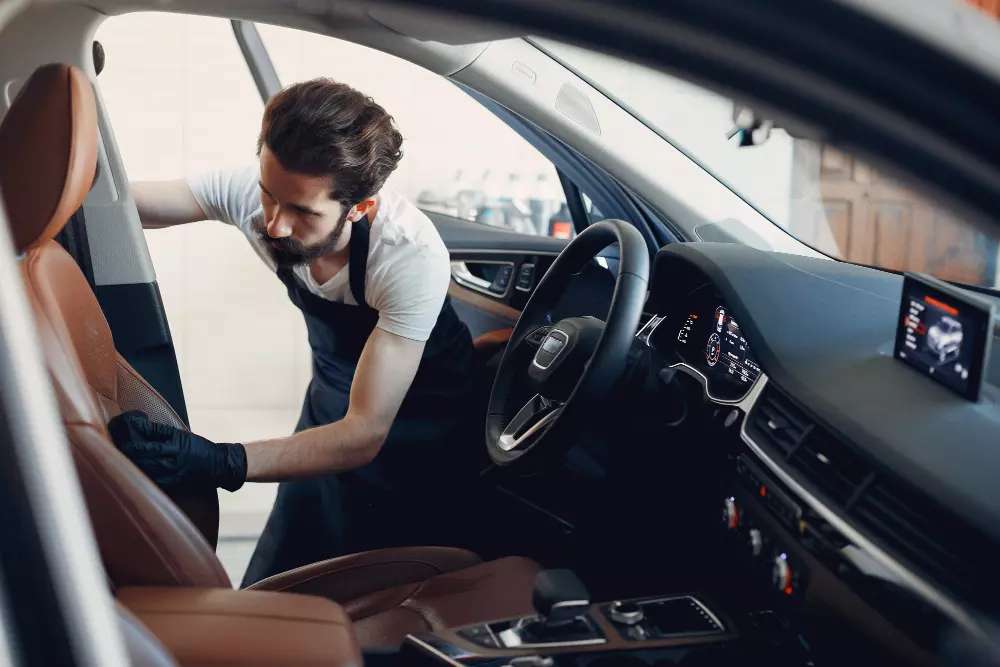
What Does Auto Detailing Actually Include?
I'll be honest — I used to think auto detailing was just a fancy car wash with a higher price tag. It wasn't until I watched a detailer spend four hours on my buddy's truck that I realized how wrong I was.
He handed back a vehicle that looked like it just rolled off the lot, and that truck had 80,000 miles on it.
If you're in Santa Rosa Beach and you've been on the fence about whether professional detailing is worth it, this guide breaks down exactly what happens during a full detail — and why it matters more than most people realize.
Auto Detailing vs. a Car Wash: What's the Real Difference?
A car wash removes surface dirt. Auto detailing removes everything — including the stuff you can't see.
We're talking about embedded road grime, industrial fallout, paint oxidation, fabric stains, and the kind of buildup that accumulates over months or years of driving.
Detailing is a restoration process. A trained detailer uses professional-grade products, specialized tools, and a systematic approach to bring your car's surfaces — inside and out — back to the best condition they can be.
It's not a quick spin through an automated tunnel. It's skilled, hands-on work.
Living near the Gulf in Santa Rosa Beach adds a layer of complexity too. Salt air, UV exposure, and humidity are genuinely harsh on vehicles here. A proper detail addresses all of that.
Exterior Detailing: More Than Just Shiny Paint
Most people picture a gleaming paint job when they think of detailing, and yes — that's part of it. But there's a process behind that shine that most car owners never see.
Hand Wash and Dry
The exterior starts with a thorough hand wash using pH-balanced soap and clean mitts — not the brushes and recycled water at an automatic wash that can actually scratch your clear coat.
Wheels, wheel wells, door jambs, and lower panels all get individual attention.
Clay Bar Treatment
Run your hand over a freshly washed car. Feel that gritty texture? That's contamination stuck to the paint — industrial fallout, road tar, tree sap residue.
A clay bar pulls all of that out of the surface, leaving paint that feels as smooth as glass. It's a step most people have never heard of, but it makes a huge difference in how polishing products perform afterward.
Paint Polishing
This is where detailing gets technical. Polishing removes a microscopic layer of clear coat to eliminate swirl marks, light scratches, and oxidation. Done right, it dramatically improves the depth and clarity of your paint.
Done wrong, it does more harm than good — which is why you want someone who knows what they're doing.
Wax, Sealant, or Ceramic Coating
After polishing, a protective layer goes on. Carnauba wax gives that warm, deep look that car enthusiasts love, but it wears off in a couple of months.
Paint sealants last longer — usually six months to a year. Ceramic coatings are the premium option: they bond to the paint chemically and can last years, making the surface resistant to water, UV rays, and light contaminants.
For vehicles parked near the beach or regularly exposed to sun and salt, ceramic coating is genuinely worth the investment.
Interior Detailing: The Part People Notice Every Single Day
You spend more time inside your car than looking at it from outside. Interior detailing is what makes getting in your vehicle every morning feel good instead of gross.
Vacuuming and Deep Cleaning
Every surface gets vacuumed, including under seats, in seat tracks, between console gaps, and inside vents. Detailers use compressed air and small brushes to blast out dust from places that a household vacuum can't reach.
Carpet and Upholstery Shampooing
Stains get treated with the right products for the material — fabric, carpet, vinyl, or leather all respond differently.
Hot water extraction lifts deep-seated dirt that vacuuming alone can't remove. Your carpets should look noticeably cleaner, not just smell like cleaning products.
Leather Care
Leather gets cleaned with a pH-balanced cleaner to remove body oils and grime that build up in the grain, then conditioned to prevent cracking and drying out.
Skipping this step is how leather seats end up stiff and cracked after a few years — especially in Florida's heat.
Dashboard, Trim, and Glass
Every plastic and vinyl surface gets cleaned and dressed. Interior glass is cleaned streak-free, which matters more for visibility than most people realize — especially the windshield.
Good detailers use separate products for interior and exterior glass because they have different contamination challenges.
Engine Bay Cleaning: The Overlooked Step
Not everyone gets the engine bay cleaned, but it's worth knowing what it does for you. Over time, oil residue, dust, and grime build up under the hood.
A clean engine bay makes it dramatically easier to spot actual problems — leaks, cracked hoses, loose connections — before they become expensive repairs.
It also helps with heat dissipation and just makes the whole car feel more put-together when you pop the hood.
Professionals protect electrical components and sensors before any cleaning product touches the engine, so there's no risk of damage when it's done correctly.
Paint Correction: For Cars That Need More Than a Polish
If your car has visible swirl marks, water spot etching, or oxidation that's dulled the finish, a standard polish might not cut it. Paint correction is a multi-stage process that uses progressively finer compounds to work out deeper defects.
It's particularly valuable for darker-colored cars (black and dark blue show every swirl) and vehicles that have been through years of automatic car washes.
The before-and-after difference on a paint-corrected car is genuinely dramatic — it looks like a completely different vehicle.
In Santa Rosa Beach, sun exposure accelerates paint oxidation, which makes paint correction more relevant here than it would be in a cooler climate.
How Often Should You Get Your Car Detailed?
The honest answer is: it depends. A full detail every four to six months is a reasonable baseline for most drivers.
But if you park outside, drive on salted or sandy roads, have kids or pets in the car, or just put a lot of miles on, you might want to do it more frequently.
Between full details, keeping up with regular washes and quick interior cleanups makes a real difference. It's much easier to maintain a clean car than to restore a neglected one.
For coastal residents specifically: salt air is corrosive. Regular washing and a solid protective coating are not optional if you want to keep your vehicle in good condition.
Read: How to Build a Mobile Car Wash Software: A Step-by
Why Detailing is Worth the Money (And Why It's Not Just About Looks)
There's a practical side to this that people don't always talk about. A well-maintained car sells for more.
If you ever plan to trade in or sell privately, a properly detailed vehicle commands a meaningfully higher price — often more than the cost of the detail itself.
Beyond resale value, regular detailing prevents damage that leads to real repair costs. Paint that's properly protected doesn't oxidize as fast.
Leather that's conditioned doesn't crack. Interior surfaces that are cleaned regularly don't develop permanent stains. These aren't small things over a car's lifetime.
And honestly? Driving a clean, well-kept car just feels different. It's one of those small things that adds up to a noticeably better daily experience.
Finding the Right Auto Detailing Service in Santa Rosa Beach, FL
Not all detailing services are equal. When you're looking for Auto Detailing In Santa Rosa Beach, FL, pay attention to a few things: do they offer a clear breakdown of what's included in each package? Can they show before-and-after photos of their work? Do they explain what products they use and why?
A good detailer takes the time to walk through your car with you, note any existing damage, and set realistic expectations. They're not rushing through 20 cars a day — they're doing careful work on yours.
Given the coastal environment here, it's worth specifically asking whether they offer salt-air protection treatments and UV-resistant coatings. These aren't standard everywhere, but they make a significant difference for vehicles in this area.
Final Thoughts
Auto detailing isn't a luxury — or at least, it doesn't have to be. Think of it as maintenance for the parts of your car that a mechanic doesn't touch.
Done regularly, it keeps your vehicle looking good, preserves its value, and prevents the kind of gradual deterioration that's hard to reverse once it's set in.
If you're in Santa Rosa Beach and you've never had a professional detail done, it's worth trying at least once. The difference is hard to unsee.