What Can You Send on a Long Code SMS Number Without Risk?
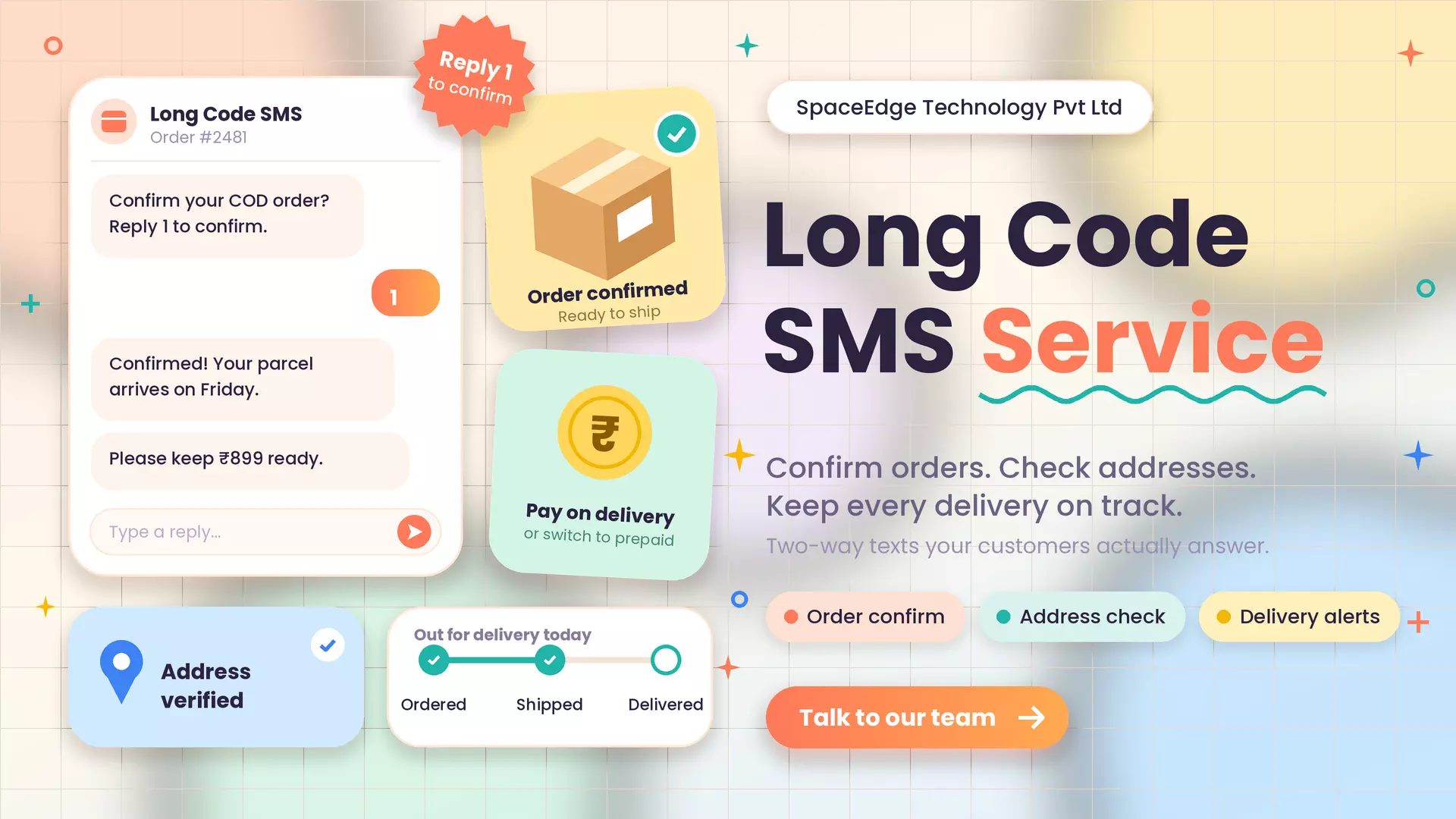
The best long code sms service in India helps businesses communicate with customers through a dedicated mobile number while managing important business messages.
Companies can use long code SMS to share order confirmations, payment notifications, delivery alerts, appointment reminders, and customer support updates, provided the number, messaging route, content, and consent meet applicable rules.
Choosing the best long code sms service in India also means understanding which messages are suitable to send, which messages may create compliance risks, and how businesses can protect customer information while using SMS communication.
TL;DR: What Can You Send on a Long Code SMS Number Without Risk?
Businesses can use a properly authorised long code SMS number for permitted customer notifications, service updates, appointment reminders, order information, and supported two-way conversations.
To reduce risk, use approved messaging routes, follow applicable telecom rules, obtain required consent, protect personal information, and avoid spam, misleading offers, and sensitive data.
Key Takeaways
- Long code SMS can support business notifications and customer communication where the number and route are authorised.
- Order confirmations, payment updates, delivery alerts, and appointment reminders are common message types.
- Promotional messages require particular attention to consent, registration, and applicable messaging rules.
- Never send passwords, complete payment card details, or confidential personal information through ordinary SMS.
- Use verified customer information, approved templates, and suitable messaging systems.
- Choose a provider that offers compliance guidance, API security, delivery reporting, and technical support.
What Is a Long Code SMS Number?
A long code SMS number is a longer phone-number format used for sending and, where supported, receiving text messages. It looks more like a regular telephone number than a traditional short code.
Businesses use long code messaging to communicate with customers, share service information, and manage certain two-way conversations.
For example, an online shopping company may use an authorised messaging number to send an order confirmation. A service company may send an appointment reminder, while a delivery business may share a package status notification.
Long code SMS can make business communication easier, but sending a message safely involves more than simply having a phone number.
Businesses must consider the following:
- Whether the number is approved for business messaging.
- Whether the messaging route supports the intended traffic.
- Whether the message category is permitted.
- Whether customer consent is required and has been obtained.
- Whether the content follows applicable telecom regulations.
- Whether customer information is handled securely.
How Does Long Code SMS Work?
The basic messaging process involves a business, an SMS platform, a messaging route, and the recipient's mobile network.
- Customer information is collected: The business receives a customer's mobile number through an appropriate channel.
- A message is prepared: The business creates a message based on a service event or customer request.
- The SMS platform processes the request: The platform checks the message and sends it through a supported route.
- The mobile network processes the message: The recipient's network handles message delivery.
- The customer receives the SMS: The message appears on the customer's mobile phone.
- Delivery information is recorded: The platform may provide a delivery report, depending on network and route support.
This process can be automated through an API, CRM, or business management system.
However, an API connection alone does not make every message legally permitted. Businesses must also follow the rules that apply to their messaging traffic.
What Can You Send on a Long Code SMS Number Without Risk?
The safest approach is to send messages that customers expect, that serve a clear purpose, and that follow the applicable rules for the number and route.
The following message types are commonly used in business communication. Their suitability depends on local regulations, registration, consent, and provider approval.
1. Order Confirmation Messages
Order confirmation messages inform customers that their purchases have been successfully recorded.
These messages are useful for e-commerce stores, D2C brands, retail businesses, and online marketplaces.
They can include:
- Order reference number.
- Order confirmation status.
- Purchase date.
- Basic product information.
- Customer support details.
- Relevant order tracking information.
Example:
"Thank you for shopping with us! Your order #45821 has been confirmed successfully. We will share shipping updates soon."
This message provides useful information about a transaction that the customer has initiated.
2. Payment Confirmation Messages
Payment confirmation SMS messages inform customers about the status of a payment.
Businesses can use them after receiving confirmation from their payment gateway or financial system.
A payment notification may contain:
- Transaction reference.
- Payment status.
- Amount paid.
- Order number.
- Payment date.
Example:
"Your payment of Rs. 1,499 for order #45821 has been received successfully. Thank you for your purchase."
Businesses should never include complete card numbers, CVV codes, banking passwords, or other confidential payment credentials.
3. Shipping and Delivery Updates
Delivery notifications help customers understand the progress of their orders.
An e-commerce business may send messages when a package is dispatched, reaches a delivery centre, or goes out for delivery.
Example:
"Your order #45821 has been shipped successfully. Track your package using the official tracking link provided by our delivery partner."
Useful shipping messages should contain accurate information from the logistics system.
Businesses should avoid sending false delivery estimates or unverified tracking links.
4. Appointment Reminders
Hospitals, salons, consultants, educational institutions, and service companies can use SMS to remind customers about scheduled appointments.
A reminder may include:
- Appointment date.
- Appointment time.
- Service location.
- Booking reference.
- Rescheduling instructions.
Example:
"Reminder: Your appointment is scheduled for 10 November at 11:30 AM. Contact our support team if you need to reschedule."
Appointment reminders should be sent according to customer preferences and applicable consent requirements.
5. Booking Confirmation Messages
Businesses that offer hotel bookings, event registrations, travel services, and online consultations can use SMS to confirm reservations.
A booking confirmation can include:
- Booking ID.
- Reservation date.
- Service details.
- Confirmation status.
- Customer support contact.
This helps customers keep important booking information available on their phones.
6. Service Status Notifications
Service companies can send updates about ongoing requests.
For example, an internet service provider may inform a customer that a repair request has been registered.
Other suitable examples include:
- Service request received.
- Technician assigned.
- Repair scheduled.
- Service completed.
- Customer feedback requested.
Example:
"Your service request #7821 has been registered. Our support team will contact you with the next update."
These messages help customers understand the status of their requests.
7. Delivery Attempt Notifications
A delivery company can notify customers when a delivery attempt has been unsuccessful.
The message may explain that the recipient was unavailable and provide an official way to arrange another delivery attempt.
Example:
"We could not complete the delivery of order #45821 today. Please contact our delivery support team through the official website."
This can help reduce confusion and unnecessary delivery attempts.
8. Return and Refund Notifications
Online businesses can use SMS to inform customers about return and refund progress.
Examples include:
- Return request received.
- Pickup scheduled.
- Returned product received.
- Refund approved.
- Refund initiated.
Example:
"Your return request for order #45821 has been received. We will share another update after the product is collected."
Businesses should share only verified refund information.
9. Customer Support Responses
Where the number and messaging route support incoming replies, businesses can use long code SMS for customer support.
Customers may ask about:
- Order status.
- Delivery problems.
- Appointment changes.
- Service requests.
- Product availability.
- General business information.
The company should have a clear process for receiving, reviewing, and responding to messages.
10. Account Activity Notifications
Businesses can send certain account-related notifications when customers have requested or authorised the relevant service.
Examples include:
- Account creation confirmation.
- Password reset request notification.
- Login activity alerts.
- Profile update confirmation.
- Security-related notifications.
For security-sensitive actions, businesses should use secure authentication methods and avoid exposing confidential information in the SMS itself.
What Messages Should You Avoid Sending on a Long Code SMS Number?
Not every message is suitable for SMS communication. Some messages can create privacy problems, customer complaints, financial risks, or regulatory issues.
Businesses should understand which types of content can create problems before starting a messaging campaign.
1. Unwanted Promotional Messages
Sending promotional messages to people who have not agreed to receive them can create spam complaints.
For example, sending discount offers to a purchased mobile number list without checking consent and applicable preferences can create compliance risks.
Avoid sending:
- Unrequested discount offers.
- Repeated sales messages.
- Unwanted product advertisements.
- Promotional messages to opted-out customers.
- Messages that ignore customer communication preferences.
For Indian bulk messaging, businesses must follow TRAI's commercial communication framework, including the relevant registration, consent, header, and template requirements.
Government of India+1
2. Fake Offers and Misleading Discounts
Businesses should never send messages that make false claims about products, prices, or services.
For example:
"Congratulations! You have won Rs. 50,000. Click here immediately to claim your prize."
If the offer is not genuine, the message can mislead customers and damage the company's reputation.
Every offer should contain correct information, clear conditions, and a genuine business purpose.
3. Suspicious Payment Links
SMS messages containing payment links require special care.
Customers may receive fraudulent messages that pretend to come from banks, shopping websites, or payment companies.
Businesses should:
- Use verified payment links.
- Avoid unfamiliar URL-shortening services.
- Clearly identify the business.
- Never ask customers to share their banking passwords.
- Never request CVV or complete card information.
- Provide an official website or support channel.
Customers should be able to recognise whether a payment request is genuine.
4. Passwords and Confidential Login Information
Ordinary SMS is not the right place to share confidential login information.
Businesses should avoid sending:
- Account passwords.
- Banking PINs.
- CVV numbers.
- Complete payment card details.
- Recovery codes.
- Confidential authentication information.
Where an OTP is required, businesses should use an approved authentication process and send the code only for the relevant purpose. They should also tell customers not to share it with anyone.
5. False Urgency Messages
Some businesses use urgent language to encourage customers to take immediate action.
However, false urgency can make customers suspicious.
Avoid statements such as:
"Your bank account will be permanently blocked in five minutes. Click this link now."
Only communicate genuine deadlines, account issues, and service interruptions.
6. Messages Containing Harmful Links
Unknown links can expose customers to phishing websites, malware, and fraudulent payment pages.
Businesses should not send suspicious links through their messaging platforms.
Before including a URL, check that:
- It belongs to the correct business.
- It uses a secure connection.
- It opens the expected page.
- It does not redirect customers to an unrelated website.
- It is approved for the relevant messaging route.
For Indian commercial SMS, URL and template restrictions imposed by telecom providers must also be considered.
7. Messages Containing Sensitive Personal Information
Customer privacy should remain a priority.
Avoid sending confidential details such as:
- Government identification numbers.
- Complete bank account details.
- Medical records.
- Private customer documents.
- Personal financial information.
If customers need to access sensitive information, direct them to a secure website or authenticated application.
8. Repeated Messages Without a Clear Purpose
Sending the same message several times can annoy customers.
For example, a customer does not need five identical order confirmation messages for one purchase.
Businesses should configure their systems to prevent duplicate notifications and send only useful updates.
9. Messages With Unverified Business Claims
Businesses should not make claims about guaranteed profits, medical results, financial returns, or product performance without proper support.
Messages should be honest and easy to understand.
10. Messages That Hide the Sender's Identity
Customers should be able to understand which business is contacting them.
Avoid messages that pretend to come from a bank, government department, delivery company, or another organisation without authorisation.
Clear sender identification helps reduce confusion and fraud.
Are Promotional Messages Safe to Send Through a Long Code SMS Number?
Promotional SMS can be useful for businesses that want to inform customers about new products, discounts, seasonal offers, and special events.
However, promotional messaging needs more care than ordinary service notifications.
A business should not assume that having a customer's mobile number gives permission to send marketing messages.
What Promotional Messages Can Businesses Send?
Depending on the applicable rules, customer consent, and approved messaging route, businesses may send promotional content such as:
- New product announcements.
- Seasonal sale notifications.
- Special discount offers.
- Festival promotions.
- Product launch updates.
- Membership offers.
- Loyalty programme information.
- Event invitations.
For example:
"Hello! Our new summer collection is now available. Explore the latest styles on our official website."
This is a promotional message. It should only be sent through a suitable approved route to customers who meet the relevant consent and preference requirements.
How Can Businesses Reduce Promotional SMS Risks?
Businesses can follow these practices:
- Collect customer consent through an appropriate process.
- Clearly explain what type of promotional communication customers will receive.
- Maintain records of consent.
- Respect opt-out requests.
- Follow the relevant registered header and template requirements.
- Avoid sending messages to unrelated or purchased contact lists.
- Keep promotional content honest and relevant.
- Review campaign performance and customer complaints.
In India, TRAI distinguishes promotional, transactional, and service communications. Businesses should not classify a promotional offer as a service message simply to bypass promotional messaging requirements.
Government of India+1
Transactional SMS vs Promotional SMS: What Is Safe to Send?
Understanding the difference between transactional and promotional messages is important for businesses.
Both types of communication serve different purposes.
Feature
Transactional or Service SMS
Promotional SMS
Main purpose
Provide transaction or service information
Promote products or services
Common example
Order confirmation
Discount announcement
Customer expectation
Usually linked to an existing transaction or service
Depends on marketing consent and preferences
Content
Relevant account or transaction updates
Offers, launches, and advertising
Main concern
Accuracy and correct message classification
Consent, customer preferences, and compliance
Automation
Based on business events
Based on approved marketing campaigns
Examples of Transactional and Service Messages
- Order confirmation.
- Payment status.
- Delivery notifications.
- Warranty information.
- Product recall information.
- Security alerts related to an existing service.
The exact classification depends on the purpose and applicable regulatory definitions.
TRAI explains that service messages can facilitate, complete, or confirm a transaction that a recipient has previously agreed to enter into, or provide relevant warranty, recall, safety, or security information.
Government of India+1
Examples of Promotional Messages
- Buy one, get one free.
- Festival discount announcements.
- New product launch offers.
- Special shopping coupons.
- Seasonal sale advertisements.
Businesses should use the correct category and registered template for each communication.
What Are the TRAI Rules for Sending Business SMS in India?
Businesses operating in India must pay attention to the Telecom Commercial Communications Customer Preference Regulations, 2018, commonly known as TCCCPR.
These rules help control unwanted commercial communication and establish requirements for businesses sending bulk SMS.
TRAI provides guidance for businesses, also known as Principal Entities, that use telecom resources to send bulk messages.
1. Principal Entity Registration
Businesses sending regulated bulk communications must complete the applicable Principal Entity registration process with their telecom service provider.
This helps identify the organisation responsible for the messages.
2. Header Registration
Businesses must use the appropriate registered sender header for commercial messaging.
A header identifies the sender under the applicable telecom framework.
For commercial SMS in India, TRAI describes registered alphanumeric headers of up to 11 characters.
Government of India+1
3. Content Template Registration
Businesses must register the relevant message templates with their access provider.
A registered template can contain fixed text and permitted variable information, such as:
- Customer name.
- Order reference.
- Transaction amount.
- Date.
- Time.
- Booking number.
The actual message must follow the approved template requirements.
4. Consent Registration
Where consent is required, businesses must acquire it through the applicable registered consent process.
Consent should clearly identify the business and the purpose of communication.
5. Correct Message Classification
Businesses should correctly identify whether a message is transactional, service-related, or promotional.
Incorrect classification can cause delivery problems and compliance issues.
6. Template and URL Compliance
Businesses should check that the content, variable fields, URLs, applications, and callback numbers follow the applicable provider and TRAI requirements.
TRAI has also issued directions addressing misuse of registered headers and templates.
Government of India+1
Important for businesses: The term long code SMS is used in different markets for different number types. It does not automatically mean that an ordinary long mobile number can be used for unrestricted bulk commercial SMS in India.
Confirm the exact number type, sender identity, permitted traffic, and route with your telecom provider before launching a campaign.
For the latest official guidance, visit the TRAI Advice to Senders and TRAI TCCCPR information pages.
How Can You Send SMS Safely Through a Long Code SMS Number?
Businesses can reduce messaging risks by creating a clear process before sending their first SMS.
The following steps can help.
Step 1: Choose an Authorised SMS Provider
Select a provider that understands the applicable telecom requirements and supports your intended messaging use.
Check the provider's:
- Number availability.
- Messaging routes.
- API documentation.
- Registration assistance.
- Template management.
- Delivery reports.
- Security practices.
- Customer support.
The provider should clearly explain which message categories and number types are supported.
Step 2: Verify the Number and Messaging Route
Do not assume that every number can send every type of SMS.
Ask your provider whether the number supports:
- Business notifications.
- Transactional communication.
- Promotional communication.
- Incoming replies.
- Automated messages.
- The intended geographical market.
Get clarity about restrictions before integrating the service.
Step 3: Collect Customer Information Correctly
Businesses should collect mobile numbers through genuine customer interactions.
Suitable collection points may include:
- Online checkout pages.
- Appointment booking forms.
- Customer registration pages.
- Service request forms.
- Official business applications.
Collect only the information needed for the intended purpose.
Step 4: Obtain the Required Consent
When consent is required, explain the purpose of communication clearly.
For example, a business may ask customers whether they want to receive promotional updates about new products and offers.
Keep suitable records of the consent process.
Step 5: Create Approved SMS Templates
Prepare separate templates for different message categories.
Examples include:
- Order confirmation.
- Payment confirmation.
- Appointment reminder.
- Shipping update.
- Promotional offer.
- Refund notification.
Avoid changing the message purpose through unapproved variable text.
Step 6: Protect Customer Information
Use secure APIs and restrict access to the messaging platform.
Businesses should also:
- Use strong account passwords.
- Enable available access controls.
- Protect API credentials.
- Limit employee permissions.
- Monitor account activity.
- Avoid storing unnecessary customer information.
Step 7: Test Messages Before Launch
Send test messages to approved test numbers.
Check the message content, links, sender identity, template, and delivery status.
Testing helps businesses identify mistakes before communicating with large customer groups.
Step 8: Monitor Delivery and Complaints
Review message reports regularly.
Track failed messages, duplicate notifications, delivery issues, and customer complaints.
If a problem occurs, pause the affected campaign and investigate it before sending more messages.
How to Write a Safe Long Code SMS Message
A good business SMS should be simple, clear, and useful. Customers should understand who sent the message and why they received it.
Follow a Simple Message Structure
A professional SMS can include:
- Business identification.
- Reason for the message.
- Important information.
- A genuine next step, if required.
- Official support information.
Safe SMS Message Examples
Here are some examples businesses can adapt after checking their approved templates and messaging permissions.
Order confirmation
"Your order #45821 has been confirmed. Thank you for shopping with ABC Store. Visit our official website for order details."
Appointment reminder
"Your appointment is scheduled for 10 November at 11:30 AM. Please contact our support team if you need assistance."
Payment notification
"Your payment of Rs. 999 has been received successfully for order #45821. Thank you for choosing ABC Store."
Delivery update
"Your package is out for delivery today. Please keep your registered contact number available for delivery coordination."
Service notification
"Your service request #7821 has been registered successfully. Our support team will share further updates."
Refund notification
"Your refund for order #45821 has been initiated. Please check the official payment method for further updates."
Promotional message
"Explore our latest collection and discover exciting offers. Visit our official website to see the available products."
The promotional example requires the appropriate consent and an authorised promotional messaging route.
What Are the Common Risks of Using a Long Code SMS Number?
Businesses should understand the possible problems associated with SMS communication.
1. Spam Complaints
Sending unwanted messages can lead to customer complaints.
A large number of complaints can damage brand trust and create regulatory problems.
2. Message Blocking
Telecom providers may block messages that fail applicable registration, template, consent, or filtering checks.
3. Customer Data Leakage
If employees or unauthorised users access the messaging platform, customer information may be exposed.
4. Phishing and Fraud
Fraudsters may imitate business messages and send fake payment requests or suspicious links.
5. Incorrect Message Classification
A promotional offer sent under an incorrect message category can create compliance problems.
6. Duplicate Messaging
Poorly configured automation can send the same message repeatedly.
7. Damaged Brand Reputation
Customers may lose trust when they receive misleading, irrelevant, or excessive messages.
Businesses should review their messaging processes regularly to prevent these problems.
Long Code SMS vs WhatsApp vs Email: Which Is Safer for Business Communication?
Businesses often use multiple communication channels to reach customers.
Each channel has different strengths and security considerations.
Feature
Long Code SMS
Communication format
Text messages
Text, images, documents, and more
Detailed written messages
Customer reach
Mobile network coverage
WhatsApp users
Email users
Order notifications
Supported where authorised
Supported through applicable business solutions
Supported
Two-way communication
Depends on number and route
Supported
Supported through replies
Rich media
Limited
Supported
Supported
Security
Depends on telecom route and device
Depends on platform security and configuration
Depends on provider and configuration
Common business use
Alerts and notifications
Customer conversations
Receipts and detailed information
When Should Businesses Use Long Code SMS?
Long code SMS is useful for short, important notifications where the relevant number and route support the intended communication.
Examples include order status, appointment reminders, and service updates.
When Should Businesses Use WhatsApp?
WhatsApp can be suitable for customer conversations, product information, support, and rich-media communication through authorised business solutions.
When Should Businesses Use Email?
Email works well for detailed invoices, account statements, product information, policy documents, and longer customer communications.
Is Using Multiple Channels a Better Option?
Businesses can combine SMS, WhatsApp, and email to improve customer communication.
For example, an online store may send an order confirmation through SMS and email, then provide detailed tracking information through its website.
The important point is to avoid sending unnecessary duplicate messages through every channel.
How to Choose the Best Long Code SMS Service in India
Choosing a suitable SMS provider is important for safe and reliable communication.
Businesses should not select a provider only because it offers a low per-message price.
They should consider the complete service, including number availability, technical support, security, and compliance.
1. Check Regulatory Support
The provider should understand the applicable Indian telecom messaging framework.
Ask whether it supports the required registration, headers, templates, and consent processes.
2. Check API Integration
A suitable platform should offer API integration for websites, mobile applications, CRM software, and business systems.
This helps businesses automate notifications.
3. Check Message Delivery Reports
Delivery reports help businesses monitor submitted, delivered, and failed messages.
This information is useful when identifying communication problems.
4. Check Two-Way Messaging Capabilities
If your business needs customers to reply, verify that the number and messaging route support incoming messages.
Also check whether replies can be managed through a dashboard or API.
5. Review Security Features
Look for suitable account controls, secure API authentication, access management, and data protection practices.
6. Compare Pricing
Ask for a clear breakdown of all costs.
Consider:
- Message charges.
- Number rental fees.
- Setup fees.
- Integration costs.
- Monthly charges.
- Additional technical support fees.
7. Evaluate Customer Support
A good provider should help businesses resolve technical issues and understand the platform's messaging requirements.
8. Check Scalability
The service should be suitable for your current communication volume and expected business growth.
9. Ask for a Platform Demonstration
A platform demonstration can help you understand the dashboard, API features, reporting tools, and available messaging options.
10. Verify the Exact Number Type
This is especially important in India.
Ask the provider whether the advertised long code number is permitted for your intended use. Do not confuse a dedicated customer support number with an authorised bulk SMS sender identity.
Why Should Businesses Consider SpaceEdge Technology for Business SMS Solutions?
SpaceEdge Technology PVT LTD offers business communication solutions for companies that want to improve customer interaction.
Businesses evaluating an SMS solution can consider their requirements for messaging automation, platform integration, delivery reporting, and customer communication.
When selecting a solution, businesses should discuss:
- Suitable messaging services for their business.
- API integration with existing applications.
- Automated customer notifications.
- Message delivery monitoring.
- Platform configuration.
- Technical assistance.
- Applicable telecom registration requirements.
Before choosing any long code SMS solution, businesses should confirm the supported number format, permitted message categories, two-way communication features, and regulatory requirements.
The right messaging setup can help businesses communicate with customers more effectively while reducing unnecessary messaging risks.
Long Code SMS Safety Checklist for Businesses
Before sending any message, businesses can use this simple checklist.
- Is the SMS number authorised for the intended purpose?
- Is the messaging route suitable for the message category?
- Have the applicable registrations been completed?
- Is the message template approved where required?
- Has the required customer consent been obtained?
- Is the customer expecting this communication?
- Does the message contain accurate information?
- Are all links genuine and verified?
- Have confidential details been removed?
- Is the sender clearly identified?
- Is there a process for handling customer replies?
- Are opt-out requests and customer preferences respected?
- Are delivery reports monitored?
- Are duplicate messages prevented?
A business that follows these checks can create a more responsible SMS communication process.
Safe messaging begins with customer trust, clear communication, and responsible data handling.
Future of Safe Long Code SMS Communication
Business messaging is changing as companies adopt automation, artificial intelligence, and connected communication platforms.
Long code SMS can continue to support customer notifications where suitable number formats and messaging routes are available.
AI-Based Message Monitoring
AI-powered tools can help businesses identify unusual messaging patterns, detect duplicate notifications, and organise customer queries.
Businesses can use these tools to support better message management.
Automated Compliance Checks
Messaging platforms can help businesses manage approved templates, customer records, and message categories.
Such features can reduce manual errors, although businesses remain responsible for following applicable regulations.
Improved Customer Verification
Businesses are increasingly using secure authentication methods to protect customer accounts.
SMS may be one part of an authentication process, but sensitive transactions should use appropriate security controls.
Better Integration With Business Applications
SMS platforms can connect with CRM systems, e-commerce stores, payment gateways, and customer support software.
This makes it easier to send relevant notifications based on actual business events.
More Personalised Customer Communication
Businesses can use verified customer information to send relevant service updates.
However, personalisation should never involve sharing unnecessary sensitive information.
Conclusion
Long code SMS can be a useful communication channel for businesses when the number, messaging route, and message content are suitable for the intended purpose.
Companies can use it to send order confirmations, payment alerts, appointment reminders, delivery updates, refund notifications, and customer support messages. Promotional communication may also be possible when the required consent and regulatory conditions are met.
To reduce risks, businesses should avoid unwanted advertising, misleading offers, suspicious links, confidential information, and repeated messages.
They should also follow applicable TRAI requirements, including Principal Entity registration, registered headers, content templates, and consent processes where required.
Choosing the best long code sms service in India involves checking more than message delivery. Businesses should evaluate security, API integration, number availability, reporting, customer support, and regulatory compliance.
With a responsible messaging strategy and a suitable service provider such as SpaceEdge Technology PVT LTD, businesses can improve customer communication while protecting customer trust.
FAQs: What Can You Send on a Long Code SMS Number Without Risk?
1. What messages can be sent through a long code SMS number?
Businesses can send permitted order confirmations, payment notifications, delivery updates, appointment reminders, service alerts, and customer support messages, subject to the applicable number and messaging rules.
2. Can I send promotional messages through a long code SMS number?
Yes, where the number and route support promotional messaging and the business fulfils applicable registration, consent, and customer preference requirements.
3. Is long code SMS safe for sending payment notifications?
Yes, businesses can send payment status notifications. However, they should never include passwords, CVV numbers, PINs, or complete card details.
4. Can businesses send OTP messages through long code SMS?
OTP messages can be sent through an appropriately authorised messaging service and route. Businesses should use secure authentication processes and protect the codes from unauthorised access.
5. Can I send SMS messages to customers without their permission?
Businesses must follow applicable consent and customer preference requirements. Unsolicited commercial messages can be treated as spam under the relevant telecom regulations.
6. What types of messages should businesses avoid sending?
Businesses should avoid misleading offers, suspicious payment links, unwanted advertisements, confidential information, fraudulent claims, and messages that violate customer preferences or applicable regulations.
7. What are the TRAI rules for business SMS in India?
TRAI's TCCCPR framework requires applicable Principal Entity registration, registered headers, content templates, and consent processes where required for commercial messaging.
8. Can I send website links through long code SMS?
Yes, where the messaging route and registered template permit the link. Businesses should use genuine, secure, and approved URLs rather than suspicious or misleading links.
9. How can I reduce the risk of SMS messages being blocked?
Use an authorised provider, complete applicable registrations, use approved templates, classify messages correctly, maintain required consent records, and monitor delivery reports.
10. How do I choose the best long code SMS service in India?
Compare providers based on authorised number availability, messaging routes, API integration, delivery reports, security, customer support, transparent pricing, and compliance assistance.