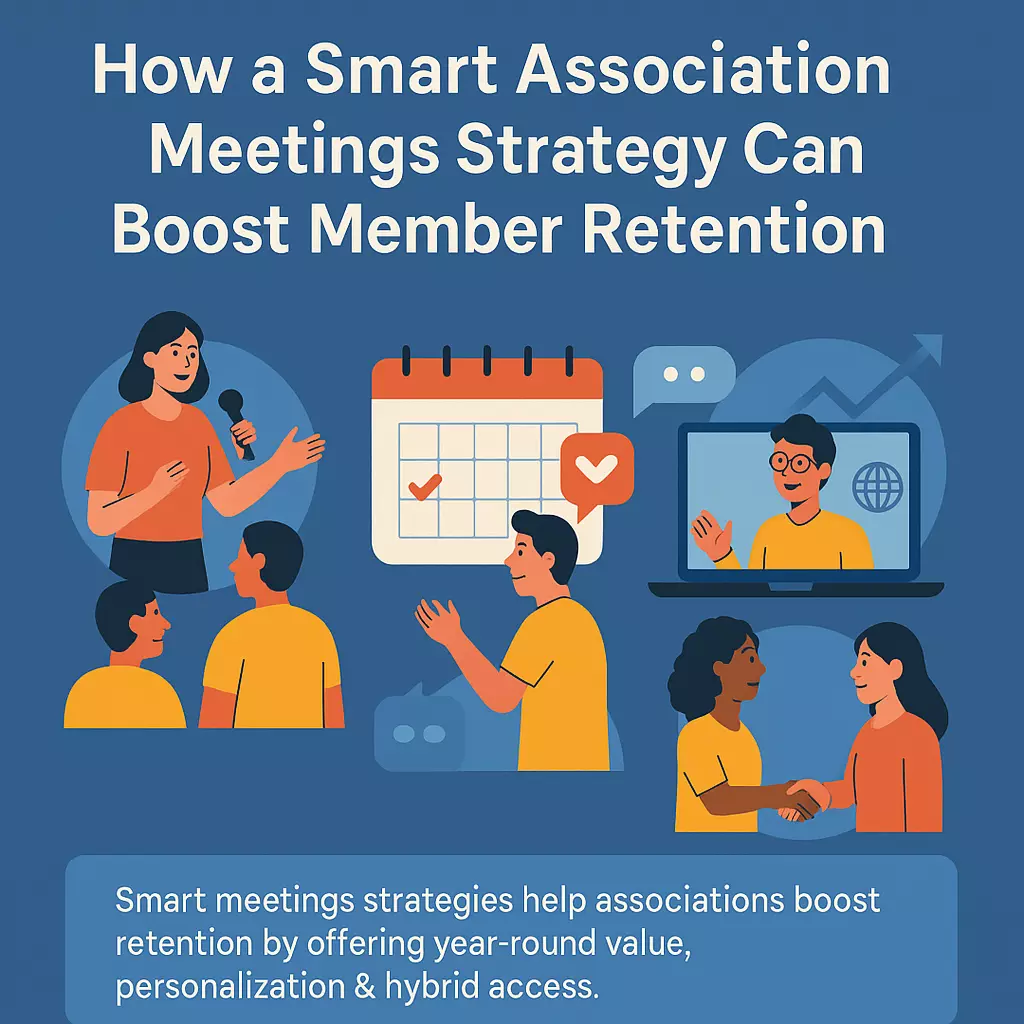
What Associations Get Wrong About Meetings and Event Technology—and How to Fix It
In an industry where innovation and changing attendee expectations are the norm, meeting and event technology has evolved from a nice-to-have to a strategic requirement. However, many associations are still lagging behind, either overusing technology or using it inappropriately. The result? Lost opportunities to engage, limited event reach, and reduced member value propositions..
In order to compete in the current high-paced environment, associations should cease to think of technology as a logistics tool and begin to consider it as a strategic pillar. This article discusses the most prevalent technology pitfalls that associations commit and how to correct them to achieve better outcomes, increased engagement, and more sustainable event management.
The Importance of Meetings and Event Technology
Meetings and Event Technology is essential for creating smarter, more engaging, and accessible events. It enhances attendee experience, boosts efficiency, and helps organisations stay agile in a fast-changing event landscape. Now, let's discuss some common misconceptions about meetings and event technology, and how you can address them.
Mistake #1: Treating Tech as a One-Off Fix, Not a Long-Term Investment
Too many times, associations are quick to make platform decisions out of immediate needs, such as a quick solution to hybrid delivery or virtual registration. The problem? Such decisions are seldom scalable, integrated or long-term goal-oriented.
Fix it: Construct a Meetings and Event Technology roadmap that is consistent with your strategic vision. Think about how platforms can not only help with your next event, but also help you engage year-round, distribute content, analyse and retain members. Collaborate with vendors that can provide scalable solutions and integration services within your CRM, AMS and digital ecosystems.
Mistake #2: Overloading Events with Features That Confuse Rather Than Connect
Sizzling details do not mean successful involvement. Another common issue is that associations tend to stuff their virtual or hybrid events with various technology components: polls, networking lounges, chatbots, gamification, etc., but they lack an integrated experience design. The result? Bewildered audience members who lose interest.
Fix it: Adopt the principle of simplicity and purpose. Question: What does your audience really need to be informed, connected and involved? Build a user experience that makes sense based on those needs and back it up with exactly the right combination of Meetings and Event Technology. A digital experience that is well-conceived and implemented usually beats one that is crowded with bells and whistles.
Mistake #3: Ignoring Accessibility and Inclusivity in Tech Choices
Associations are in business to serve a variety of members, yet they frequently ignore how technology can cause (or eliminate) accessibility challenges. Accessibility is an important issue, whether it be time zones and language support or compatibility with assistive technology on the platform.
Fix it: Have an inclusive approach to your technical choices. Select platforms that have closed captioning, multi-language interfaces, screen reader compatibility and flexible time-based access. Not only are such decisions in line with contemporary ideals of equity, but they also increase the global reach of your event.
The change is also sustainable as it decreases the use of travel, printed materials, and onsite infrastructure.
Mistake #4: Underutilising Data for Post-Event Value
Most associations gather useful data at their events, but they do not do much with it after the event. That data is a digital waste unless it is followed up with analysis and actionable insights.
Fix it: Get data on your side. Use analytics dashboards and attendee behaviour measures to optimise content, future follow-up messages and programming. Make it a habit to tell success stories both internally and externally- through impact reports, sponsor ROI summaries, and event infographics.
According to the Global MICE Insights and Trends, data-driven associations always experience higher member retention year on year and better sponsor satisfaction.
Mistake #5: Missing the Connection Between Tech and Sustainability
The members, stakeholders, and sponsors are all thinking about sustainability. However, a number of associations are not aware that Meetings and Event Technology can go a long way in promoting their sustainable event management initiatives.
Fix it: Switch printed materials with mobile event apps. Have virtual booths rather than actual booths by sponsors and exhibitors. Introduce intelligent check-in systems, which minimise queues and wastage. Even minor alterations, such as digitised surveys or e-badges, make a difference in terms of a reduced environmental impact.
Tech is not only green-friendly to events, but it also makes your association appear progressive and values-based.
Mistake #6: Viewing Technology as a Cost, Not a Strategic Asset
Budgets are a reality, but most associations view technology as a sunk cost rather than a growth driver. Such an attitude inhibits creativity and generates a technology-resistant culture.
Fix it: Rewrite your own story. Demonstrate to leadership teams that the investment in smarter, scalable technology will result in:
- Higher participation of members
- Increased attendance at events
- Improved sponsorship ROI
- Better sustainability and accessibility indicators
Develop case studies and pilot programs to create internal buy-in. Showing the real-world value will make it simpler to justify--and increase--future tech investment.
Conclusion
Technology has the potential to change the way associations create value, but only when it is applied with purpose, intent and strategy. When carefully selected and applied intelligently, Meetings and Event Technology is a connector, rather than a divider, to greater connection, wider reach, and relevance in the long term.
With a little bit of thought and the proper use of technology at the heart of your sustainable event management and member engagement strategies, your association will be able to stay on top of things and even become a leader.