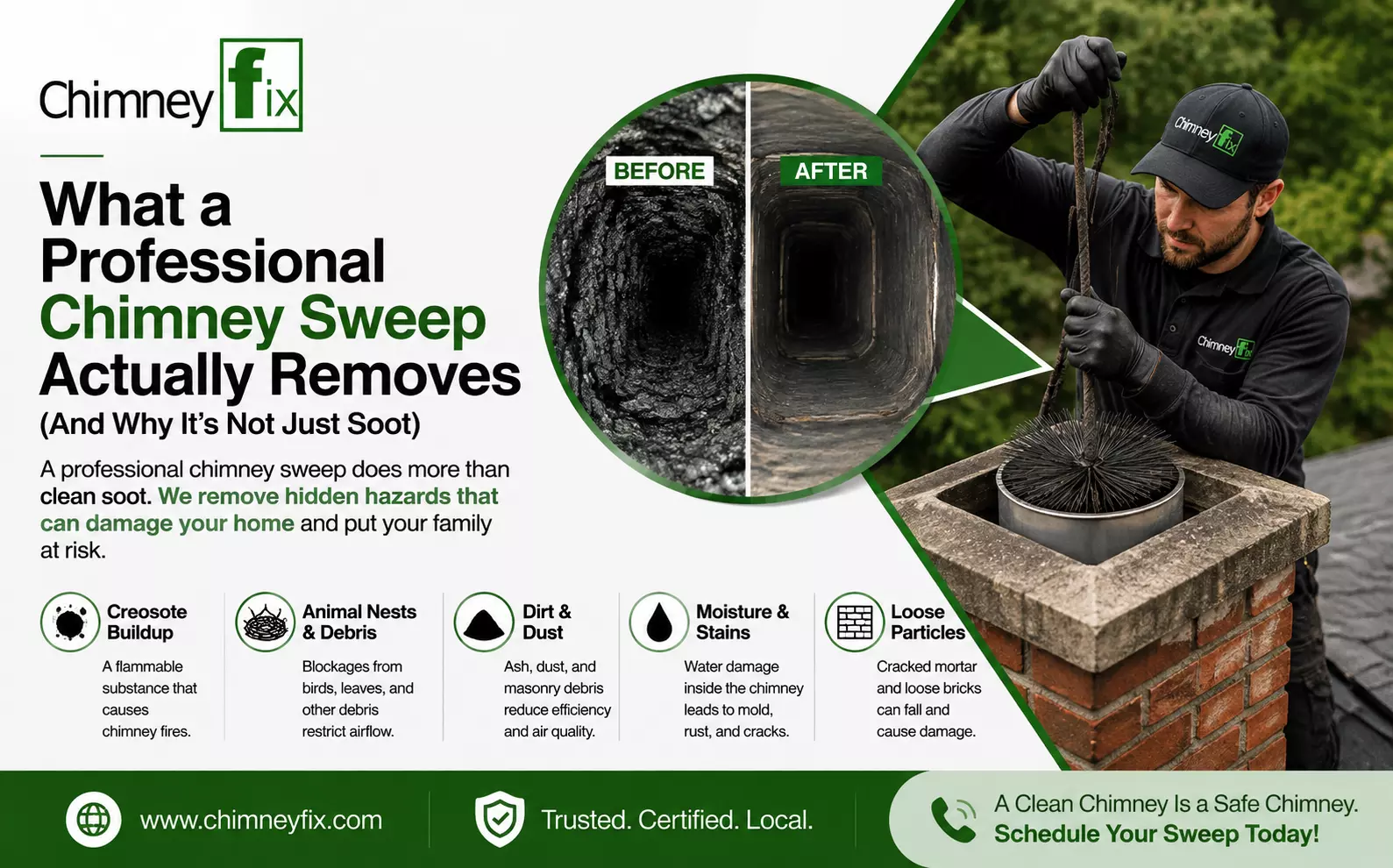
What a Professional Chimney Sweep Actually Removes (And Why It's Not Just Soot)
Most people picture a chimney sweep as someone brushing black soot out of a flue, and while that's part of it, it undersells what actually accumulates inside a chimney over a year of use — or a year of sitting unused, which is just as common in Central Florida.
Creosote, animal debris, leaves, and even structural fragments all end up in the same space, and each one creates a different kind of risk if it isn't cleared out properly.
Understanding what's actually being removed helps explain why a clean sweep is about more than appearances — it's a safety and performance service, not a cosmetic one.
Creosote: The Main Reason Sweeping Exists
Creosote is the tar-like byproduct of burning wood, and it's the primary reason chimney sweeping is necessary at all. It builds up in three recognized stages:
- Stage 1 — Flaky, soot-like residue that's relatively easy to remove
- Stage 2 — Denser, more textured buildup that requires firmer brushing
- Stage 3 — Glazed, tar-like, and highly flammable, often requiring specialized chemical treatment before mechanical removal is even possible
Homes that burn unseasoned wood, or that use the fireplace only occasionally with incomplete burns, tend to build creosote faster than expected.
Stage 3 creosote in particular is the leading contributor to chimney fires, and it's not something a homeowner can safely address without professional tools — which is why an experienced Lakeland sweep technician uses chemical treatment before mechanical removal on heavier buildup.
What Else Ends Up Inside a Chimney
Creosote gets most of the attention, but it's rarely the only thing found during a sweep. Common additional findings include:
Animal Nesting Material
Birds and squirrels frequently use uncapped or poorly capped flues as nesting sites, especially during the long stretches when a fireplace sits unused. Nesting material is both a fire hazard and a blockage that prevents proper draft.
Leaves and Storm Debris
Florida's storm season pushes leaves, small branches, and general debris into open or damaged flues. Left in place, this debris can trap moisture against the flue liner, accelerating deterioration.
Loose Mortar and Brick Fragments
In older or deteriorating chimneys, small pieces of mortar or brick can break loose and collect at the base of the flue. Finding this kind of debris during a sweep is often the first sign of a masonry issue that needs separate attention.
Read: A Homeowner's Guide to Identifying and Fixing Chimney Leaks
How the Process Actually Works
A proper sweep isn't a quick brush-through. It typically follows a specific sequence:
- Initial visual inspection to assess creosote stage and check for obvious damage or blockages
- Covering the firebox opening to contain soot and debris inside the work area
- Mechanical brushing using flue-specific brushes, sized and shaped for the particular chimney
- Vacuum extraction with HEPA-filtered equipment to control dust rather than letting it settle throughout the home
- Final inspection to confirm the flue is clear and check for anything that was hidden under the buildup
Skipping steps — particularly the containment and final inspection — is a common shortcut with lower-cost or less experienced services, and it's part of why sweep quality varies more than people expect.
Why "Once a Year" Isn't a One-Size Rule
The general guideline is an annual sweep, but actual frequency depends on usage patterns. A fireplace used several times a week through a full winter builds creosote faster than one used a handful of times a year, which describes a lot of Lakeland households.
On the other end, chimneys with known draft problems or that burn wood inconsistently can build glazed creosote even with light use, since incomplete combustion produces more residue per burn.
A technician who actually assesses creosote stage during the visit — rather than sweeping on a fixed calendar assumption — gives a more accurate read on what a specific chimney needs.
A Case Worth Mentioning
One pattern that comes up more than people expect: a homeowner requests a routine chimney clean sweep Lakeland service after noticing a faint burning smell, assuming it's just leftover soot smell from the last use.
During the sweep, the actual cause turns out to be nesting debris partially blocking the flue, warming from residual heat rather than a true fire risk in that moment
but a clear indicator that the chimney had gone without a cap check for some time. It's a reminder that a sweep often catches problems that have nothing to do with soot at all.
Getting a Sweep That Covers the Full Picture
The most useful sweep isn't just the fastest or cheapest option — it's one that treats the process as diagnostic, not just cosmetic.
A technician who documents creosote stage, checks for nesting or debris, and flags any masonry concerns provides far more value than a quick brush-and-go visit.
For homeowners ready to schedule, a full-service chimney cleaning and inspection covers all of this in a single visit rather than requiring a separate follow-up for issues a basic sweep might miss.
Chimneys accumulate more than most homeowners realize between visits, and a thorough sweep is one of the more straightforward ways to catch problems — creosote, blockages, or early masonry damage — before they turn into something more serious or expensive.