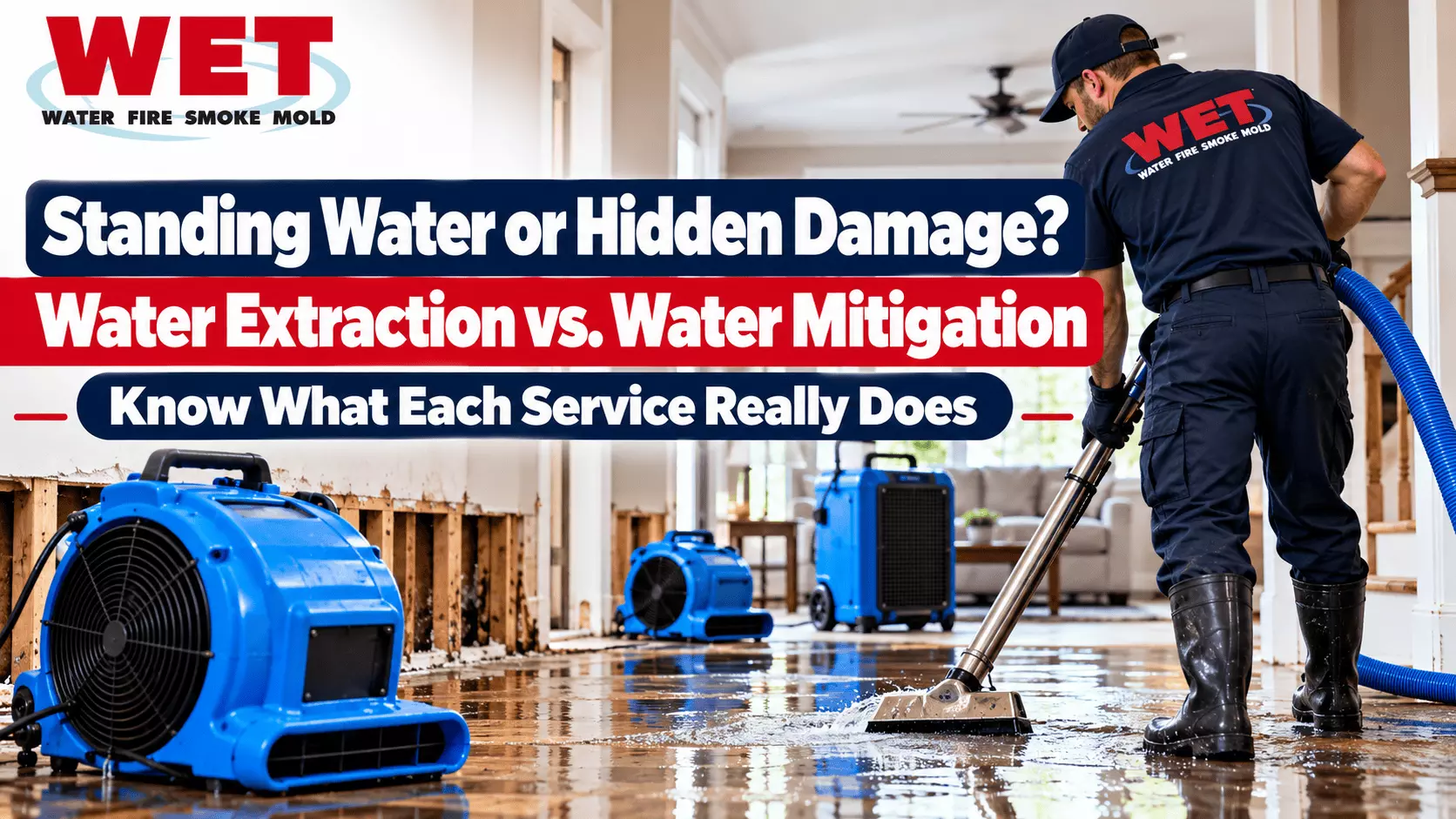
Water Extraction vs. Water Mitigation: Key Differences
When water enters your home or business, you may hear two terms: water extraction and water mitigation.
They sound similar, but they do not mean exactly the same thing.
Water extraction focuses on removing standing and excess water from a property. Water mitigation is the broader process of reducing water damage and preventing the problem from getting worse.
In simple terms, water extraction is usually one part of water mitigation.
For example, after a basement flood, a restoration team may first stop the source of the water. Then they extract standing water, dry wet materials, reduce humidity, clean affected areas, and take steps to prevent further damage. Together, these actions can be part of the water mitigation process.
Understanding the difference can help you know what type of service your property needs after a flood, broken pipe, appliance leak, storm, or other water emergency.
What Is Water Extraction?
Water extraction is the process of physically removing standing or excess water from a property.
It is usually one of the first major steps after significant water damage.
Professional restoration companies may use pumps, extraction vacuums, and other water removal equipment to remove water from floors, carpets, basements, and other affected areas.
Water Extraction Team explains that its Cleveland water extraction process focuses on identifying the water source and type, removing standing water, controlling moisture and humidity, cleaning affected areas, and checking the property after extraction.
Water extraction may be needed after situations such as a flooded basement, burst pipe, overflowing appliance, roof leak, plumbing failure, storm damage, or firefighting water.
The main goal is simple: remove as much excess water as possible, as quickly as possible.
What Is Water Mitigation?
Water mitigation is the broader process of limiting water damage and protecting the property from additional damage.
It does not focus only on standing water.
Water mitigation may involve stopping the source of water, extracting standing water, removing materials that cannot be saved, drying the structure, reducing humidity, cleaning affected areas, and protecting the building while restoration continues.
Water Extraction Team defines water mitigation as minimizing water damage to prevent further damage and protect the property. Its Cleveland service page also explains that mitigation can include stopping the water source, removing standing water, and drying affected structures.
This means water extraction can be an important step within the larger mitigation process.
Water Extraction vs. Water Mitigation: The Main Difference
The easiest way to understand the difference is:
Water extraction removes the water. Water mitigation manages the overall damage and works to stop it from becoming worse.
- Water Extraction
- Water Mitigation
- Focuses mainly on removing water
- Focuses on limiting overall water damage
- Often uses pumps and extraction vacuums
- May include extraction, drying, dehumidification, cleaning, and other protective steps
- Usually happens early in the process
- Covers several stages of the response
- Removes standing and excess water
- Helps protect wet materials and the structure from further damage
- Is one specific service
- Is a broader damage-control process
- For many larger water emergencies, you may need both.
Is Water Extraction Part of Water Mitigation?
Yes.
In professional water damage restoration, water extraction is commonly one part of water mitigation.
Water Extraction Team specifically explains that extraction focuses on standing water, while mitigation is broader and includes services such as extraction, dehumidification, and sanitization.
Think about a flooded basement.
Removing two inches of standing water is water extraction.
But the project may not be finished once the floor looks dry.
Water may still be inside carpet padding, drywall, wood, insulation, flooring, or other materials.
The restoration team may then need to dry those materials, use dehumidifiers, check hidden moisture, clean affected areas, or remove items that cannot be saved.
Those additional steps are part of the wider water mitigation process.
Why Isn't Water Extraction Alone Always Enough?
One of the biggest mistakes after water damage is assuming the problem is solved when visible water disappears.
Water can travel into materials you cannot easily see.
It may remain underneath flooring, inside walls, beneath carpet padding, around baseboards, inside cabinets, or in insulation.
The EPA notes that some water-damaged materials need more than surface water removal. For example, carpet and backing may require water extraction, reduced humidity, and increased airflow, while underflooring should also be checked and dried when needed.
This is why professional water mitigation services go beyond simply pumping out water.
The goal is to manage the entire moisture problem.
Read: Top Deep Home Cleaning Services in Dehradun
Why Is Fast Water Mitigation Important?
Water damage can become more difficult to manage when wet materials stay wet for too long.
Drywall can become damaged. Wood can swell. Flooring may lift or warp. Carpet padding can remain wet underneath the surface.
Moisture can also create conditions that support mold growth.
The EPA says moisture control is the key to mold control and recommends drying water-damaged areas and materials within approximately 24 to 48 hours whenever possible.
The CDC also advises homeowners to clean and dry or remove wet items within 24 to 48 hours after water enters a home to help prevent mold growth.
Fast extraction and mitigation can therefore help reduce the amount of time building materials remain wet.
What Happens During Professional Water Mitigation?
Every water damage situation is different, but professional mitigation generally follows a logical process.
A restoration team may:
- Identify and stop the source of the water when possible.
- Determine how far the water has traveled.
- Remove standing water through professional water extraction.
- Check for moisture underneath or inside building materials.
- Remove materials that cannot be safely restored when necessary.
- Set up air movers and dehumidifiers to dry affected areas.
- Clean or sanitize areas based on the type of water involved.
- Monitor moisture levels during drying.
- Prepare damaged areas for any repairs or restoration that may still be needed.
These steps help prevent a small water problem from turning into a larger one.
Is Water Mitigation the Same as Water Damage Restoration?
Not exactly.
Water mitigation focuses on stopping or reducing additional damage. Water damage restoration focuses on returning the property to its pre-damage condition as much as possible.
Mitigation happens early.
Restoration may come afterward and can involve repairing drywall, replacing damaged flooring, painting, replacing insulation, rebuilding damaged areas, or completing other repairs.
Water Extraction Team also notes that water mitigation alone may not fully restore a property. More extensive restoration may be required when structural repairs, mold remediation, or other work is needed.
So the process may look like this:
Emergency response → Water extraction → Water mitigation and drying → Cleaning → Repairs and restoration
What Is the Difference Between Water Mitigation and Structural Drying?
Structural drying is another related term.
Structural drying focuses specifically on removing moisture from building materials and structural areas.
Water mitigation is broader.
For example, mitigation may include water extraction, structural drying, dehumidification, cleanup, and other steps designed to reduce further damage.
Structural drying is therefore one of the services that may be used during water mitigation.
What Equipment Is Used During Water Extraction and Mitigation?
The equipment depends on how much water is present and which materials are affected.
Water extraction may use professional pumps and extraction vacuums to remove standing water quickly.
The broader mitigation process may also use air movers, dehumidifiers, and moisture-detection equipment.
EPA guidance for water-damaged materials recommends extraction equipment for removing water and dehumidifiers and fans for reducing moisture and speeding drying in appropriate situations.
The important point is that different equipment solves different parts of the problem.
Extraction equipment removes bulk water.
Air movers encourage moisture to leave wet materials.
Dehumidifiers remove that moisture from the air.
Moisture readings help technicians see whether drying is working.
When Do You Need Water Extraction?
Water extraction is usually needed when there is enough standing or excess water that normal drying alone will not solve the problem.
For example, professional extraction may be needed after significant basement flooding, burst pipes, overflowing appliances, plumbing failures, storms, roof leaks, or other large water losses.
The sooner excess water is removed, the sooner proper drying can begin.
When Do You Need Water Mitigation?
Water mitigation may be needed whenever water is threatening your property or has already affected building materials.
Water Extraction Team recommends mitigation when problems such as burst pipes, roof leaks, or flooded basements cause water damage that needs to be controlled before it becomes worse.
Mitigation becomes especially important when water has reached walls, floors, carpet, cabinets, insulation, or several rooms.
Can You Handle Water Extraction or Mitigation Yourself?
A very small clean-water spill may sometimes be handled with basic household drying.
A major water emergency is different.
Professional assistance may be appropriate when water covers a large area, has entered walls or flooring, affects several rooms, or cannot be removed and dried quickly.
The type of water also matters.
Water from sewage backups, flooding, or other contaminated sources may require different safety precautions than clean water from a supply-line leak.
Professional restoration technicians can determine how far the water has traveled and what drying and cleaning steps may be needed.
Water Extraction and Water Mitigation in Cleveland, Ohio
Water damage can happen at any time in Northeast Ohio.
Heavy rain, frozen or burst pipes, basement flooding, appliance failures, plumbing leaks, roof problems, and other emergencies can leave homes and businesses with significant water damage.
Water Extraction Team provides both water extraction and water mitigation services in Cleveland, Ohio, and surrounding communities.
Its current service information explains that water extraction targets standing water, while mitigation provides a broader approach to controlling moisture and limiting additional property damage.
For larger water emergencies, these services often work together rather than competing with each other.
Water Extraction Removes Water. Water Mitigation Protects the Property.
Water extraction and water mitigation are closely connected, but they serve different purposes.
Water extraction removes standing and excess water. Water mitigation includes the wider steps needed to reduce damage and keep the situation from becoming worse.
In many water emergencies, extraction is the first major action within a complete mitigation plan.
Once the visible water is gone, proper drying, dehumidification, moisture monitoring, cleaning, and other protective steps may still be necessary.
If your Cleveland-area home or business experiences flooding, a burst pipe, plumbing leak, or another water emergency, acting quickly with professional water extraction and water mitigation can help limit additional damage and start the property on the path toward restoration.
Frequently Asked Questions
What is the biggest difference between water extraction and water mitigation?
Water extraction focuses on physically removing standing and excess water. Water mitigation is a broader process that may include extraction, drying, dehumidification, cleaning, and other actions designed to prevent further damage.
Which comes first, water extraction or water mitigation?
Water mitigation is the overall damage-control process. Water extraction is often one of the first steps within that process after the water source has been identified and controlled.
Does water mitigation include drying?
Yes. Professional water mitigation commonly includes drying and dehumidification after standing water has been removed.
Is water extraction enough after a flood?
Not always. Water can remain underneath flooring or inside walls, carpet padding, wood, and other materials after standing water is gone. Additional drying and moisture control may be required.
Does fast water mitigation help prevent mold?
Fast moisture removal helps reduce the conditions mold needs to grow. EPA and CDC guidance recommends drying water-damaged materials within about 24 to 48 hours whenever possible.