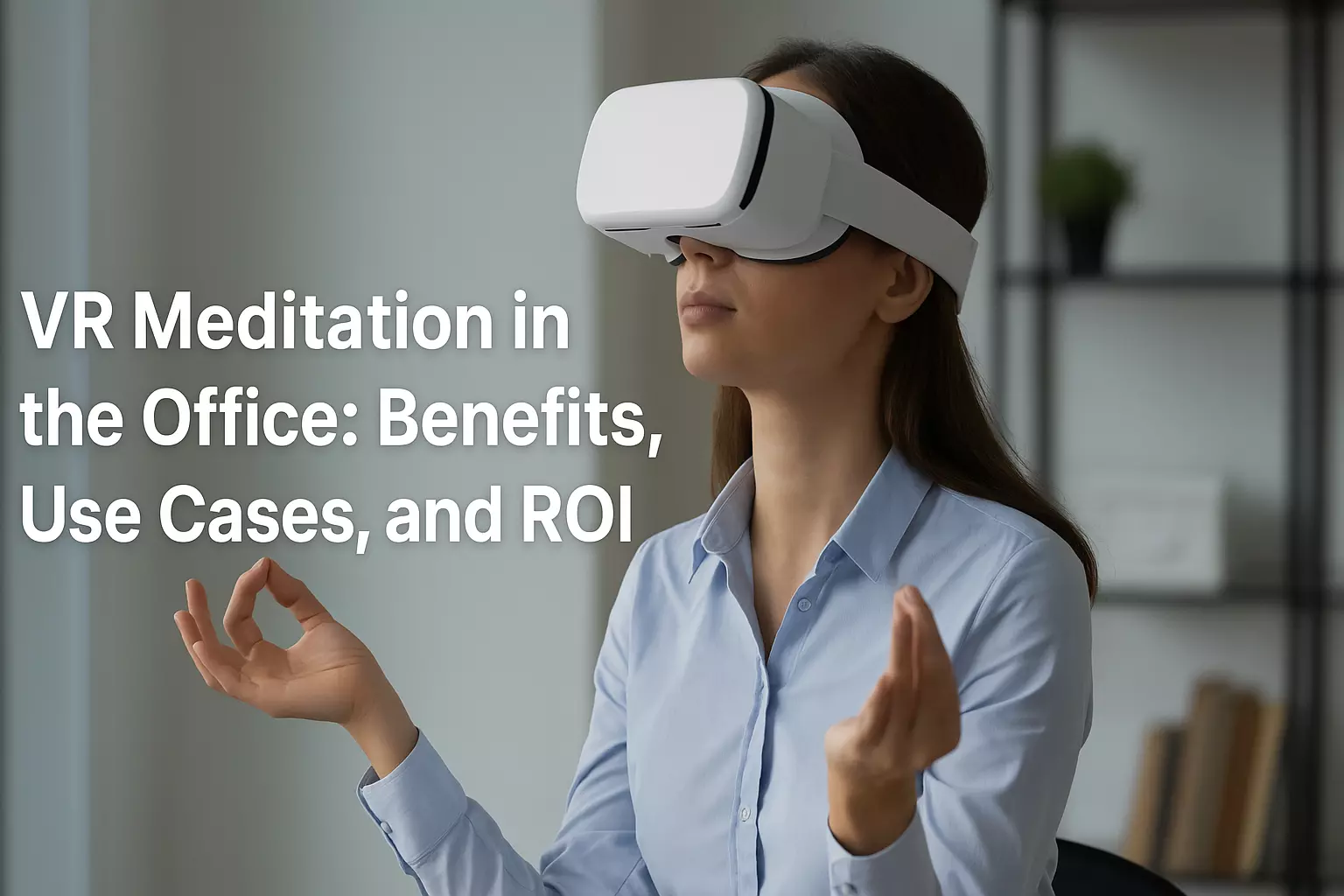
VR Meditation in the Office: Benefits, Use Cases, and ROI
In an era where workplace stress, mental fatigue, and burnout are rising faster than productivity metrics, companies are rethinking how to support employee well-being. One solution making waves in forward-thinking offices? Virtual Reality (VR) meditation.
More than a wellness trend, VR meditation is proving to be a science-backed, immersive experience that helps employees reset, refocus, and recharge — right from their desks or dedicated calm zones.
Let’s break down the benefits, real-world use cases, and measurable ROI of using virtual reality meditation in the modern workplace.
What is VR Meditation?
VR meditation combines immersive environments, guided voiceovers, calming music, and breathwork — all experienced through a VR headset. Unlike traditional app-based meditation, this method removes distractions by completely transporting users to relaxing, virtual settings like:
- A quiet forest trail
- A serene ocean shore
- A mountaintop sunrise
- Or even abstract spaces designed for deep focus
These environments are designed to activate the parasympathetic nervous system, helping users lower cortisol levels, slow their heart rate, and enter a deeply relaxed state — in just a few minutes.
Key Benefits of VR Meditation in the Office
1. Instant Stress Reduction
A 5-minute VR session can significantly reduce anxiety levels and emotional overload — perfect for stressful workdays or before big presentations.
2. Enhanced Focus and Productivity
By reducing mental clutter, VR meditation improves cognitive clarity, attention span, and task performance — leading to higher quality output.
3. Better Mental Health Support
Unlike generic mental health perks, VR offers an interactive and accessible support system employees can actually use.
4. Higher Engagement Rates
Compared to traditional meditation apps or mindfulness sessions, VR has a novelty factor that boosts participation and long-term habit-building.
5. Inclusivity and Privacy
Not everyone is comfortable joining group wellness sessions. VR allows for personalized and private experiences, encouraging more people to participate without judgment.
Real-World Use Cases
1. Pre-Meeting Mental Reset
Employees use VR to calm nerves before high-stakes meetings or client calls. A quick 3-minute session helps shift their mindset and reduce performance anxiety.
2. Post-Lunch Slump Recovery
Instead of coffee or scrolling on phones, teams are using VR meditation to re-energize and get back to focus faster.
3. Hybrid Team Wellness
Distributed teams participate in synchronized VR mindfulness sessions — creating a shared wellness ritual that bridges remote isolation.
4. De-escalation Zones for High-Stress Roles
Customer service teams, healthcare professionals, or frontline staff use VR as a calm-down space after emotionally intense interactions.
5. Onboarding and HR Welcome Programs
Some companies are including VR meditation as part of onboarding to signal a culture of well-being and innovation from Day 1.
ROI: Is It Worth the Investment?
MetricPre-VRPost-VR (after 6 weeks)Employee Stress LevelsHigh↓ 32%Productivity RatingsAverage↑ 18%Absenteeism Due to BurnoutFrequent↓ 22%Engagement in Wellness ProgramsLow↑ 41%
The cost of implementing virtual reality therapy in the workplace — including headsets, content subscriptions, and setup — is marginal compared to the long-term savings in mental health support, absenteeism, and productivity loss.
How to Get Started
- Set up a quiet room or relaxation corner in your office.
- Equip it with affordable VR headsets (like Meta Quest, Pico, or HTC Vive).
- Subscribe to a VR wellness platform offering high-quality meditation content.
- Integrate short 3–10 minute sessions into daily routines, break times, or opt-in programs.
- Track wellness KPIs and gather employee feedback to optimize adoption.
Final Thoughts: Innovation Meets Well-Being
VR meditation is not just about relaxation — it’s about creating resilient, focused, and emotionally intelligent teams. In today’s high-pressure environments, giving employees an immersive escape can lead to real, measurable change.