VPN Gateways Explained: Core Concepts and Role in Secure Networking
VPN gateway forms a part of the critical infrastructure used in ensuring the connectivity of networks of securities; this allows the application of the encrypted communication over networks that cannot be relied on such as the internet. To network engineers, information technology administrators, and cybersecurity experts, an in-depth knowledge about VPN gateways is necessary to ensure a strong and secure network architecture.
This article examines the technical basis, practical applications, deployment patterns, and the current trends of VPN gateways and offers practical advice on the same to tech professionals.
1. Introduction to VPN Gateways
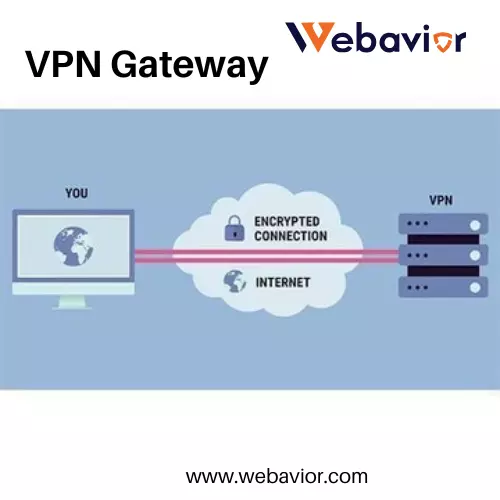
VPN gateway refers to a network device or a software solution that establishes encryption and tunnels of networks or single users over the internet. It acts as a safe intermediary with the protection of data confidentiality, integrity, and authentication. VPN gateways are essential in current hybrid networks whether they are used to connect branch offices, provide remote accessibility to employees, or protection of cloud-based workloads.
This guide is meant to give tech professionals the knowledge to design and deploy such systems efficiently and trouble-shoot them, as well as, give useful tips on how these systems can be used in practice.
2. Core Components of a VPN Gateway
The VPN gateways have a number of major elements which collaborate to create the secure connections. Dedicated performance Hardware-based gateways, like Cisco ASA or Fortinet FortiGate, are more expensive, but are appropriate to large companies.
Software applications, VPN or StrongSwan, are flexible and economical in smaller applications or in labs. Cloud-based gateway solutions like AWS Client VPN have high scalability in hybrid or multi-cloud environments. The decision will be based on performance requirements, budget and infrastructure complexity.
VPN gateway protocols are IPsec which is based on IKEv1 or IKEv2 to exchange keys and ESP/AH to encrypt and authenticate, hence suitable in site-to-site connections. The client-based VPNs are strongly secured through the protocols based on the use of the protocols modeled on the applications of the HTTPS, including the WebaviorVPN.
The new protocol WireGuard employs ChaCha20 to be faster and leaner. There are trade-offs between each of the protocols in the sense of complexity, speed, and compatibility.
The VPN security relies on encryption standards. AES-256 can be highly confident in the data confidentiality whereas Diffie-Hellman (DH), or elliptic-curve DH, can be used in ensuring key exchange with high security and DH Group 14 or above is advisable.
The integrity of the data is checked by hashing algorithms such as SHA-256 or SHA-384 and no data is compromised during transit. To avoid handshake failures, tech professionals need to ensure that cipher suites are compatible, e.g. using AES-GCM as the modern IPsec.
Tunneling mechanisms wrap data in order to be transmitted safely. GRE offers lightweight, although unencrypted, tunneling, which is commonly used together with IPsec. When used together with IPsec, L2TP has the capability of providing secure layer-2 tunneling. Tunnel mode in IPsec wraps complete packets and therefore the mode is suitable for site to site VPNs. These mechanisms are essential in setting up stable and secure connections.
3. Types of VPN Gateway Connections
VPN gateways have several types of connections that are specific to intended use cases. Site-to-site VPNs are used to bridge complete networks: between a head office and its branches, or between a local network in one location and a VPN-hosted network in another (e.g. between an on-premises network with 192.168.1.0/24 and a cloud-hosted network with 10.0.0.0/16). This is the best in the cases where the organization has a distributed physical location.
P2S VPNs allow individual connections between a laptop or mobile device and a network in a safe and secure way. WebaviorVPN or IKEv2 are popular protocols, and the authentication can be performed either by use of certificates or multi-factor authentication (MFA), which suits remote workforces.
These configurations have to be done with close attention to the clients to be connected smoothly. Also read How Remote Access VPN Enhances Business Security and Productivity
VNet-to-VNet VPNs facilitate secure communication between virtual networks, often in cloud or hybrid environments. They are essential for multi-region deployments or connecting cloud providers to on-premises infrastructure. For complex architectures, route-based VPNs with BGP enable dynamic routing, simplifying management of multi-site networks.
4. Role in Secure Networking
VPN gateways are used to solve networked environment security requirements. They provide confidentiality using the AES encryption which makes sure that data cannot be eavesdropped on the network. Authentication Authentication mechanisms, like certificates, pre-shared keys, or MFA, are used to check the identity of endpoints and users. Data integrity is ensured by using hash functions such as SHA-256 such that data will not be modified during transmissions.
VPN gateways have important applications in industries. They also facilitate safe distance-learning where distributed workforces can access corporate resources remotely wherever they are. In the hybrid cloud configuration, they network data centers on premises to the cloud providers such as AWS or Google Cloud.
In case of finance (PCI-DSS), healthcare (HIPAA), or government (FedRAMP) industries, VPN gateways guarantee the adherence to the requirements by securing sensitive information. Perfect Forward Secrecy (PFS) can be implemented so that compromised keys cannot reveal previous sessions, whereas split tunneling can be applied to maximize the performance at the cost of being cautiously applied to prevent circumventing security measures.
5. Deployment Considerations for Tech Professionals
When choosing the appropriate VPN gateway, it is necessary to trade off its performance, cost, and scalability. Hardware providers, such as Cisco ASA or Fortinet FortiGate, provide high throughput (1-10 Gbps) but are very costly to buy, and are aimed at enterprises.
Small businesses or a lab can afford software-based solutions such as pfSense which provide flexibility in a virtualized setting. Cloud-based gateways like AWS VPN are dynamically scaled but might have the cost of bandwidth.
Choice of the protocol will be dependent on application.
IPsec offers stability to site to site connection and IKEv2 offers faster rekeying. Open-source and can be used to allow client access that accommodates various platforms. WireGuard supports the best performance in benchmarking IPsec by a factor of 3, and is best used in IoT, or mobile devices. Scalability: load balancing between gateways, employing BGP in large networks, and high-throughput hardware (e.g. FortiGate 200F 20 Gbps IPsec).
It is important to be interoperable with the existing routers, firewalls, or cloud platforms. Technical workers are to test NAT traversal of networks which are behind NAT devices and configure MTU between 1350-1400 in order to prevent IPsec tunnel fragmentation. Such utilities as ping -s can be used to define the best packet sizes to use in stable connections.
6. Security Best Practices
There is a need to have a multi-layered approach of securing VPN gateways. Encrypt with AES-256 with DH Group 14+ or elliptic-curve DH to exchange keys to provide high security. Install MFA through RADIUS (e.g. Duo) or point-to-site VPNs with client certificates to avoid unauthorized access.
Enhance Syslog or SIEM tool such as Splunk to detect anomalies in real-time. Periodically replace firmware to address vulnerabilities, including CVE-2023-20269 in Cisco VPNs. Use the latest ciphers such as 3DES or MD5 that are not allowed by such standards as NIST SP 800-131A.
7. Common Challenges and Troubleshooting
The mismatch of IKE policies mostly leads to connectivity problems like the failure of tunnels. Technologists may also debug crypto ikev2 on Cisco or on StrongSwan to troubleshoot errors. Application packages such as Wireshark can be used to analyse the packets to trouble shoot. High latency or low throughputs can be solved with optimization of MTU, hardware acceleration (e.g., AES-NI), or by replacing it with WireGuard, performance bottlenecks.
The problem of interoperability between legacy devices needs to standardize on either IKEv2 or AES-GCM or considers fallback proposals. The dead peer detection (DPD) is enabled to make sure that failed tunnels are identified and restarted as quickly as possible.
8. Future Trends in VPN Gateways
The VPN gateway environment is changing at a high rate. The 4,000-line codebase of WireGuard provides simplicity, speed, and the count of deployments has doubled every year based on 2024 surveys. Zero-trust integration concurs with the NIST 800-207, integrating endpoint verification and ongoing authentication.
Multi-cloud VPNs are made easier by cloud-native gateways, such as AWS Transit Gateway. The emergence of 5G and edge computing enables 5G to support low-latency VPNs of an IoT and mobile device, and 5G will cut in half the tunnel setup time in 2025 benchmarks.
9. Conclusion
The VPN gateway continues to be a fundamental part of safe, scalable networking, connecting on-premises, cloud, and remote settings. Technical experts have the options of beginning with open-source software such as StrongSwan to learn by example or test out a commercial solution such as Cisco Meraki to deploy at scale.
Trial and error in a sandbox set up can be used to master configurations, and keeping up to date with the latest trends such as WireGuard or zero-trust will keep networks future-friendly. With the knowledge and implementation of these ideas, the professionals are able to establish resilient and secure infrastructures.