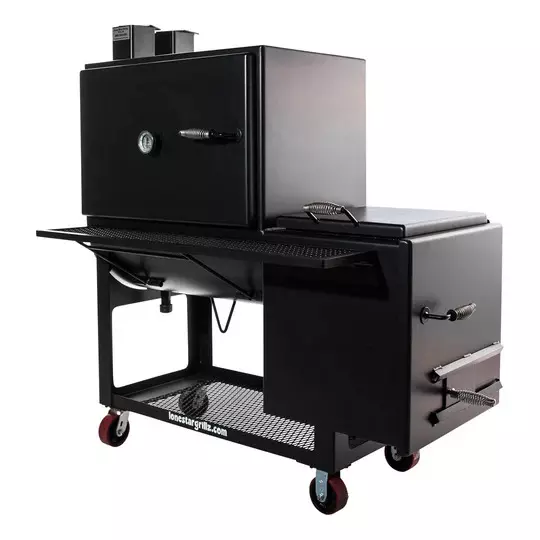
Vertical Smoker or Offset Smoker? What I Wish Someone Told Me Before I Bought Mine
So you're standing in your backyard, staring at a rusted-out old grill, thinking "yeah, it's time." Maybe you've been scrolling around looking at a vertical smoker for sale and got completely overwhelmed by the options.
Or maybe someone at a cookout told you offset smokers are the "real" way to do it and now you feel like a fraud for even considering anything else.
I get it. I went through the exact same thing about three years ago, and honestly, I made a couple of dumb choices before landing on what actually worked for me.

Why This Decision Actually Matters (More Than You Think)
Here's the thing nobody tells you upfront — the smoker you buy shapes how often you actually cook outside. I know that sounds dramatic, but it's true. Buy something too fussy, too big, or too finicky to manage, and it ends up sitting under a tarp by August.
I've seen it happen to at least three friends of mine. They dropped serious money on a rig, used it twice, and now it's basically lawn furniture.
So before you go hunting for a vertical smoker for sale online, it helps to actually understand what you're choosing between. Not in some textbook way, just practically — what's it like to use on a random Tuesday when you just want some decent ribs.
Vertical Smokers: The Space-Saver That Still Gets the Job Done
Vertical smokers (some folks call them cabinet smokers, or drum smokers if you're talking about the barrel-style ones) stack everything up instead of out. Heat source at the bottom, racks going up, smoke rises through the whole thing. That's basically it.
What I like about them — and why a lot of first-timers gravitate here — is the footprint. If you've got a small patio or a tight backyard, this thing doesn't eat up your whole space.
You can fit a ton of food on those racks too. Doing a big brisket, a rack of ribs, and a couple chickens all at once? A vertical rig handles that without breaking a sweat.
They're also a little more forgiving on temperature control, generally speaking. Not "set it and forget it" exactly, nothing really is, but there's less babysitting involved compared to some other setups. That matters if you've got a life outside of standing next to a smoker for six hours straight.
Downside? Some people feel like the smoke flavor isn't quite as deep or as "authentic" as what you get from other methods. I don't know if I'd go that far, but there IS a difference. It's subtle though, and most guests at your cookout aren't going to notice or care.
Offset Smokers: The Old-School Workhorse
Now, offset smokers are a different animal entirely. You've got the firebox off to the side, smoke and heat pull through the main cooking chamber, and it exits out a chimney on the far end.
This is the classic "Texas style" setup you see at legit barbecue joints, the ones with the long horizontal barrel shape.
There's something almost meditative about running one of these, not gonna lie. You're constantly managing the fire, adjusting airflow, watching the smoke color. It's more hands-on, no question.
If you're the type who actually enjoys the process — not just the eating part, but the whole ritual of tending a fire — offset smokers scratch that itch in a way nothing else really does.
The flavor payoff is real too. That slow pull of smoke across the meat gives you a deeper, more complex bark and smoke ring than most other setups can match. Pitmasters who've been doing this for decades will tell you there's just no substitute.
But I'll be straight with you — it's more work. You need more room in your yard, more attention during the cook, and honestly a bit more patience while you're learning fire management.
It's not a "throw it on before work and check it at lunch" kind of tool. If your schedule's packed and you want good barbecue without dedicating your whole Saturday, this might frustrate you at first.
So Which One's Actually Right For You?
Honestly? It depends on what kind of cook you are, not what kind of cook you want to be on Instagram.
If you're just getting into smoking meat, want something that doesn't demand constant attention, and you're working with limited backyard space, a vertical smoker for sale is probably the smarter first move. You'll get good results faster, and you won't burn out on the hobby before you even fall in love with it.
If you've already got some grilling experience under your belt, you enjoy the process as much as the result, and you've got the space and patience for it, offset smokers are going to give you that deep, old-school flavor that's hard to replicate any other way.
It's a bigger commitment, sure, but for a lot of people that commitment is the whole point.
Some folks — myself included, eventually — end up owning both. Vertical for the lazy weeknight cook, offset for the big weekend project when you've got nowhere to be. There's no rule that says you have to pick a side forever.
A Few Things Worth Checking Before You Buy
Whichever direction you lean, don't just grab the first thing that looks good in photos. Check the steel gauge — thin metal warps and doesn't hold heat well, and you'll fight it constantly.
Look at how the doors and vents seal up, because gaps let smoke escape where you don't want it to. And actually think about where it's going to live in your yard, because these things are heavier and bulkier than they look in pictures.
It also doesn't hurt to buy from a place that actually knows barbecue equipment inside and out, rather than some generic big-box retailer that also sells patio furniture and pool floats. You want people who can answer real questions about airflow, build quality, and maintenance — not just process a return.
Wrapping This Up
Look, there's no universally "correct" answer here. Vertical smokers get you cooking faster with less fuss.
Offset smokers reward patience with flavor that's genuinely hard to beat. What matters most is being honest with yourself about how much time and attention you actually want to put into this hobby.
If you're ready to stop scrolling and start cooking, head over to Lone Star Grillz and check out their lineup.
Solid build quality, real barbecue know-how behind every unit, and options that'll fit whether you're just starting out or you've been doing this for years.

FAQs
1. Is a vertical smoker good for beginners?
Yeah, generally it is. Vertical smokers tend to hold temperature a bit more steadily and don't demand the constant fire-tending that offset smokers do, so there's a shorter learning curve. You'll still mess up a cook here and there — everybody does — but the equipment itself isn't fighting you as much.
2. Do offset smokers really taste better than vertical smokers?
It's close, honestly, but a lot of experienced folks say yes, offset smokers produce a deeper smoke flavor and better bark because of how the smoke travels across the meat before exiting. That said, a well-run vertical smoker still turns out genuinely great barbecue. The difference is noticeable to a trained palate, less so to your average dinner guest.
3. How much backyard space do I actually need for an offset smoker?
More than you'd think. Between the firebox sticking out the side, the length of the main chamber, and needing room to move around it while tending the fire, you're looking at a decent chunk of patio or yard space. Vertical smokers are the better call if your space is tight.
4. What should I look for when browsing a vertical smoker for sale?
Pay attention to steel thickness (thicker holds heat better and lasts longer), how tight the door seals, the quality of the vents and dampers, and overall build. Cheap, thin-gauge smokers might look similar in photos but perform totally differently once you're actually cooking on them.