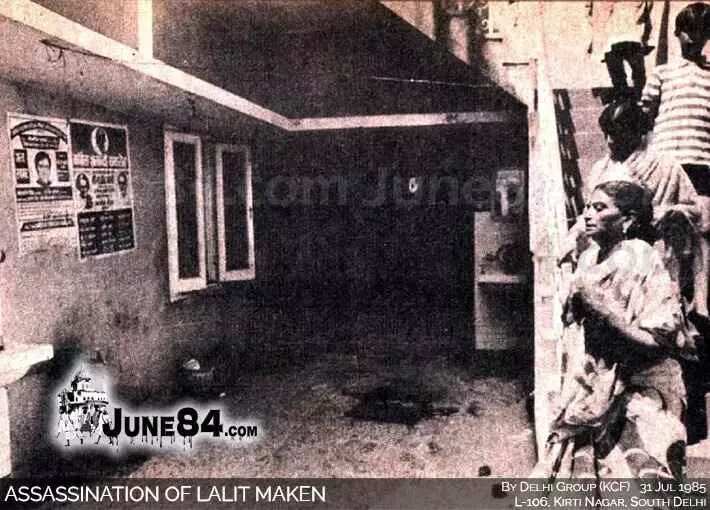
Unveiling the Tragic Assassination of Lalit Maken
Lalit Maken was a rising figure in Indian politics during the 1980s, admired for his youthful energy and vision. As a Congress leader, he inspired young citizens and held immense potential for shaping the party’s future. However, his life ended in tragedy when Lalit Maken was assassinated in 1985. This event shocked the nation and exposed the volatility of Indian politics in the wake of the 1984 riots.
Early Years and Personal Background
Raised in Delhi, Lalit Maken came from a family deeply engaged in political life. His environment naturally nurtured his interest in public affairs. Known for being approachable and forward-thinking, he became popular with people across different communities. His background provided him with both the confidence and the connections to embark on a political career at a young age.
Rise within the Congress Party
As part of the Indian National Congress, Lalit Maken advanced rapidly, quickly earning a reputation as a leader who understood youth concerns. His speeches often emphasized the need for participation in democracy and the empowerment of the next generation. With his growing recognition, he became a vital asset to the party. But his prominence also placed him at risk during a turbulent time in India’s history.
The Context of the 1984 Riots
The circumstances leading up to Lalit Maken assassinated can be traced to the aftermath of the 1984 anti-Sikh riots. Following the assassination of Indira Gandhi, India witnessed widespread violence, with thousands of Sikhs killed. Several Congress leaders were accused of being involved, and Lalit Maken’s name also came up in connection with these events. Whether accurate or not, such allegations created resentment, which ultimately endangered his life.
Lalit Maken Assassinated in 1985
On July 31, 1985, Lalit Maken was brutally killed outside his residence in Delhi. His wife, Geetanjali—daughter of future President Shankar Dayal Sharma—was also slain in the attack. According to reports, Sikh militant groups were behind the killing, seeking vengeance for the riots of 1984. The assassination sent shockwaves across India, as a young leader’s life was cut short by the violence of the times.
Investigations and Legal Proceedings
The authorities launched immediate investigations after the murder, and extremist groups were quickly linked to the attack. Some suspects fled overseas, which made the pursuit of justice difficult. The assassination revealed both the shortcomings of the state’s security systems and the dangers faced by politicians during periods of heightened communal tension.
Impact on the Congress Party
Lalit Maken’s death was a major setback for the Congress party. His youthful energy and rising influence were suddenly lost, leaving a gap that could not easily be filled. His assassination also intensified the political fallout of the 1984 riots, further dividing communities and bringing more scrutiny to the Congress leadership. The loss highlighted the severe risks of political life during unstable times.
Family Ties and Legacy
The tragedy extended beyond politics into personal grief. Lalit Maken’s wife Geetanjali, who perished alongside him, came from an influential political family. Their daughter, Avantika Maken, later chose to follow in their footsteps by entering politics, carrying forward the family’s legacy of public service. The assassination is remembered not only as a political incident but also as a deeply personal loss for the Maken family.
Political Significance of Lalit Maken Assassinated
The assassination of Lalit Maken symbolizes the turbulence of Indian politics in the mid-1980s. Historians often point to it as an example of how communal conflict shaped political violence. His killing demonstrated how the unresolved wounds of the riots spilled over into acts of retribution, destabilizing the nation and claiming the lives of leaders who represented new hope.
Remembering Lalit Maken Today
Even decades later, Lalit Maken’s memory lives on. His work for youth empowerment and his commitment to public service remain part of his enduring legacy. Supporters and historians alike describe him as a leader whose future was filled with promise but was stolen too soon. His life story serves as both an inspiration and a cautionary tale about the dangers of political violence and communal hatred.
Conclusion: A Leader Lost Too Soon
The assassination of Lalit Maken illustrates the fragility of political leadership during times of national crisis. From his rapid rise within the Congress to his tragic death, his story reflects both the promise of youthful leadership and the destructive power of communal unrest. Remembering Lalit Maken today reminds us of the need for justice, unity, and peace to ensure that such tragedies do not repeat themselves in the future.