Understanding Consumer Laws: A Comprehensive Guide
What Are Consumer Laws?
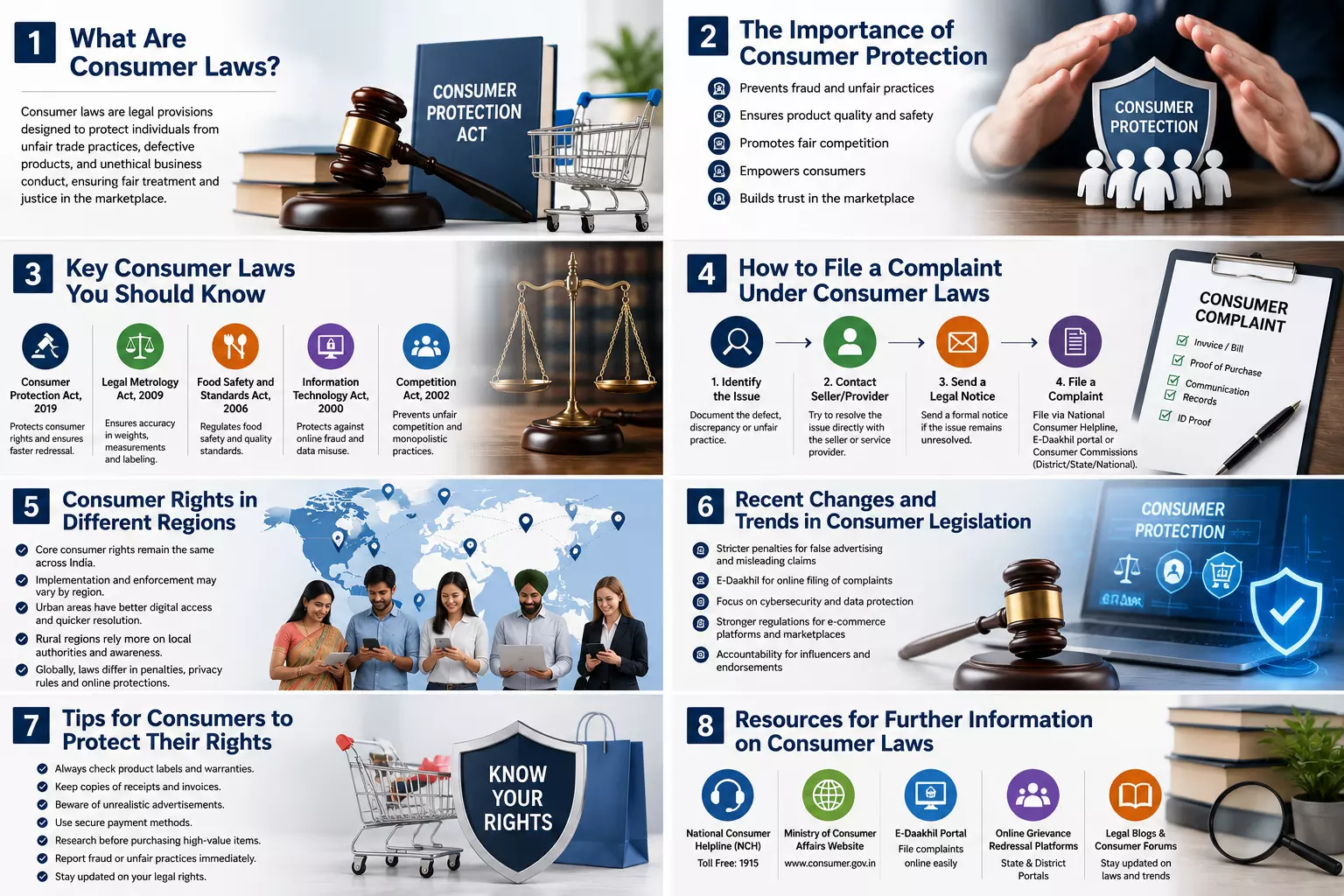
Consumer protection laws are legal provisions designed to protect individuals from unfair trade practices, defective products, misleading advertisements, and unethical business conduct.
These laws ensure that consumers receive fair treatment, accurate information, and safe products or services while engaging in the marketplace.
Their primary purpose is to create a balance between consumer rights and business obligations, fostering trust and transparency.
The Importance of Consumer Protection
Consumer protection plays a vital role in safeguarding public interest. It empowers individuals to make informed choices without fear of exploitation. Effective consumer protection:
- Prevents fraud and deceptive business practices
- Promotes fair competition
- Ensures product quality and service accountability
- Strengthens public confidence in the economic system
A strong consumer protection framework leads to a healthier, more ethical marketplace.
Key Consumer Laws You Should Know
Several major laws govern consumer rights and business responsibilities. The most significant include:
1. Consumer Protection Act, 2019
This act forms the backbone of consumer law, introducing stricter penalties for misconduct, simplified complaint filing, and the establishment of Consumer Commissions.
2. Legal Metrology Act, 2009
Ensures accuracy in product weights, measurements, and labeling.
3. Food Safety and Standards Act, 2006
4. Information Technology Act, 2000
Provides protection against online fraud, data misuse, and cybersecurity breaches—especially relevant in e-commerce transactions.
5. Competition Act, 2002
Prevents monopolistic and unfair competition practices that affect consumer choices.
How to File a Complaint Under Consumer Laws
Filing a consumer complaint is now simpler than ever. Consumers can:
- Identify the Issue – Document defects, discrepancies, or unfair practices.
- Contact the Seller/Service Provider – Attempt resolution first.
- Send a Legal Notice – Inform them formally if the issue remains unresolved.
- File a Complaint via:
- National Consumer Helpline - 1800-11-4000
- E-Daakhil portal
- District, State, or National Consumer Commissions
Include invoices, proofs, communication records, and identification while filing.
Consumer Rights in Different Regions
Although core rights remain similar across India, implementation and enforcement can vary by region. Urban areas often have quicker resolution frameworks due to better digital access, while rural regions may depend more on local authorities.
Globally, countries follow similar consumer protection principles, but the extent of penalties, privacy laws, and online protections may differ.
Read: Top 10 Law Professional Books and Law Text Books
Recent Changes and Trends in Consumer Legislation
Consumer protection has evolved rapidly in response to emerging challenges such as digital transactions, data privacy, and e-commerce. Recent trends include:
- Enhanced penalties for false advertising
- E-Daakhil for online complaint filing
- Greater focus on cybersecurity and data protection
- Stricter rules for influencers and endorsements
- Increased regulation of online marketplaces
These developments strengthen consumer rights in the digital age.
Tips for Consumers to Protect Their Rights
Consumers can proactively safeguard themselves by following key practices:
- Always check product labels and warranties
- Keep copies of receipts and invoices
- Beware of unrealistic advertisements
- Use secure payment methods
- Research before purchasing high-value items
- Report fraud immediately
- Stay updated on legal rights
Being informed is the first step to being protected.
Resources for Further Information on Consumer Laws
Consumers can explore:
- National Consumer Helpline (NCH)
- Ministry of Consumer Affairs website
- E-Daakhil portal
- Online grievance redressal platforms
- Legal blogs and consumer forums
These resources offer detailed guidance, complaint mechanisms, and updates on legal developments.