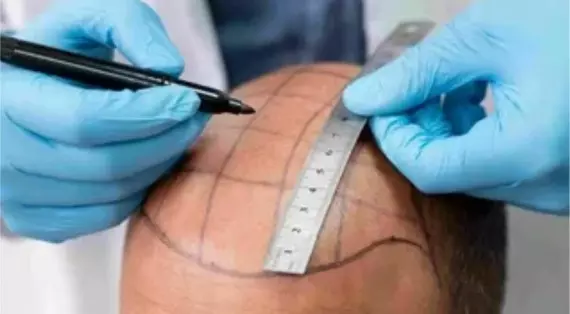
Local Expertise: Why Riyadh Surgeons Understand Middle Eastern Hair Best
The global quest for the perfect hairline often leads patients to cross borders, but for those of Middle Eastern descent, the most effective solutions are found right in the heart of the Kingdom.
Choosing a Hair Transplant in Riyadh is no longer just a matter of convenience; it is a strategic decision based on the unique physiological and aesthetic requirements of Arab hair.
Unlike standard procedures in Western or Asian clinics, Riyadh’s specialists have spent decades mastering the specific "curl, coarse, and curve" dynamics that define the Middle Eastern phenotype, ensuring that results are not just successful, but ethnically authentic.
The Biological Blueprint of Middle Eastern Hair
Middle Eastern hair is unique. It occupies a specific middle ground between the straight, fine strands of many Caucasian types and the tightly coiled, dense follicles found in African heritage.
1. The Multi-Hair Follicle Advantage
Statistics show that Middle Eastern hair follicles often contain higher concentrations of triple and quadruple hair grafts.
While this allows for incredible density, it requires a surgeon who knows how to harvest these larger units without damaging the surrounding tissue.
Riyadh surgeons use customized micro-punches (ranging from 0.7mm to 0.9mm) specifically calibrated for this thickness.
2. Sub-Scalp Curvature
One of the most significant challenges in hair restoration is the "hidden curve." Many Middle Eastern hair types feature a follicle that curves slightly beneath the skin’s surface.
An inexperienced surgeon using a straight extraction method risks "transection"—the accidental cutting of the hair root.
Experts in Riyadh utilize Hybrid FUE techniques that account for this subcutaneous angle, leading to graft survival rates that often exceed 97%.
Defining the "Arabian Hairline"
A hairline is more than just a row of hair; it is a frame for the face. Middle Eastern facial structures—characterized by stronger brow ridges and specific forehead proportions—
require a different design philosophy than the lower, straighter hairlines common in East Asia.
Artistic Cultural Sensitivity
In Riyadh, the "Artisan Surgeon" approach is standard. Surgeons focus on:
- Macro and Micro-Irregularity: Creating a "jagged" front line that mimics natural growth.
- Angle of Exit: Middle Eastern hair typically grows at a more acute angle ($15^{\circ}$ to $25^{\circ}$) to the scalp. Local surgeons are trained to replicate this exact tilt to prevent the "spiky" or unnatural look often seen in generic clinics.
- Density Grading: Placing the highest density in the mid-scalp and crown, which are the primary areas of concern for many local patients.
Tackling the "Sun and Sand" Factor
Riyadh’s environmental conditions—extreme heat, low humidity, and desalinated water—play a massive role in hair health. Local surgeons don't just perform surgery; they provide a comprehensive environmental management plan.
- UV Protection Protocols: Since the Riyadh sun can be harsh on newly transplanted grafts, local clinics provide specialized post-op headwear and cooling serums designed for the Saudi climate.
- Mineral Management: They address the effects of local water on hair texture, often recommending specific pH-balanced treatments to ensure the native and transplanted hair remains robust.
Comparison: Riyadh Expertise vs. Generic Hubs
Feature
Riyadh Specialists
Generic High-Volume Hubs
Graft Focus
High-density multi-hair units
Single-hair high-speed extraction
Follicle Mapping
Accounts for sub-scalp curvature
Standardized straight-line punches
Consultation
Surgeon-led diagnostic
Sales-team led "graft counting"
Aftercare
Localized environmental guidance
Generic "wash and go" instructions
Read: Expert Hair Restoration Options in Riyadh
The Growth of Specialized Treatments
Riyadh is also leading the way in non-surgical adjuncts that complement the transplant.
- Exosome Therapy: Using cellular messengers to signal the scalp to repair faster.
- Bio-Stimulation: Tailored specifically for the thicker skin (dermis) typical of Middle Eastern patients.
- Beard and Mustache Restoration: A vital part of Middle Eastern grooming. Riyadh surgeons are arguably the world's best at restoring facial hair density, ensuring the grain of the beard matches the natural growth pattern of the jawline.
"In Riyadh, we don't just see a patient; we see a legacy of hair characteristics that require a bespoke surgical touch."
Conclusion: Trust the Local Specialists
When it comes to something as permanent as your appearance, expertise in your specific hair type is the only metric that truly matters.
The surgeons in the Saudi capital have built a global reputation by combining high-tech innovation with a deep, intuitive understanding of regional biology.
By opting for a Hair Transplant in Riyadh, you are ensuring that your hair restoration is handled by professionals who see your hair's unique challenges as their primary strength.
The result is a transformation that looks natural, feels authentic, and stands the test of time and climate.