Types of Retractors: Essential Instruments in Modern Surgery
Retractors are among the most important instruments used in surgical procedures. Their primary purpose is to hold back tissues, organs, or incisions, allowing surgeons to gain a clear view of the operative field.
Every surgical retractor is designed to improve visibility, enhance precision, and create a safer environment during medical procedures.
These instruments are available in various shapes and sizes, each suited for specific surgical applications.
As surgical techniques continue to evolve, retractors remain indispensable tools that contribute significantly to successful outcomes.
Hand-Held Retractors and Their Applications
Hand-held retractors are operated manually by a surgeon or surgical assistant during procedures.
These retractors are commonly used in general surgery, plastic surgery, and orthopedic procedures where temporary tissue retraction is required.
A surgical retractor in this category provides flexibility and control, allowing the operator to adjust positioning as needed throughout the operation.
Popular designs include simple flat-blade retractors and curved models that help maintain exposure while minimizing tissue trauma. Their versatility makes them a staple in operating rooms worldwide.
Self-Retaining Retractors for Enhanced Efficiency
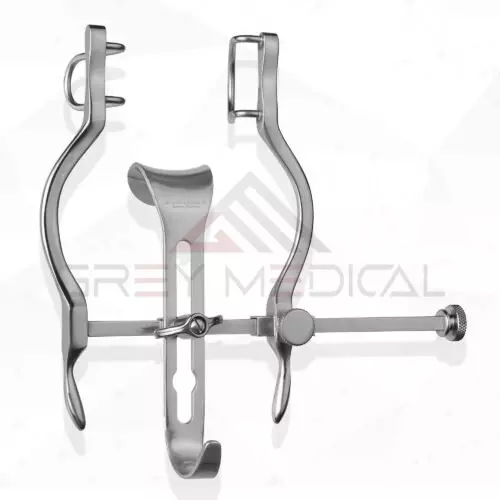
Self-retaining retractors are designed to hold tissues apart without requiring continuous manual support.
These instruments feature locking mechanisms that maintain a fixed position once placed. A surgical retractor with self-retaining functionality is especially valuable during lengthy procedures because it reduces the need for additional assistance while ensuring consistent exposure.
These retractors are widely used in abdominal, cardiovascular, and neurosurgical operations where stability and precision are critical. Their ability to improve efficiency has made them an essential component of many surgical instrument sets.
Read: Precision and Reliability in Surgical Procedures
Specialized Retractors for Different Surgical Fields
Various surgical specialties require uniquely designed retractors to address specific anatomical challenges.
Orthopedic retractors are built to expose bones and joints, while neurosurgical retractors are engineered for delicate procedures involving the brain and spinal cord.
In plastic and reconstructive surgery, a surgical retractor may feature finer blades to provide gentle tissue handling and optimal visibility.
These specialized instruments help surgeons perform complex procedures with greater accuracy and confidence, contributing to improved patient outcomes and reduced procedural risks.
Quality Surgical Instruments from GreyMedical
The effectiveness of retractors depends greatly on their design, durability, and manufacturing quality. GreyMedical is a privately owned medical technology company dedicated to innovation and excellence in the craft of surgical instruments.
The company focuses on producing precision-engineered tools that meet the demanding requirements of modern healthcare professionals.
Whether used in routine operations or advanced surgical procedures, a high-quality surgical instrument retractor ensures reliable performance, superior handling, and long-term durability. Healthcare providers worldwide trust expertly crafted instruments to support successful surgical interventions.
Conclusion
Retractors play a vital role in creating optimal surgical access and visibility. From hand-held designs to self-retaining and specialty instruments, each surgical retractor serves a unique purpose in supporting safe and effective procedures.
As surgical technology advances, the importance of well-designed retractors continues to grow, helping surgeons achieve greater precision while enhancing patient care and surgical outcomes.