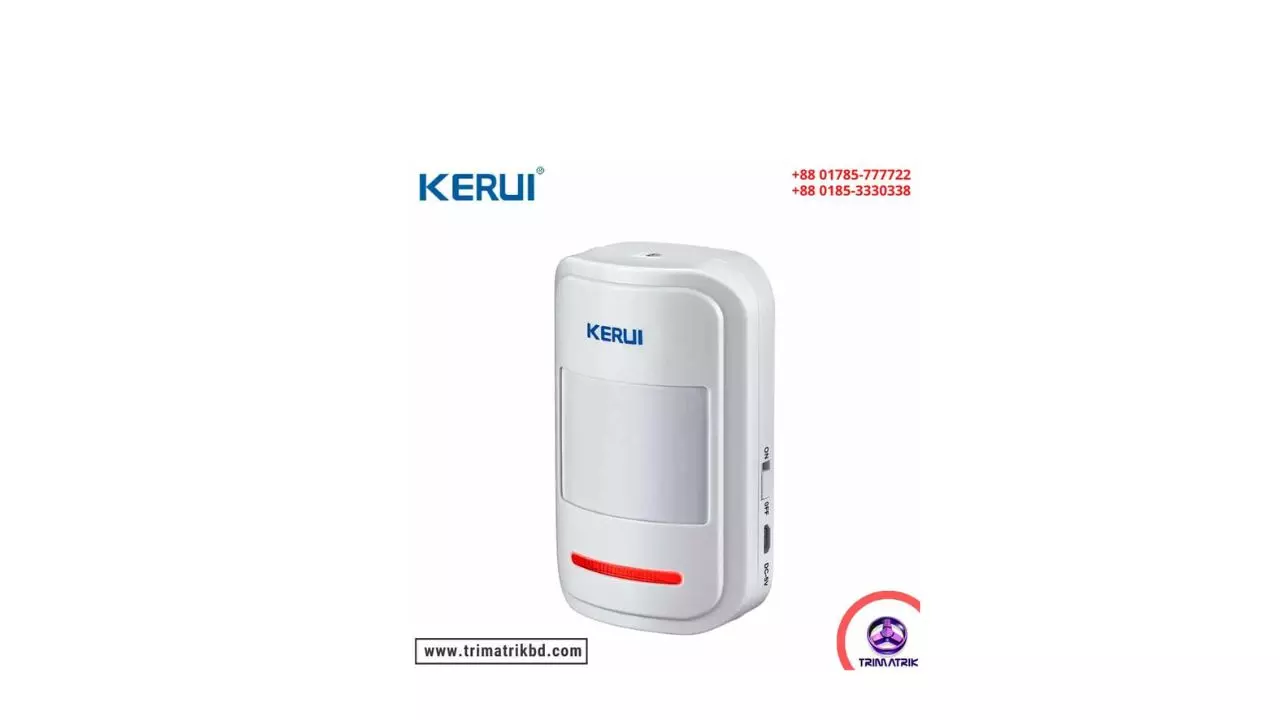
Types of Motion Sensors: Which Is Best for Security?
Motion sensors are integral components of modern security systems, providing early detection of intruders, monitoring movement, and triggering alarms when necessary. The right motion sensor can enhance the effectiveness of a security system, ensuring that it responds quickly to potential threats while minimizing false alarms. In this guide, we will explore the various types of motion sensors, their applications in security, and help you choose the best one for your specific needs.
Passive Infrared (PIR) Sensors
Explanation of How PIR Sensors Work
Passive Infrared (PIR) sensors detect changes in infrared radiation emitted by objects, particularly human bodies. All objects emit infrared radiation, but living beings, such as humans, produce a higher amount of heat. PIR sensors detect these temperature changes as motion when someone enters their detection range.
Advantages and Applications in Security Settings
PIR sensors are the most widely used motion sensors in security systems due to their simplicity and cost-effectiveness. They are especially effective for detecting intruders in residential, commercial, and industrial security settings.
Advantages:
- Cost-effective: PIR sensors are inexpensive and widely available, making them ideal for residential and small-scale commercial use.
- Low power consumption: These sensors consume minimal energy, making them an efficient choice for security applications.
- Easy installation: PIR sensors are easy to install, often requiring no special skills or professional help.
- Applications in Security:
- PIR sensors are typically used in home security systems, motion-activated lighting, and automated door entry systems. They are ideal for detecting movement at entry points like doors, windows, and corridors.
Limitations and Challenges of PIR Sensors
- Limited range: PIR sensors usually have a limited detection range, which can be affected by the size of the detection area.
- Sensitivity to environmental factors: These sensors can be sensitive to temperature changes or obstructions like furniture, which can impact their effectiveness.
- False alarms: Pets or small animals may trigger false alarms if not properly accounted for in the sensor’s placement.
Ultrasonic Motion Sensors
Working Principle of Ultrasonic Sensors
Ultrasonic motion sensors emit high-frequency sound waves that are inaudible to the human ear. These sound waves bounce off objects and return to the sensor. When the sensor detects changes in the returning sound waves, it can identify movement within its range.
Benefits for Security Use Cases
- Wide coverage: Ultrasonic sensors can detect movement in larger areas and can even "see" through walls or obstacles, making them ideal for large rooms or industrial spaces.
- Sensitive to small movements: These sensors are capable of detecting even subtle movements, which enhances security by picking up on hidden threats.
Drawbacks to Consider with Ultrasonic Sensors
- Prone to interference: Ultrasonic sensors can be affected by environmental factors, such as large furniture, which may obstruct sound waves, or materials that absorb sound.
- Complexity: Due to their sensitivity, ultrasonic sensors are more complex to install and calibrate compared to PIR sensors, requiring more precise setup.
Microwave Motion Sensors
How Microwave Sensors Detect Motion
Microwave sensors use electromagnetic waves (microwaves) to detect motion. The sensor emits microwave signals, and when these waves reflect off objects in the detection zone, the sensor analyzes the changes in the returned signal. This enables it to detect movement with high accuracy.
Productivity and Uses in Security Systems
- Long-range detection: Microwave sensors have a longer detection range compared to PIR and ultrasonic sensors, making them suitable for large outdoor or industrial spaces.
- Penetration ability: Unlike PIR or ultrasonic sensors, microwave sensors can detect movement through walls, making them useful in complex environments like corridors or enclosed spaces.
Potential Issues and Limitations
- Higher cost: Microwave sensors are generally more expensive than PIR sensors, which may be a consideration for some users.
- False alarms: Microwave sensors can be triggered by non-human movement, such as wind or moving vehicles, leading to false alarms.
- Sensitivity to interference: These sensors are sensitive to certain environmental conditions, such as weather changes or electromagnetic interference, which may affect their performance.
Dual-Technology Motion Sensors
Overview of Dual-Technology Sensors Combining PIR and Microwave or Ultrasonic Technology
Dual-technology motion sensors combine two different types of motion detection technologies, such as PIR and microwave or ultrasonic sensors. These sensors require both technologies to be triggered before the alarm is activated, significantly reducing false alarms caused by environmental factors or small movements.
Advantages in Reducing False Alarms
- Improved accuracy: By combining two detection technologies, dual-technology sensors provide greater accuracy in detecting legitimate threats.
- Reduced false positives: The combination of PIR and microwave/ultrasonic technologies reduces the likelihood of false alarms, making them ideal for sensitive environments or high-security applications.
Best Scenarios for Employing Dual-Technology Sensors
Dual-technology sensors are best used in high-security settings where accuracy is critical. Examples include commercial properties, government buildings, and high-value residential homes where unwanted triggers can be costly.
Video Motion Sensors
Explanation of Video Motion Detection
Video motion sensors use surveillance cameras combined with motion detection software to monitor movement in their field of view. When movement is detected, the camera records the event, and the security system can trigger alerts.
Integration with Security Camera Systems
Video motion sensors work seamlessly with CCTV cameras, providing a more comprehensive security solution. The sensors help cameras focus on areas where movement is detected, ensuring that recorded footage captures relevant events without wasting storage on empty frames.
Pros and Cons of Using Video Motion Sensors
Pros:
- Higher accuracy: Video motion sensors can be highly accurate in detecting movement and tracking individuals.
- Visual evidence: These sensors provide visual documentation of intrusions, which can be useful for law enforcement and insurance claims.
- Cons:
- Higher cost: Video motion sensors tend to be more expensive than traditional sensor types, including installation and maintenance.
- Privacy concerns: The use of video surveillance may raise privacy issues, especially in residential settings.
Comparison of Motion Sensors for Security
Real-World Performance Comparison of Different Sensor Types
- PIR Sensors: Reliable and cost-effective, ideal for detecting human movement in smaller, indoor spaces.
- Ultrasonic Sensors: Offer broader coverage and sensitivity to small movements but can be affected by environmental factors.
- Microwave Sensors: Effective in large areas with long-range detection but can trigger false alarms from environmental conditions.
- Dual-Technology Sensors: Provide the best accuracy by combining PIR and microwave/ultrasonic technologies but are more expensive.
- Video Motion Sensors: Excellent for monitoring large areas with detailed visual evidence but come at a higher cost.
Key Factors to Consider When Selecting a Motion Sensor for Security Purposes
- Coverage area: Choose a sensor based on the size of the area you need to cover.
- Sensitivity: Consider whether you need a highly sensitive sensor or one that minimizes false alarms.
- Cost: Weigh the costs of different sensor types against the budget available for your security system.
- Environmental conditions: Consider the environment in which the sensor will be placed—outdoors, in high-traffic areas, or in large spaces.
Compatibility with Existing Security Systems
Ensure that the chosen motion sensor type is compatible with your existing security system, including integration with alarms, cameras, and monitoring systems.
Motion Sensor Price in Bangladesh
When considering motion sensors for security systems, motion sensor price in Bangladesh can vary significantly depending on the type, brand, and technology used. Basic PIR sensors tend to be more affordable, while dual-technology sensors or video motion sensors may have a higher price point due to their advanced features and accuracy. It's important to balance your security needs with the available budget to choose the most cost-effective solution.
Conclusion
Motion sensors are crucial components in modern security systems, each offering unique benefits for different applications. PIR sensors are ideal for basic security needs, while dual-technology sensors offer the most reliable detection for high-security settings. Video motion sensors provide comprehensive surveillance capabilities, though at a higher cost.
By understanding the strengths and limitations of each sensor type, you can choose the best solution for your security system, ensuring that your home or business remains safe and secure.
FAQs:
What is the best motion sensor for a home security system?
- PIR sensors are typically the best choice for home security systems due to their affordability and reliability, but dual-technology sensors may be ideal for areas with more movement.
Do motion sensors work outdoors?
- Yes, motion sensors like PIR, ultrasonic, and microwave sensors are available for outdoor applications. Ensure the sensor is rated for outdoor use to withstand weather conditions.
How can I reduce false alarms with motion sensors?
- Use dual-technology sensors, which combine two detection methods to reduce the likelihood of false alarms, and carefully place sensors away from pets and environmental disturbances.