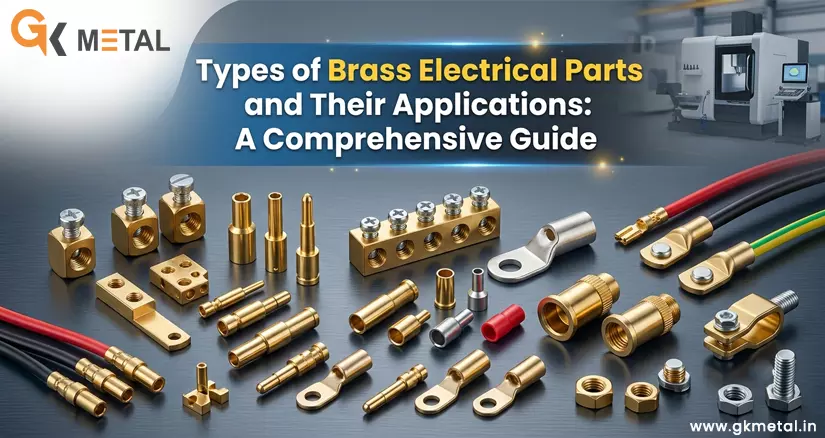
Types of Brass Electrical Parts and Their Applications: A Comprehensive Guide
The electrical and electronics industry relies heavily on components that offer uncompromised safety, high conductivity, and long-term durability. Among various metals, brass—a alloy of copper and zinc—stands out as the premier choice for manufacturing precision electrical hardware.
As a trusted brass electrical components manufacturer, GK Metals delivers precision-engineered solutions designed to meet stringent global standards. In this guide, we break down the primary types of brass electrical parts, their industrial applications, and why sourcing from specialized manufacturing hubs is critical for quality control.
Why Brass is the Preferred Material for Electrical Components
Before exploring specific parts, it is essential to understand why top engineering industries prefer brass over alternative metals.
1. Superior Electrical & Thermal Conductivity: The copper base in brass ensures efficient electrical transmission with minimal resistance, reducing power loss and heat build-up.
2. Exceptional Corrosion Resistance: Brass naturally resists oxidation and rust, making it ideal for high-moisture environments, marine fittings, and outdoor installations.
3. High Machinability & Mechanical Strength: Brass allows for tight tolerances during CNC turning, stamping, and threading. This makes it possible to produce intricate shapes without compromising structural integrity.
4. Non-Magnetic Properties: Essential for sensitive electrical circuits, switchgear, and electronic devices where magnetic interference can disrupt performance.
Key Types of Brass Electrical Parts & Their Applications
Precision electrical networks require specialized components to function reliably. Here are the core types of electrical brass parts produced by leading electrical brass parts manufacturers:
1. Brass Terminals & Connectors
Electrical terminals act as the vital point where conductors connect to circuits or hardware.
- Types: Screw terminals, block terminals, tubular lugs, and wire connectors.
- Applications: Used extensively in terminal blocks, control panels, circuit breakers, and power distribution systems to maintain secure, heat-resistant electrical contact.
2. Brass Pins & Socket Contacts
Pins and socket contacts are essential for male-female electrical connections in everyday appliances and industrial machinery.
- Types: 2-pin/3-pin plug pins, neutral pins, earth pins, and industrial socket contacts.
- Applications: Found in power plugs, extension cords, automotive connectors, and electronic power supplies where smooth insertion and stable conductivity are required.
3. Brass Cable Glands & Fasteners
Cable glands secure cable entries into enclosures, protecting internal systems from dust and environmental wear.
- Types: Single compression glands, double compression glands, armor clamps, machine screws, and washers.
- Applications: Essential for hazardous areas, industrial automation, marine installations, and power plant wiring.
4. Brass Switch & Fuse Components
Heavy-duty electrical switches demand materials that can sustain frequent current switching without melting or sparking wear.
- Types: Switch contacts, fuse caps, relay parts, and socket inserts.
- Applications: Used in residential switchboards, commercial distribution boxes, and industrial motor starters.
Sourcing from Jamnagar: The Global Brass Hub
When searching for reliable suppliers, sourcing from established manufacturing clusters makes a measurable difference in product quality and cost-efficiency.
Why Sourcing from Jamnagar Advantageous
Known globally as the "Brass City," Jamnagar, Gujarat, accounts for a significant portion of the world’s high-grade brass hardware. Choosing brass electrical parts manufacturers in jamnagar provides key benefits:
- End-to-End Infrastructure: From raw material melting and extrusion to precision machining and electroplating, the entire supply chain is locally integrated.
- Customization & Precision Tolerances: Manufacturers in Jamnagar specialize in custom drawings, producing parts in high volumes with microscopic accuracy.
- Global Compliance: Leading export units like GK Metals adhere to international standards including RoHS, REACH, ISO, and DIN specifications.
- Cost-Effective Production: Integrated manufacturing hubs optimize operational overheads, delivering competitive prices without compromising quality.
Frequently Asked Questions (FAQs)
Q1. Why is brass preferred over aluminum for electrical components?
While aluminum is lighter, brass provides significantly higher mechanical strength, better corrosion resistance, and superior performance in high-temperature or high-vibration applications. Brass is also much easier to thread and machine with tight tolerances.
Q2. Can GK Metals produce custom brass electrical components based on specific technical drawings?
Yes. As a specialized brass terminal manufacturer and brass pin manufacturer, GK Metals manufactures custom parts based on user-provided technical drawings, material grades (such as CuZn39Pb3, CZ121, or lead-free brass), and plating specifications (nickel, tin, or silver plating).
Q3. How do surface coatings enhance brass electrical components?
Surface coatings like nickel plating, tin plating, or silver plating improve wear resistance, prevent oxidation, reduce contact resistance, and enhance soldering capabilities in harsh operating environments.
Conclusion
Choosing the right brass components directly impacts the safety, efficiency, and lifespan of electrical systems. Whether you require precision terminal blocks, industrial cable glands, or custom plug pins, partnering with an experienced manufacturer ensures your products meet international quality and performance standards.
As a leading brass electrical components manufacturer, GK Metals combines advanced manufacturing technology with rigorous quality assurance to deliver high-precision parts worldwide.