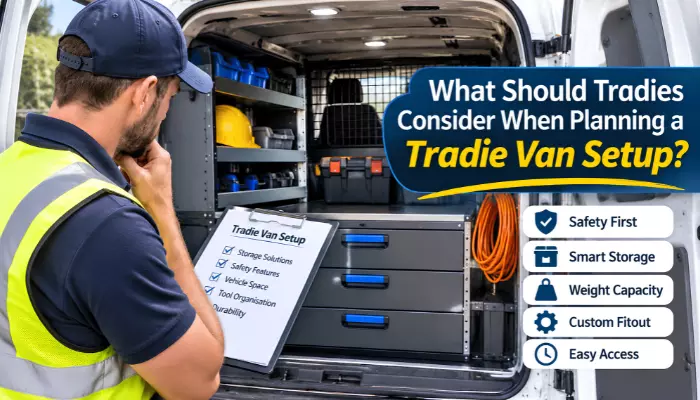
What Should Tradies Consider When Planning a Tradie Van Setup?
For tradies, a work van is more than a vehicle. It is a mobile workspace that carries essential tools, equipment, materials, and supplies between job sites.
A poorly organised van can make daily tasks difficult, waste valuable time, and create unnecessary safety risks. Planning a practical Tradie Van Setup helps workers keep equipment organised, improve accessibility, and make better use of available vehicle space.
However, choosing the right setup requires more than adding shelves and storage compartments. Tradies should consider their trade requirements, vehicle capacity, equipment size, and everyday working habits before making changes.
1. Understand Your Daily Work Requirements
The first step is identifying what you need to carry regularly. Electricians, plumbers, builders, and maintenance technicians all use different tools and materials. Therefore, a storage layout that works for one trade may not be suitable for another.
Make a list of frequently used equipment, larger tools, spare parts, and safety gear. Consider which items need quick access and which can be stored in less accessible areas.
Understanding these requirements helps prevent unnecessary storage additions and makes the vehicle layout more practical.
2. Choose Practical Tool Storage Options
Storage should keep equipment organised without taking up more space than necessary. Drawers, shelving, toolboxes, and compartments can provide dedicated locations for different items.
Installing van tool storage drawers can help separate equipment by category and make frequently used tools easier to locate. Consider drawer depth, load capacity, locking mechanisms, and accessibility before choosing a system.
3. Consider Vehicle Space and Weight Capacity
Every van has specific dimensions and manufacturer-specified weight limits. Adding storage equipment, tools, passengers, and materials increases the vehicle's overall load.
Before installation, measure the available space and plan where each storage component will fit. Heavy equipment should be positioned and secured appropriately to help maintain vehicle stability.
Tradies should also check the vehicle's payload and axle limits. A well-organised van should never compromise safe loading practices.
4. Select a Durable Drawer and Shelving System
Work vehicles experience regular movement, changing weather conditions, and frequent loading and unloading. Storage components should be suitable for these everyday demands.
When comparing options, consider material quality, drawer runners, mounting arrangements, corrosion resistance, and ease of maintenance.
Choosing the best van drawer system depends on the tools being carried, available space, and the type of work performed. A suitable system should offer practical storage without making essential equipment difficult to access.
5. Think About Safety and Equipment Protection
Safety should be a priority when planning any commercial vehicle setup. Loose tools and unsecured materials can move during sudden braking or sharp turns, potentially causing damage or injury.
Suitable restraints, secure compartments, and correctly installed storage equipment can help reduce these risks. For vehicles carrying cargo inside the cabin area, cargo barrier installation melbourne may also be worth considering, depending on the vehicle configuration and intended use.
Remember that a cargo barrier does not replace proper load restraint. Always follow relevant vehicle requirements and safe loading practices.
6. Plan Storage Around Your Specific Trade
Different professions require different vehicle layouts. Plumbers may need pipe storage and fitting compartments, while electricians often require organised spaces for testing equipment, cables, and smaller components.
Businesses operating both vans and utes should consider the different storage requirements of each vehicle. For example, ute drawers melbourne can provide dedicated compartments for equipment carried in a ute tray or canopy.
A customised approach can help ensure that each vehicle supports the tasks it is expected to perform.
7. Allow Room for Future Requirements
A business's equipment needs may change over time. New tools, additional materials, or different types of projects can require more storage space.
Avoid filling every available area with unnecessary accessories. Instead, consider a flexible layout that allows future adjustments.
Regularly inspect storage components, mounting points, locks, and drawer runners. Keeping the system clean and checking for damage can help maintain its condition.
Final Thoughts
Planning a practical tradie van setup involves more than choosing storage products. Tradies should evaluate their daily work requirements, vehicle dimensions, weight capacity, equipment protection, and accessibility before making a decision.
A well-designed system can make tools easier to find, reduce unnecessary clutter, and support a more organised working environment. Van Drawers offers vehicle storage and fitout solutions that can help tradies make better use of their available space.
Frequently Asked Questions
1. What is the most important factor when planning a tradie van setup?
Understanding your daily work requirements is essential. The storage layout should match your tools, equipment, and the type of trade you perform.
2. Are drawers better than shelves for work vans?
Both have different advantages. Drawers are useful for smaller tools and equipment, while shelves can accommodate larger items and materials.
3. How can I make my work van safer?
Secure loose equipment, distribute weight appropriately, avoid overloading, and use suitable storage and load-restraint systems.
4. Should I customise my van storage?
Customisation can be useful when standard storage options do not suit your equipment, vehicle dimensions, or workflow.
5. How often should van storage systems be inspected?
Inspect them regularly, particularly the mounting points, locks, runners, and fasteners. Address any damage or loose fittings promptly.