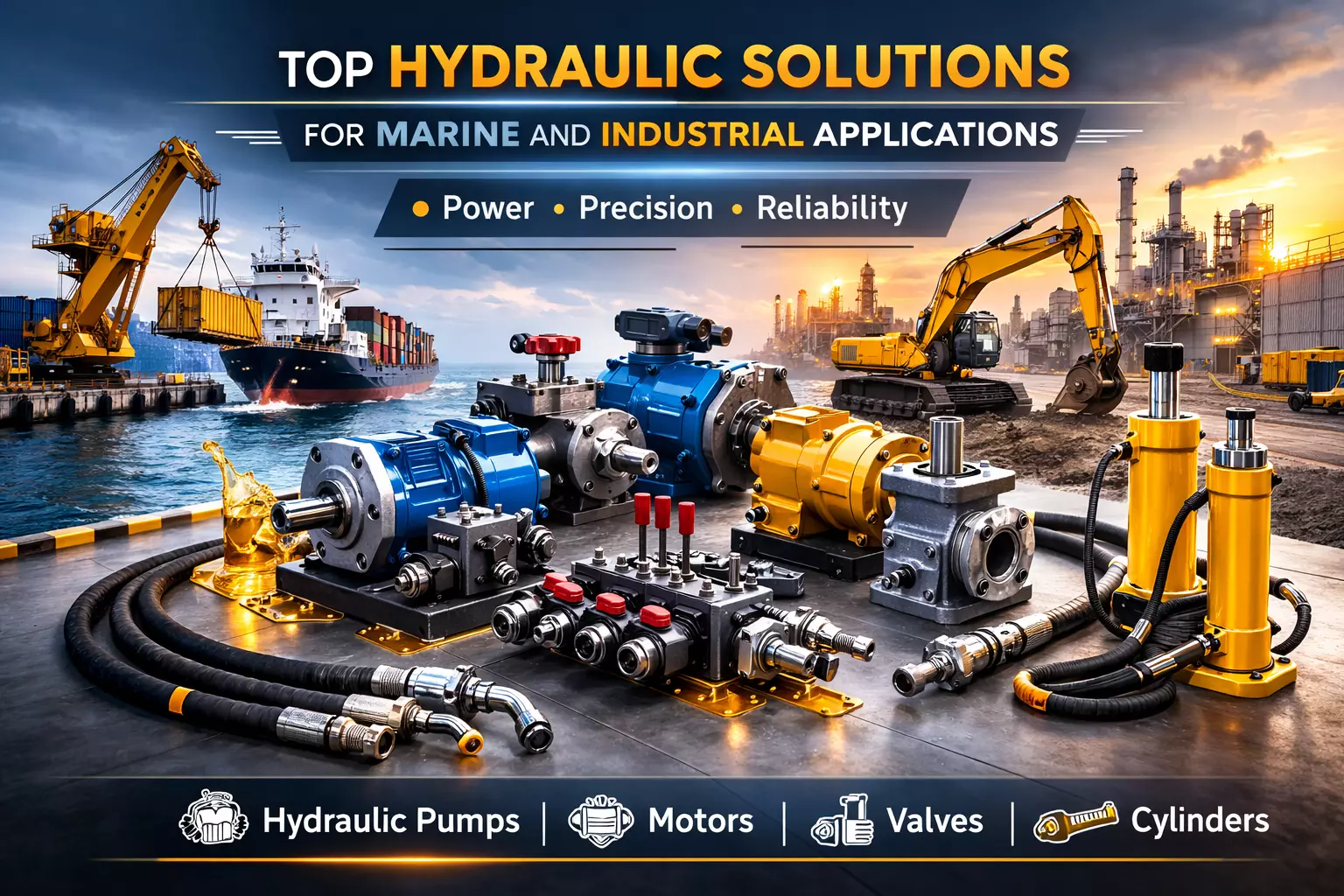
Top Hydraulic Solutions for Marine and Industrial Applications
Hydraulic systems form the backbone of heavy machinery used in marine and industrial environments.
From lifting cargo on ships to operating construction equipment and manufacturing machinery, hydraulic solutions deliver unmatched power, precision, and reliability.
Their ability to transmit force through pressurized fluid makes them ideal for applications that demand consistent performance under high pressure and challenging conditions.
In both marine and industrial sectors, downtime can result in significant financial losses. That is why investing in high-quality hydraulic components is essential for maintaining operational efficiency.
Understanding how these systems work and selecting the right equipment ensures long-term productivity and safety.
Understanding How Hydraulic Systems Work
Hydraulic systems function based on the principle of fluid power. When hydraulic fluid is pressurized by a pump, it transmits force through hoses and valves to motors or cylinders.
This controlled movement allows machinery to lift heavy loads, rotate components, or perform precision tasks with minimal effort.
One major advantage of hydraulic systems is their ability to generate high force from compact components. They also provide smooth and precise control, which is essential for complex machinery.
In demanding environments such as offshore vessels or industrial plants, hydraulics outperform many mechanical alternatives because they handle heavy loads with greater stability and durability.
Hydraulic systems are also energy efficient when properly maintained. With correct pressure management and fluid quality control, they can operate continuously with minimal wear.
Core Hydraulic Components and Their Functions
Every hydraulic system consists of essential components that work together to produce and control power. Choosing reliable components improves overall system performance and reduces maintenance issues.
Hydraulic Pumps
Hydraulic pumps are responsible for converting mechanical energy into hydraulic energy. They create the flow of pressurized fluid that powers the system. Typical varieties include gear pumps, vane pumps, and piston pumps.
Each type offers specific advantages depending on pressure requirements and application needs.
Selecting the correct pump ensures steady flow, optimal pressure levels, and improved efficiency. In marine and industrial machinery, pump reliability directly impacts productivity.
Hydraulic Motors
Hydraulic motors transform hydraulic energy into mechanical motion. These motors are widely used in winches, conveyors, cranes, and rotating equipment.
Their high torque output makes them suitable for heavy-duty operations where precision and strength are equally important.
Directional Control Valves
Directional control valves manage the flow and direction of hydraulic fluid. They allow operators to control movement with accuracy, ensuring safe and efficient performance. Without proper valve control, systems may experience instability or reduced efficiency.
Hydraulic Cylinders
Hydraulic cylinders generate linear motion and are essential in lifting, pushing, and pulling operations. From construction machinery to marine hatch covers, cylinders provide the force necessary for demanding applications.
Hoses and Fittings
High-pressure hoses and fittings connect system components and maintain fluid integrity. Durable hoses prevent leakage and ensure consistent pressure flow. Using high-quality connectors reduces the risk of system failure and enhances safety.
Marine Hydraulic Applications
Marine hydraulic systems are specifically designed to withstand harsh offshore environments. Saltwater exposure, high humidity, and heavy mechanical loads require corrosion-resistant and durable components.
Common marine applications include:
- Steering systems for vessels
- Deck cranes and cargo handling equipment
- Winches and anchor handling systems
- Hatch cover operations
Reliability is critical in marine settings because unexpected failure can disrupt operations and pose safety risks. High-performance marine hydraulic equipment ensures vessels operate smoothly, even in rough sea conditions.
Properly engineered marine hydraulic systems also improve operational efficiency by providing accurate control and reducing manual effort. This enhances crew safety and supports smooth cargo handling.
Industrial Hydraulic Applications
In industrial environments, hydraulic systems power machinery used in construction, mining, manufacturing, and material handling.
Heavy equipment such as excavators, loaders, presses, and injection molding machines rely on hydraulic power for strength and precision.
Industrial hydraulic solutions offer several advantages:
- Consistent performance under heavy loads
- Precise motion control for automated systems
- Reduced mechanical strain
- Enhanced production efficiency
Many businesses collaborate with a trusted machine supplier to ensure hydraulic components are compatible with existing systems.
Working with an experienced machine supplier helps industries select reliable equipment that meets operational requirements and industry standards.
Hydraulic systems also play a vital role in factory automation, where precision and repeatability are essential. Properly designed systems reduce downtime and improve productivity.
Factors to Consider When Choosing Hydraulic Solutions
Selecting the right hydraulic equipment requires careful planning. Key considerations include:
- Required pressure and load capacity
- Operating environment and temperature conditions
- Compatibility with machinery
- Ease of maintenance
- Long-term durability
Choosing components that match system demands improves performance and reduces operational risks. Consulting experts ensures the right combination of pumps, motors, valves, and cylinders is selected for specific applications.
Read: Why OEW Is a Trusted Hydraulic Cylinder Manufacturer in
Maintenance and System Optimization
Regular maintenance is crucial for maximizing hydraulic system lifespan. Routine inspections help detect wear in hoses, seals, and fittings before failures occur.
Monitoring hydraulic fluid quality prevents contamination, which can damage internal components.
Preventive maintenance practices include:
- Checking pressure levels regularly
- Replacing worn seals and hoses
- Maintaining proper fluid cleanliness
- Inspecting valves and pumps for efficiency
Well-maintained hydraulic systems operate more efficiently and reduce unexpected downtime. Businesses that prioritize maintenance benefit from improved safety, reduced repair costs, and extended equipment life.
Conclusion
Hydraulic solutions are essential for powering marine and industrial machinery. Their ability to deliver high force, precise control, and reliable performance makes them indispensable in demanding environments.
From pumps and motors to valves and cylinders, every component plays a vital role in ensuring system efficiency.
Whether used offshore or in heavy industrial operations, investing in high-quality hydraulic components supports long-term productivity and operational safety.
By understanding system requirements, selecting reliable equipment, and maintaining proper care, businesses can achieve optimal performance and sustainable growth.