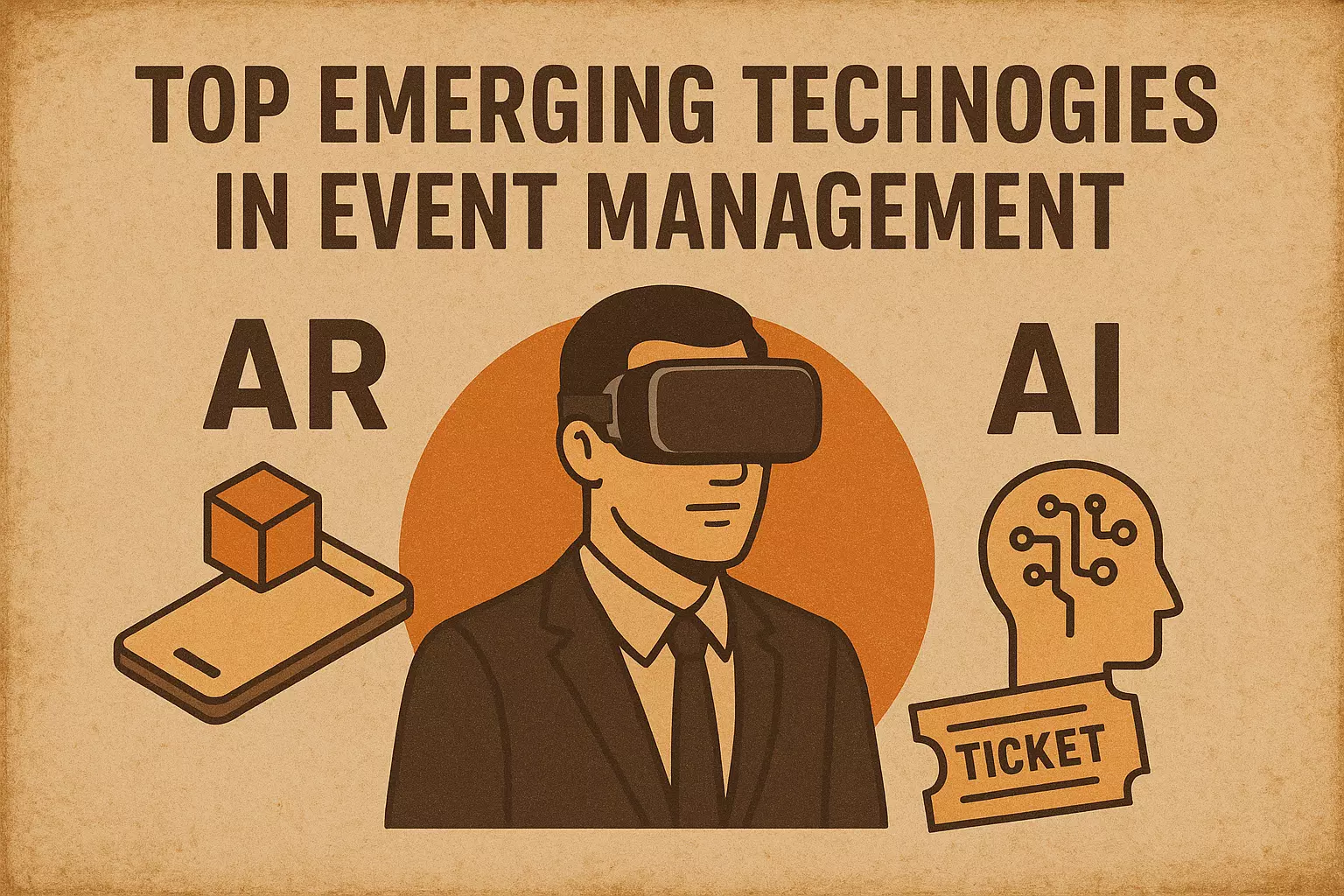
Top Emerging Technologies in Event Management (AR, VR, AI)
The event management industry is evolving at lightning speed, driven by rapid advancements in technology. What used to be about paper tickets, long registration lines, and manual data entry has now transformed into a fully digital experience — powered by Artificial Intelligence (AI), Augmented Reality (AR), and Virtual Reality (VR).
These emerging technologies are redefining how events are planned, experienced, and analyzed. From immersive attendee experiences to smart data-driven decisions, modern tech tools are empowering event organizers to deliver seamless, engaging, and measurable outcomes.
In this article, we’ll explore how AR, VR, and AI are shaping the future of event management — and how businesses can leverage them to stay ahead of the competition.
Read: How Is AI Driving Modern Technologies?
1. The Role of AI in Event Management
Artificial Intelligence has become a cornerstone of digital transformation, and event management app development company is no exception. AI-driven tools and platforms are now central to automating processes, personalizing experiences, and optimizing performance.
a. Smart Event Planning
AI algorithms can analyze past event data, attendee feedback, and engagement metrics to help organizers make informed decisions. Whether it’s choosing the ideal venue, estimating audience size, or predicting catering needs, AI removes the guesswork and enables smarter planning.
b. Chatbots and Virtual Assistants
AI chatbots have revolutionized customer support and event communication. These virtual assistants can handle real-time inquiries, provide session updates, and guide attendees throughout the event — 24/7. The result? Better engagement and less workload for staff.
c. Predictive Analytics for Success
AI-based predictive analytics tools help organizers forecast attendance, revenue, and engagement trends. By understanding audience behavior and preferences, event planners can tailor their marketing and content strategies for maximum impact.
d. Personalized Attendee Experience
AI makes personalization easy. From recommending sessions based on interests to suggesting networking matches, intelligent algorithms create customized event journeys for each participant. This level of personalization leads to higher satisfaction and stronger brand loyalty.
2. How Augmented Reality (AR) Is Enhancing Event Experiences
Augmented Reality (AR) has moved beyond gaming and social filters — it’s now a game-changer in event management. By blending the digital and physical worlds, AR creates interactive and memorable experiences for attendees.
a. Immersive Event Navigation
Imagine walking into a large conference center and using your phone to view 3D directions, exhibitor booths, and session schedules overlaid onto your camera feed. That’s the power of AR-based event navigation. It simplifies movement across venues and improves user experience.
b. Interactive Booths and Brand Activations
AR gives sponsors and exhibitors exciting new ways to attract attention. Interactive AR booths can display digital product demos, host mini-games, or provide 360° views of products. This not only enhances engagement but also helps brands collect valuable attendee data.
c. Enhanced Presentation Experiences
Speakers can use AR to make their presentations more dynamic and visually appealing. Imagine a keynote where 3D graphics pop up in real time — turning static slides into interactive experiences that captivate audiences.
d. Real-Time Engagement and Gamification
AR-based games and activities during events can drive participation and networking. Organizers can create AR treasure hunts, virtual leaderboards, or photo challenges, turning attendees into active participants rather than passive viewers.
3. The Power of Virtual Reality (VR) in Event Management
While AR enhances the physical event experience, Virtual Reality (VR) transports users to entirely new worlds. VR has become one of the most transformative tools in the event industry, especially for hybrid and virtual events.
a. Immersive Virtual Venues
VR can recreate entire event venues in 3D — allowing attendees from anywhere in the world to join and explore as if they were physically present. This makes global participation possible without the logistical challenges of travel.
b. Virtual Product Demonstrations
Exhibitors can use VR to showcase their products in detailed, realistic environments. For example, a car manufacturer can let attendees “test drive” a new vehicle virtually, providing an unforgettable brand experience.
c. Networking in Virtual Spaces
VR-based networking lounges allow attendees to interact through avatars, fostering meaningful connections even in virtual environments. This is especially useful for global conferences where physical meetings aren’t possible.
d. Sustainable and Cost-Effective
VR events reduce costs related to travel, venue rentals, and printed materials. They’re also more sustainable — helping organizations lower their carbon footprint while still delivering impactful experiences.
4. The Synergy of AR, VR, and AI
The real magic happens when these technologies work together. Combining AI’s intelligence with AR and VR’s immersive capabilities creates a new era of “smart events.”
- AI + AR: Personalized AR recommendations based on attendee behavior (e.g., highlighting booths relevant to user interests).
- AI + VR: Data-driven virtual environments that adapt to user preferences and optimize content delivery.
- AR + VR + AI: Fully integrated event ecosystems where attendees move seamlessly between physical and virtual spaces, guided by AI-powered personalization.
This synergy transforms event management from logistics-driven to experience-driven — where technology becomes an invisible enabler of human connection.
5. Real-World Applications of Emerging Event Technologies
a. Trade Shows and Expos
Large-scale expos are using AR for interactive product displays and VR for virtual booth tours. AI analytics help exhibitors identify high-potential leads in real time.
b. Conferences and Seminars
Organizers use AI-based matchmaking tools to connect attendees with similar interests. AR name badges display live social feeds, and VR enables remote participants to “sit” virtually in the audience.
c. Product Launches
Brands are hosting immersive VR product launches, where global audiences can participate simultaneously. AI tools measure sentiment and engagement across social media channels.
d. Corporate Training and Internal Events
Companies leverage VR for realistic training simulations and AI for tracking learning progress. AR enhances engagement through gamified learning experiences.
6. Preparing for the Future of Event Management
As technology continues to evolve, event organizers must adapt quickly to stay relevant. Investing in innovation isn’t optional anymore — it’s essential. Businesses looking to scale should partner with an experienced Event Management App Development Company that understands how to integrate AR, VR, and AI seamlessly into user-friendly solutions.
These technologies will continue to reshape the industry by:
- Making events more data-driven and measurable
- Enhancing attendee engagement through immersive experiences
- Enabling remote participation without sacrificing quality
- Driving sustainability and cost-efficiency
Read: How Artificial Intelligence Impacts Everyday Life
Conclusion
The fusion of AR, VR, and AI is setting the stage for the next generation of event experiences. Events are no longer just gatherings — they are interactive ecosystems fueled by innovation. Organizers who embrace these technologies will not only improve operational efficiency but also create unforgettable experiences that resonate with audiences long after the event ends.
As the world moves toward hybrid and digital-first experiences, companies offering Event Management Development Services are focusing on building intelligent, scalable, and immersive platforms. Moreover, with trends like Social Media App Development overlapping into event technology, the line between social engagement and live events is becoming beautifully blurred.