Top EMS Student Tools That Make Clinical Training Easier
Clinical training is one of the most important stages of becoming an EMS professional. It bridges the gap between classroom learning and real patient care by allowing students to apply their knowledge in realistic situations.
Whether you're practicing vital signs, assisting during ambulance ride-alongs, or participating in simulation labs, having dependable equipment helps you stay organized and perform tasks with greater confidence.
Every EMS student quickly discovers that preparation makes a difference. Carrying the right tools reduces stress, improves efficiency, and allows you to focus on patient assessment instead of searching for missing equipment.
While there are many accessories available, a few essential items consistently prove their value throughout EMT school and clinical rotations.
Students looking to build a complete kit often start by learning which emt equipment best supports both classroom instruction and field experience.
Essential Gear Every EMS Student Should Carry
EMS education is designed to prepare students for unpredictable situations. One day may involve practicing airway management in a skills lab, while another includes documenting patient findings during a clinical shift.
Reliable tools make these experiences smoother and help students develop professional habits early.
A practical EMS kit doesn't need to be overloaded with unnecessary accessories. Instead, it should contain durable equipment that students will use repeatedly throughout their education.
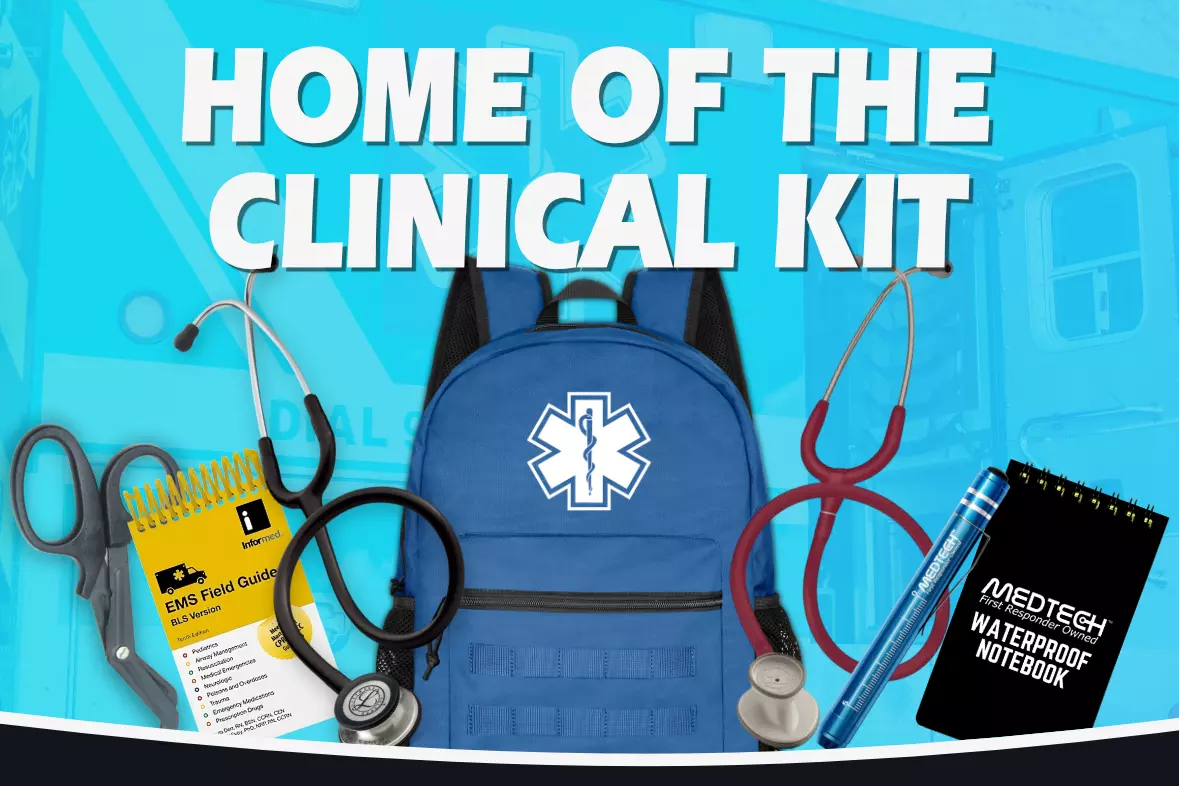
Four items stand out as everyday essentials: a waterproof notepad, a tactical flashlight, trauma shears, and an EMS backpack.
These tools work together to improve organization, efficiency, and readiness during every stage of clinical training.
Keep Accurate Notes with a Waterproof Notepad
Patient information is one of the most valuable resources during any emergency call. EMS students frequently record vital signs, medication lists, assessment findings, treatment plans, and instructor feedback throughout their clinical experience.
A waterproof notepad provides a dependable writing surface regardless of weather conditions.
Rain, spilled fluids, or humid environments can quickly ruin ordinary paper, making waterproof pages especially useful during outdoor training and ambulance shif
Students also benefit from carrying a compact notepad because it fits easily into uniform pockets without adding unnecessary bulk. Instead of relying on memory after multiple patient encounters, they can immediately document important observations for later review.
Consistent note-taking also strengthens learning. Reviewing assessment findings after each shift reinforces classroom lessons while helping students identify areas that need additional practice.
Read: EMT Training Kits That Make Patient Care Intuitive and
Stay Prepared During Low-Light Emergencies with a Tactical Flashlight
Emergency scenes rarely happen under perfect lighting. Patients may require assessment inside dark homes, vehicles, stairwells, or outdoor environments after sunset.
A dependable tactical flashlight allows EMS students to work safely while improving visibility during patient care.
Compact tactical flashlights provide bright illumination without taking up much space. Many include durable aluminum construction, multiple lighting modes, and long battery life suitable for extended shifts.
Beyond scene lighting, flashlights assist with several routine clinical tasks. Students may use them to examine pupils during neurological assessments, locate equipment inside medical bags, or safely navigate unfamiliar environments.
Learning to carry and properly use a flashlight early in EMS education builds habits that continue throughout a professional career.
Why Trauma Shears Are a Must-Have for Clinical Training
Trauma shears are among the most frequently used tools in emergency medicine. During patient assessment, clothing often needs to be removed quickly to identify injuries, monitor bleeding, or expose treatment areas without causing unnecessary delays.
Unlike household scissors, trauma shears are specifically designed to cut through heavy fabrics including denim, jackets, boots, and seat belts while minimizing the risk of injuring patients.
EMS students regularly practice these skills during simulation exercises before encountering them during real patient care. Owning personal trauma shears allows students to become comfortable handling them throughout their education.
Quality trauma shears also remain useful well beyond graduation. Their durability makes them valuable additions to every EMT's daily gear.
Organize Your Equipment with an EMS Backpack
As students progress through EMT school, the amount of equipment they carry often increases. Books, clinical paperwork, medical instruments, protective equipment, snacks, water bottles, and personal supplies can quickly become difficult to manage without proper organization.
An EMS backpack keeps everything in one location while protecting valuable equipment from damage.
Modern EMS backpacks include multiple compartments that separate medical tools from personal belongings. Dedicated storage spaces allow students to quickly locate supplies without unpacking their entire bag during busy clinical rotations.
Comfort is another important advantage. Adjustable shoulder straps and ergonomic designs distribute weight more evenly, making long walks across hospitals or training facilities much easier.
Students who remain organized spend less time searching for equipment and more time focusing on patient care.
Building an EMS Kit That Supports Every Stage of Training
Although each tool serves a different purpose, together they create a practical foundation for EMS education.
A waterproof notepad keeps documentation protected in challenging environments.
A tactical flashlight improves visibility during assessments.
Trauma shears prepare students for emergency patient care.
An EMS backpack keeps everything organized throughout busy training days.
As students gain experience, additional items may be added to their clinical kit. However, these four essentials remain useful from the first classroom lab through graduation and into professional practice.
Many instructors recommend purchasing dependable equipment early so students can become familiar with the same tools they'll eventually use in the field.
Students preparing for clinical rotations often create a checklist of necessary emt school supplies to ensure they're fully equipped before every shift.
Why EMS Students Trust MedTechKits.com
Finding reliable equipment from a trusted source saves students time and ensures they receive products designed for EMS education. Rather than purchasing random accessories from multiple retailers, students benefit from selecting gear specifically chosen for EMT and paramedic training.
MedTechKits.com focuses on practical equipment that supports classroom instruction, clinical rotations, and ride-alongs. From notebooks and flashlights to trauma shears and backpacks, every product is selected with the needs of EMS students in mind.
Whether beginning your first semester or preparing for graduation, choosing dependable tools helps build confidence while reducing unnecessary distractions during training.
Students looking for dependable equipment can explore an emt supply store that specializes in products designed specifically for EMS education and clinical success.
Final Thoughts
Success during EMS clinical training depends on preparation just as much as knowledge. While instructors provide the education, students are responsible for bringing the right tools to every lab, clinical rotation, and field experience.
A waterproof notepad helps preserve important patient information. A tactical flashlight improves visibility in challenging environments. Trauma shears prepare students for emergency patient care, while an EMS backpack keeps essential gear organized throughout demanding training days.
Investing in quality equipment early allows students to develop professional habits that continue throughout their careers. With dependable tools always within reach, future EMTs can focus on what matters most building the confidence, skills, and experience needed to provide exceptional patient care.