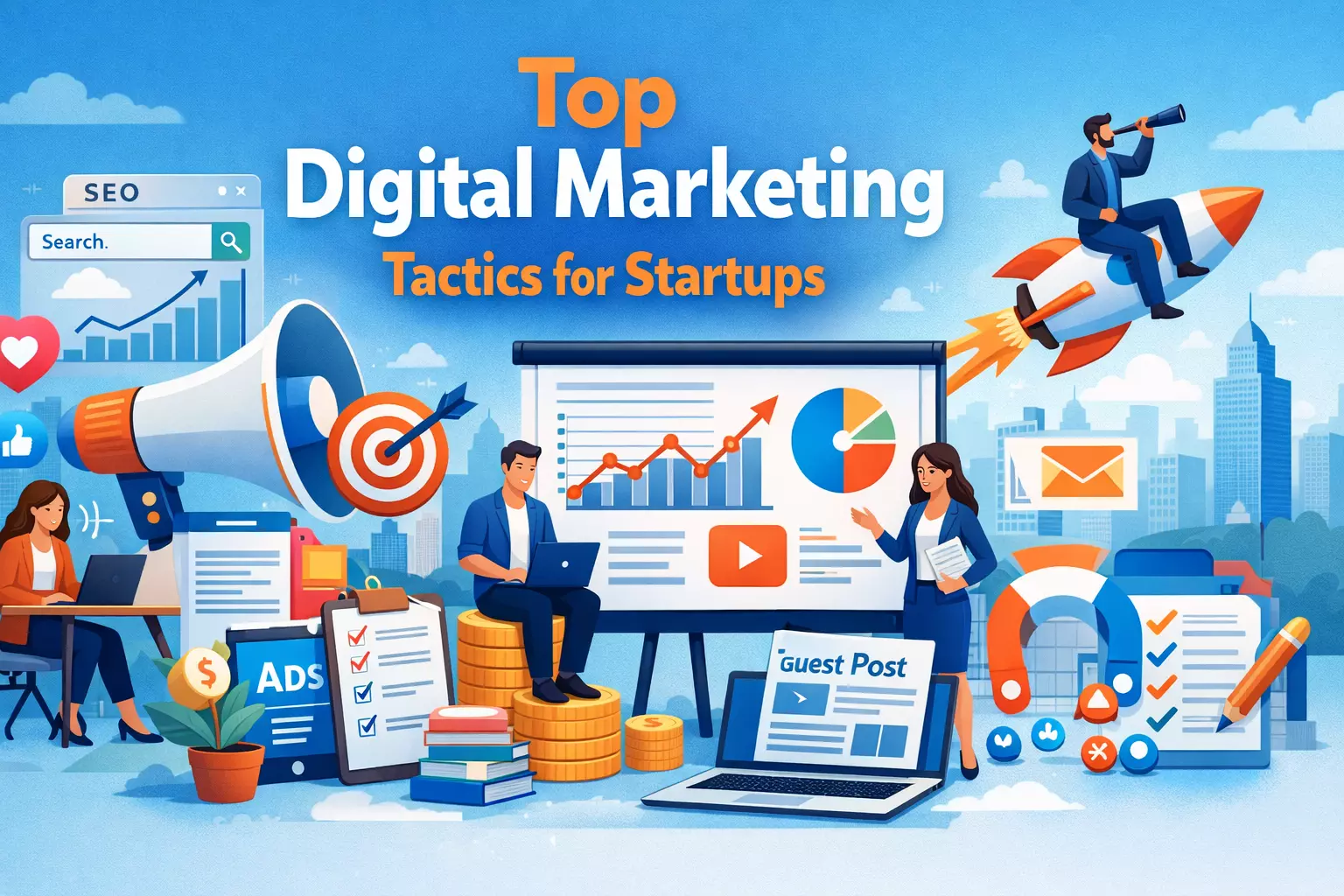
Top Digital Marketing Tactics for Startups
Many entrepreneurs find themselves overwhelmed with the marketing aspect of starting a business. New businesses tend to have tight budgets and small staff members, but also have an overall high level of anticipated success. For all of these reasons, selecting the appropriate digital marketing techniques becomes critical for startup businesses.
Instead of jumping into different tactics at once, startups should pick and execute the few that will yield measurable results and build on them as the business continues to grow. In addition, many founders of new businesses will utilize effective tools such as monitoring tools to track guest posting efforts and the success of their campaigns from the beginning, so that the decisions being made regarding marketing will be based on facts instead of assumptions.
Why Digital Marketing Is Essential for Startups
Digital marketing equips startups with an opportunity to compete with large corporations at little cost. Other marketing strategies, including the use of television and print media, are too costly for small business owners to afford. Digital marketing sites give startups and other small businesses access to specific markets, help them track the results of their marketing strategies, and allow them to adapt to changes instantly.
Flexibility is another benefit of creating a digital marketing presence for your business. For a new business, there is the opportunity to try a multitude of messages, designs, and offers to find the ones that work best. When a message or design that is not working needs to be changed, it can be done immediately.
Because of this, digital marketers can keep trying and experimenting until the combination works for their business. Because of these advantages, digital marketing is considered to be one of the most valuable resources for businesses looking to expand.
Building a Strong Brand Foundation
Startups need to have a clear brand identity before starting to promote their business or products. A strong brand identity goes just beyond the logo or color of the startup. A brand identity also includes the mission and values of the company, the tone of voice when speaking about the company and what a startup promises to the customers. If people understand what a startup represents, they will be more willing to trust that company.
It is also essential for your brand to be consistent across each of your digital platforms. For example, when someone looks for you on the internet (through a website, social media, or an email newsletter), they should have a similar, professional experience as they do when they reach your company. Having this type of consistent engagement will help create familiarity and trust with consumers over time.
Creating a High-Quality Website
For any startup, having an online presence is crucial, which is why a website serves as the digital hub of its business. The website will likely be the first location that a consumer will go to learn more about your company and your products or services.
An effective website should be easy to use, quick to access, and have a mobile-responsive design. Users should be able to gain an understanding of what your business is providing and the benefits you can provide for them in a very short period of time.
The use of clear headings, interesting materials, and compelling calls to action are crucial. For example, using simple words or phrases to describe what visitors need to do next (such as, "Start Here", "Schedule A Demo", "Contact Us") can point them in the right direction. SEO (Search Engine Optimization) also needs to be part of the original website's design, so that when people do searches for services, the site shows up among the results.
Search Engine Optimization for Long-Term Growth
Search engine optimization (SEO) is a method of helping startups draw in customers from organic sources (i.e., through unpaid channels) instead of using paid advertising by targeting keywords/phrases that are appropriate and creating valuable content that meets user needs so that those businesses can be found and ranked higher on search engine results pages, such as Google.
SEO consists of two main components, namely on-page and off-page SEO. On-page SEO involves the optimization of your website's content, headings, meta-description, and images. On the other hand, off-page SEO consists of building back links to your site from other websites to improve your domain authority. Over time, a solid SEO strategy will provide a consistent volume of traffic and leads at a lower cost than through pay-per-click advertising.
Content Marketing to Build Trust
Startups can use content marketing as a powerful tool to reach potential customers. Rather than directly selling their products through advertising, startups offer educational and valuable content that helps consumers understand the business or service. Examples of content include blogs, white papers, videos, podcasts, and infographics.
When a startup provides valuable data, research and knowledge to its audience, it is seen as an expert in its industry. This creates credibility and ultimately influences the selected brand to be purchased when compared to the competitor. For instance, a startup in the technology space may produce an educational guide about rising trends within their industry, while a startup in the health industry may provide suggestions on how to achieve greater overall wellness.
Ultimately, quality will outweigh quantity. The production of fewer quality and well-researched pieces of content produces better results than producing multiple lower-quality pieces of content.
Social Media Marketing for Brand Awareness
Startups gain direct access to their target audience via social media outlets such as Facebook, Instagram, LinkedIn, and X (aka Twitter). Each of these outlets provide companies with a way to communicate with their audience (followers, etc.), post updates about their company, and promote their products and/or services.
There are two key aspects that lead companies to be successful on social media: consistency and engagement. Having an adequate posting schedule ensures that your audience will be engaged, and responding to your followers builds a stronger level of trust and loyalty between your company and its followers.
Startups should also carefully evaluate which social media outlet(s) provide the best access to their audience; i.e., LinkedIn is a great outlet for B2B(Startup) companies, but Instagram may be more appropriate for visually-based brands.
Paid social media ads allow companies to increase their visibility quickly. Even with limited funds, startup companies can effectively measure which target demographics they can reach, as well as test several ad formats to determine which will give them the best return on investment.
Email Marketing for Direct Communication
Startups have an excellent way of reaching their target audience with an Email marketing strategy. They use Email marketing to connect effectively with potential customers or existing customers. Startups gather email addresses either by having potential customers sign up on the website or through lead magnets (free incentives) to email prospective customers regularly.
In email marketing, the personalization of messages is extremely important for success. Startups need to send tailored emails not generic ones based on their customer’s behaviour and likes. Additionally, through the use of automated email sequences, startups can nurture their leads and prompt them through the buying process.
Startups can analyse their open rates, click-through rates and conversions to determine the effectiveness of their emails, as well as make improvements to future campaigns.
Influencer and Collaboration Marketing
Startups can leverage the influence of other professionals or industry authorities to quickly access and attract new customers. The audience has a level of pre-existing trust in the person's expertise, and typically it will result in large amounts of traffic to the product via the recommendation of the person/brand that they are potentially already familiar with.
Another way that startups can achieve similar levels of success to the use of influencer marketing is by collaborating with complementary brands. For example, two different startup brands that offer different products but target similar audiences can work with one another to help increase the overall exposure of both brands. Partnering with another startup brand can create numerous win-win scenarios while requiring a small financial investment out-of-pocket for either party.
Leveraging guest posting for Authority
One very good way that startups don't typically utilize is guest blogging. If startups write great articles for other reputable websites in their industry, they can gain the attention of new audiences while also building credibility. If a respected site publishes your content, it means that it is a credible source, giving you the ability to gain trust with your potential customers.
In addition, writing/posts contribute to other blogs creates backlinks which help with search engine ranking and shows your credibility/expertise to those within the industry. To maximize your results through this strategy, it is best to target websites that target your niche/audience rather than randomly submitting to different sites for guest posts.
Paid Advertising for Quick Results
Though organic methods may require a long time to achieve results, paid ad campaigns can often produce quicker results. The use of Google Ads, social media advertising and other forms of online ads give start-up companies an ability to reach potential customers by targeting them with specific keywords and utilizing information about their interests, geography and past habits.
Read: Top 10 Performance Marketing Agencies in India
Paid advertising has the benefit of being seen immediately. However, start-ups need to carefully manage their budgets when beginning with a new paid ad strategy. Start-ups should utilize small test campaigns on advertising platforms, measure the results of those test campaigns and adjust them based on the performance data. By tracking metrics, such as cost per click and conversion rates, start-up companies can maximize the benefit of their advertising spend.
Data Analytics and Performance Tracking
The most significant strength of digital marketing is its total measurability. Due to analytics tools offering detailed insight into your website's traffic, usage behavior, and campaign performance, start-ups can easily and regularly review the data they receive. This allows you to determine which areas you excel in, and which areas could use improvement.
An example of this is if you have a blog post that is generating high traffic with limited sales; this blog post may need to have a new/modified call-to-action associated with it. Alternatively, if you have social media ads that are generating clicks, but are not converting to sales, you may need to adjust either your targeting and/or messaging. Continuous measuring of your marketing efforts will provide you with a basis for more intelligent decision-making and resulting success.
Marketing Automation for Efficiency
It is often difficult for startup businesses to manage multiple marketing campaigns as they grow, and this is where a marketing automation tool can help make things much easier. Not only will it streamline the way campaigns are developed (building an automated email sequence, tracking leads, etc.) but it will also save time and provide consistent communication with your potential customers.
Automated workflows can help startups create and develop their leads, regardless of whether the employees are working on other projects. This increases the productivity of each employee so that the owner has extra time to develop plans for the company's future growth and create innovative products for their customers.
Choosing the Right Mix for Your Startup
A business's philosophy and approach depend on many circumstances that ultimately affect its success. Therefore, you should find what works best for your type of business. As an example, your B2B software company should consider both search engine optimization (SEO) and LinkedIn marketing; your fashion business likely will prioritize Instagram and working with influencers.
In many cases, it's beneficial to have a mix of short-term and long-term strategy to achieve stable growth. If you can use paid advertisement (which affords fresh visibility) and create content material (which builds a library of invaluable stored content), you can create a successful way to grow your company. Remember, the key here is to experiment (again and again), learn, and adapt as you go along
Final Thoughts
Startups can harness the power of digital marketing to compete and grow their business while building a relationship with customers through creating their brand, optimizing their website, utilizing SEO, producing content, engaging with customers on social media, and analyzing their data effectively.
While success does take time, consistent hard work combined with strategic planning will lead to tangible improvements. As startups evolve their strategy, they should look for ways (such as link insertion) to enhance their backlink profile potentially improving search visibility. With the correct tools and constant optimization, digital marketing will lead to small startups to become established and trusted brands.