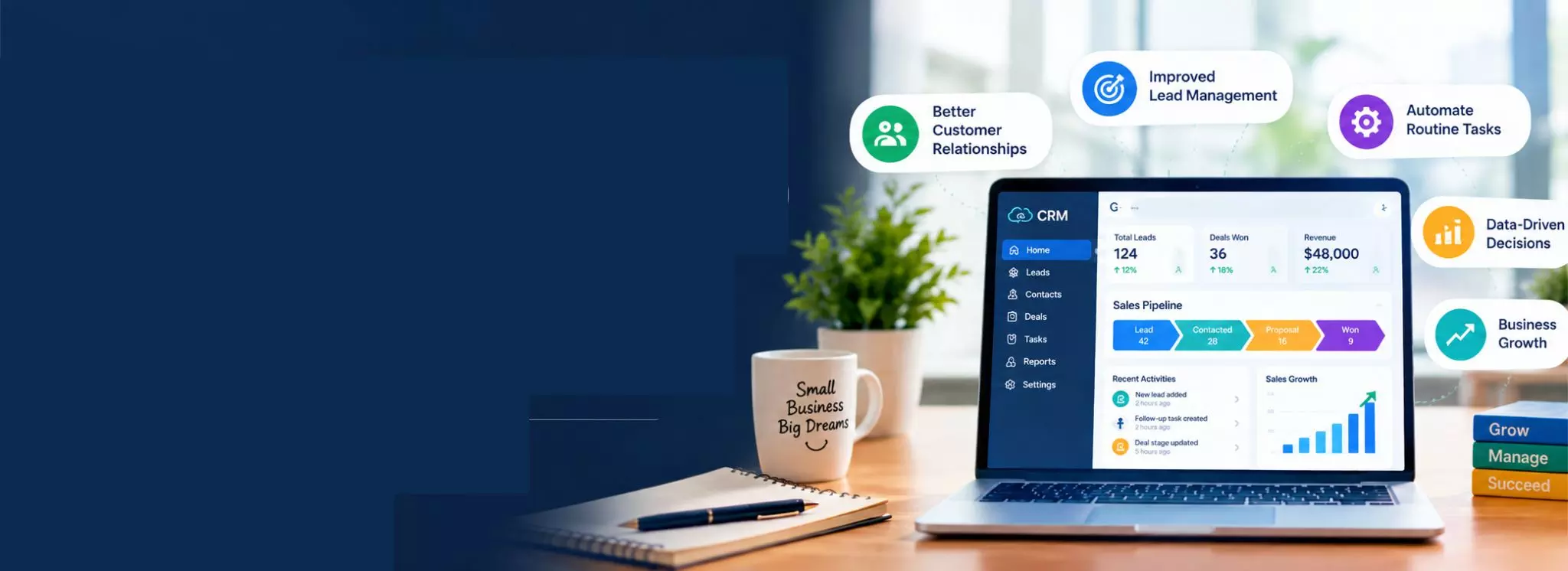
Top Benefits of Using CRM Software for Small Businesses
Managing customer relationships is essential for small business growth. As a company expands, keeping track of customer information, sales opportunities, follow-ups, and communication becomes increasingly difficult.
Relying on spreadsheets and manual processes can result in missed leads, disorganized records, and delays in responding to customers.
Customer Relationship Management (CRM) software helps businesses organize customer data, streamline sales activities, and maintain consistent communication from one centralized platform.
It also provides insights that help business owners understand customer needs and make informed decisions.
Whether a business is building its first sales team or improving existing operations, the right CRM system can make everyday tasks more manageable.
Understanding its benefits can help small businesses choose suitable tools, improve productivity, and build stronger customer relationships.
1. Centralized Customer Information
One of the most important benefits of CRM software is the ability to store customer information in a single, organized location. Instead of maintaining separate spreadsheets, email records, and contact lists, businesses can manage essential information through one system.
A CRM database can include customer contact details, previous conversations, purchase history, preferences, and upcoming activities. This allows employees to find relevant information quickly and understand the context of each interaction.
For example, when a returning customer contacts a business, the sales representative can review previous conversations before responding. This reduces the need to ask customers for the same information repeatedly.
Centralized records also improve collaboration between departments. Sales and support teams can access relevant updates, helping them deliver a more consistent customer experience.
2. Better Lead Management and Follow-Ups
Generating leads is important, but converting those leads into paying customers requires an organized process. Small businesses may lose potential sales when inquiries are overlooked or follow-ups are delayed.
CRM software helps teams track prospects throughout the sales pipeline, from the initial inquiry to the final purchase. Employees can assign leads, schedule reminders, record conversations, and monitor the progress of each opportunity.
How businesses can improve lead management
- Prioritize promising leads: Identify prospects who are more likely to purchase based on their requirements and level of interest.
- Schedule follow-ups: Set reminders to ensure that important conversations do not get forgotten.
- Track sales progress: Monitor where prospects stand in the buying process.
- Review lost opportunities: Identify common reasons prospects decide not to purchase.
These practices help businesses manage their sales activities more efficiently. A clear lead management process also enables managers to identify bottlenecks and improve the way their teams communicate with potential customers.
3. Increased Productivity Through Automation
Small business teams often handle multiple responsibilities, including customer communication, record maintenance, sales reporting, and administrative work. Repetitive tasks can consume valuable time that could otherwise be spent serving customers.
CRM automation helps simplify routine activities by performing tasks according to predefined rules. For example, a system can automatically assign new leads, create follow-up reminders, notify employees about pending activities, or update records when certain conditions are met.
Automation can also reduce human error by standardizing common processes. When employees follow consistent workflows, businesses can maintain better records and avoid unnecessary delays.
However, automation works best when the underlying process is clearly defined. Businesses should begin by identifying repetitive tasks that take up significant time and automate those that can be handled reliably without reducing the quality of customer service.
This approach allows employees to focus on relationship building, problem-solving, and other activities that require human judgment.
Read: Can the Best Sales CRM Software in India Reduce Missed
4. Improved Customer Retention and Satisfaction
Attracting new customers is only one part of business growth. Maintaining relationships with existing customers can also contribute to repeat purchases, referrals, and long-term revenue.
CRM software helps businesses understand their customers by maintaining records of previous interactions, preferences, purchases, and support requests. Employees can use this information to provide more relevant responses and personalized service.
For example, a service provider can schedule a follow-up after completing a project to collect feedback and address any concerns. A retailer can use purchase history to recommend products that match a customer's interests.
CRM systems can also help businesses identify customers who have not interacted with them recently. Teams can then plan appropriate follow-up communication instead of waiting for customers to return on their own.
Consistent communication, timely support, and a better understanding of customer needs can strengthen trust and improve the overall customer experience.
5. Data-Driven Decision-Making
Business decisions are more effective when they are based on reliable information rather than assumptions. CRM software provides reports and dashboards that help business owners monitor sales activities and identify areas for improvement.
Depending on the platform and configuration, businesses can track metrics such as lead conversion rates, sales pipeline value, follow-up completion, and individual team performance.
For example, if many prospects stop responding after receiving a quotation, managers can review their pricing, proposal quality, or follow-up process. If one lead source consistently generates qualified prospects, the business may decide to allocate more resources to that channel.
Regular reporting also helps teams compare performance against targets and identify emerging trends.
To make these insights useful, businesses should select a small set of meaningful metrics and review them consistently. Tracking too many numbers without a clear purpose can create confusion rather than improve decision-making.
6. Stronger Team Collaboration
When customer information is scattered across different tools, employees may struggle to understand the latest status of a conversation or sales opportunity. This can lead to duplicated work, communication gaps, and inconsistent customer service.
CRM software creates a shared workspace where authorized employees can review customer records, add notes, update activities, and monitor progress.
For instance, when a sales representative hands a customer over to the support team, the support employee can review relevant interaction history before responding. This makes the transition smoother and reduces the need for customers to explain their situation again.
Clear responsibilities and shared records also help managers understand which activities are pending and who is responsible for completing them.
Better collaboration is particularly valuable for growing businesses where multiple employees may interact with the same customer.
7. Scalable Operations as the Business Grows
A process that works for 20 customers may become difficult to manage when the customer base reaches hundreds or thousands. As businesses expand, they often need better reporting, more structured workflows, additional integrations, and clearer responsibilities.
CRM software can provide a foundation for handling these changing requirements. Businesses can begin with basic contact management and gradually introduce more advanced capabilities as their needs develop.
Before choosing a platform, business owners should consider their budget, team size, existing tools, data requirements, and future growth plans.
Working with a qualified Zoho Partner may help a business assess its requirements and determine which features are appropriate for its operations.
The objective should be to select a system that solves current problems while remaining flexible enough to support future changes.
8. More Effective CRM Implementation
Purchasing CRM software does not automatically improve business performance. The system must be configured correctly, existing data must be organized, and employees need to understand how to use it.
A structured implementation process begins with identifying business goals and reviewing current workflows. Businesses should decide which information needs to be tracked, how leads should move through the sales pipeline, and which tasks could benefit from automation.
A Zoho Implementation Partner may assist with activities such as data migration, workflow configuration, customization, integration, and employee training, depending on the agreed scope of services.
After implementation, businesses should monitor adoption and evaluate whether the system is delivering the intended results. Useful indicators may include faster lead response times, improved record accuracy, fewer missed follow-ups, and more consistent reporting.
Ongoing review helps businesses identify problems early and make adjustments as their processes evolve.
Conclusion
CRM software offers small businesses a practical way to organize customer information, improve lead management, automate repetitive work, and strengthen customer relationships. It also supports better decision-making, team collaboration, and scalable operations.
However, the value of a CRM system depends on more than the software itself. Businesses need clear processes, accurate data, appropriate training, and regular performance reviews.
By selecting a solution that matches their requirements and implementing it thoughtfully, small businesses can reduce administrative challenges, improve customer experiences, and create a stronger foundation for sustainable growth.
Author Bio
I am Alex Morgan, I writes about CRM software, sales management, and digital tools that help small businesses improve productivity and customer relationships.
Through practical insights and technology-focused articles, I aims to help businesses streamline their operations and make informed decisions as they grow.