Top 10 Best Apparel ERP Software for Fashion Businesses in India
The fashion and apparel industry involves much more than designing and selling clothes. Businesses need to manage product development, costing, fabrics, trims, suppliers, purchase orders, inventory, production, quality, sales, shipping, and finance.
When these processes are handled through spreadsheets or disconnected software, it can become difficult to maintain accurate information and keep orders on schedule.
This is where apparel ERP software can help. An ERP system brings different business functions together on one platform, allowing teams to work with shared data and better visibility.
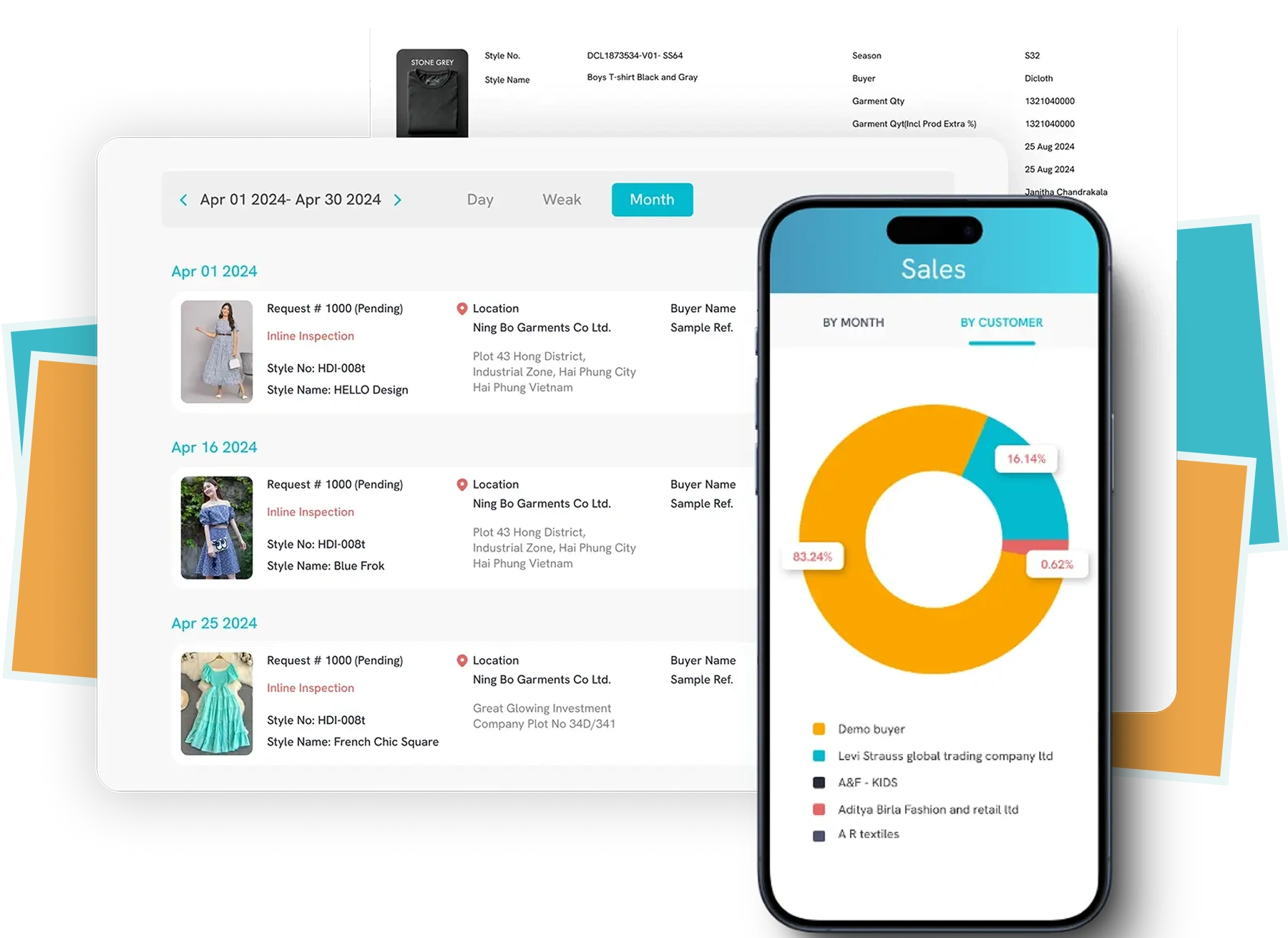
However, fashion businesses have specific requirements that a standard ERP may not fully address. Apparel companies often work with styles, colors, sizes, seasons, fabric consumption, multiple suppliers, complex bills of materials, subcontractors, and changing buyer requirements.
The right apparel ERP software should therefore support these workflows rather than simply offer generic accounting and inventory features.
1. WFX (World Fashion Exchange)
WFX (World Fashion Exchange) is a leading apparel-focused ERP platform designed for garment manufacturing companies, apparel manufacturers, sourcing companies, and fashion businesses.
Its platform connects key processes across the apparel business, from product development and costing to procurement, production, quality, inventory, shipping, and financials.
WFX provides modules for:
- Costing and budgeting
- Customer order management
- Material planning
- Procurement and supplier management
- Fabric and trim inventory
- Quality control
- Production management
- Shipping and documentation
- Accounting and financial management
- Time and action management
- Business intelligence and dashboards
Its apparel-specific approach makes it relevant for manufacturers managing multiple styles, buyers, suppliers, factories, and production activities. The platform is cloud-based and is positioned as an integrated solution covering ERP, PLM, and manufacturing-related processes.
For businesses looking to bring different apparel operations onto one system, WFX can be included in the ERP shortlist.
2. SAP S/4HANA for Fashion and Vertical Business
SAP S/4HANA for Fashion and Vertical Business is designed for fashion companies managing manufacturing, wholesale, retail, and supply chain operations.
The platform includes fashion-specific style, color, and size management, seasonal planning, purchasing, production, inventory, demand and supply matching, and subcontracting. SAP also provides capabilities for integrating garment manufacturing with textile manufacturing processes.
It can be considered by larger fashion businesses that require an enterprise-level ERP environment and have complex business processes across different functions and markets.
3. Infor CloudSuite Fashion
Infor CloudSuite Fashion is a cloud-based software suite built specifically for apparel, footwear, accessories, and home and textile businesses.
The platform combines ERP with capabilities such as fashion PLM, demand forecasting, warehouse management, supply chain, e-commerce, sustainability, and analytics.
This makes it relevant for fashion businesses that want to connect back-office operations with product, supply chain, and commercial activities.
Its broader functionality can be useful for companies managing complex fashion operations across multiple channels and markets.
4. Oracle NetSuite
Oracle NetSuite is a cloud ERP platform used by businesses across industries, including fashion and apparel companies.
Its capabilities cover financial management, inventory, order management, procurement, CRM, reporting, and other core business processes. For growing fashion businesses, the platform can provide a central system for managing financial and operational information.
NetSuite can be particularly relevant for fashion companies that need a scalable cloud ERP and want to connect finance, inventory, sales, and other business functions.
For apparel manufacturers, however, it is important to check how the required fashion-specific processes will be handled through native functionality, configuration, or integrations.
5. Microsoft Dynamics 365 Business Central
Microsoft Dynamics 365 Business Central is a business management ERP platform aimed largely at small and midsize organizations.
It supports areas such as finance, sales, purchasing, inventory, supply chain, and manufacturing. Its connection with the wider Microsoft ecosystem can also be useful for companies already using Microsoft products.
For fashion businesses, Business Central can be adapted to apparel workflows through configuration, extensions, and industry-specific partner solutions.
Companies considering it should check the availability of apparel-specific functionality for areas such as style and size management, production planning, fabric tracking, and garment costing before selecting the platform.
Read: Top 10 Best ERP Software for Apparel Manufacturers in India
6. AIMS360
AIMS360 is an apparel-focused business management solution designed for fashion companies working across wholesale, retail, and direct-to-consumer channels.
It is designed around fashion-specific requirements such as style, color, size, inventory, order management, and sales operations.
For fashion brands that need to manage products across different sales channels, an apparel-focused system such as AIMS360 can help bring order and inventory information into a central environment.
Businesses operating mainly as manufacturers should compare its manufacturing capabilities with their specific production requirements.
7. BlueCherry by CGS
BlueCherry is a supply chain and enterprise software platform designed for apparel, footwear, consumer lifestyle, and related industries.
Its capabilities cover areas such as ERP, product lifecycle management, supply chain management, manufacturing, and business operations.
For apparel companies, the platform can support processes that involve products, suppliers, manufacturing, inventory, and distribution.
BlueCherry may be considered by established fashion companies looking for an industry-focused technology platform with broader supply chain capabilities.
8. LOGIC ERP
LOGIC ERP is an India-focused ERP solution that provides business management capabilities for industries including retail, manufacturing, and apparel.
For fashion and garment businesses, its functionality can cover areas such as inventory, purchasing, sales, manufacturing, accounting, and reporting.
Its India-focused approach can be relevant for companies looking for software that fits local business processes. Apparel businesses should evaluate its support for their specific requirements around garment production, style and size combinations, BOMs, material consumption, and production tracking.
9. Zubizi
Zubizi is an India-oriented ERP solution focused on apparel and fashion businesses. Its platform addresses areas such as product management, inventory, production, sales, and reporting.
The solution is positioned for Indian apparel manufacturers, fashion businesses, boutiques, and smaller companies. Industry-specific features include size and color product matrices, production tracking, fabric inventory, and India-related tax and product requirements.
For small and growing apparel businesses, it can be worth evaluating alongside other India-focused ERP platforms.
10. Odoo
Odoo is a modular business management platform that includes applications for manufacturing, inventory, purchasing, sales, accounting, CRM, and other business functions.
Its modular structure allows companies to select the applications they need and expand their system over time.
For apparel companies, Odoo can be configured for fashion and manufacturing processes.
However, businesses should carefully assess how much customization or third-party development is required for apparel-specific workflows such as style-color-size management, garment costing, fabric consumption, production planning, and subcontracting.
What Should Fashion Businesses Look for in an ERP?
Choosing an ERP for an apparel business requires looking beyond basic accounting and inventory features. Before selecting software, businesses should consider the following:
- Apparel-specific product management: The ERP should be able to manage styles, colors, sizes, seasons, collections, SKUs, and product variations without creating unnecessary manual work.
- Costing and material planning: Garment costing can involve fabrics, trims, labor, overheads, wastage, and other expenses. The system should make it easier to create and track product costs.
- Production management: Manufacturers should check whether the ERP supports production planning, work orders, subcontracting, WIP tracking, quality checks, and production progress.
- Inventory visibility: Fashion businesses often handle large numbers of SKUs and materials. The ERP should provide visibility into fabrics, trims, raw materials, finished goods, and inventory movements.
- Procurement and supplier management: The system should connect material requirements with purchasing and supplier activities so teams can better track orders, deliveries, and costs.
- Financial integration: Connecting operational transactions with accounting can reduce duplicate data entry and give management a clearer view of costs, revenue, and profitability.
- Cloud access and scalability: For businesses operating across factories, offices, warehouses, or supplier networks, cloud-based access can make collaboration easier and support business growth.
Final Thoughts
The right apparel ERP software for fashion businesses in India depends on the company's size, manufacturing model, sales channels, number of locations, and operational requirements.
For apparel manufacturers, the selection process should focus on how well each platform handles real fashion workflows rather than simply counting the number of features.
A practical evaluation should include costing, material planning, procurement, production, inventory, quality, shipping, finance, and reporting.
A product demonstration using actual apparel business scenarios can also help companies understand whether an ERP fits their processes before making a long-term investment.