Thinking About New Paving? Here's What to Know About Outdoor Stone
New paving can completely change the way an outdoor area looks and feels. Whether you are updating a Sydney backyard, creating a new patio or giving an old pathway a fresh appearance, the right stone can bring the whole space together.
But choosing paving is about more than finding a colour you like. You also need to think about where the paving will be used, the style of your home, the type of stone, the finish and how much maintenance you are comfortable with.
If you are considering Outdoor Stone Pavers, here are some practical things to know before making your choice.
Start With the Purpose of Your Space
Before looking at colours and patterns, think about how you will use the area.
A pool surround, patio, garden path and driveway all have different requirements. A paving product that looks great in a courtyard may not necessarily be suitable for a driveway.
Ask yourself:
- Is the area mainly for entertaining?
- Will it be exposed to water?
- Will vehicles use the surface?
- How much foot traffic will it receive?
- Is the area exposed to direct sunlight?
- How much maintenance are you prepared to do?
Once you understand the purpose, it becomes easier to narrow down the right stone.
Natural Stone Brings Its Own Character
One of the main attractions of natural stone is that it does not always look perfectly uniform. Colour, texture, veining and pattern can vary from one piece to another.
This variation can give a backyard a more natural appearance and help the paving work with gardens, timber, outdoor furniture and other landscaping materials.
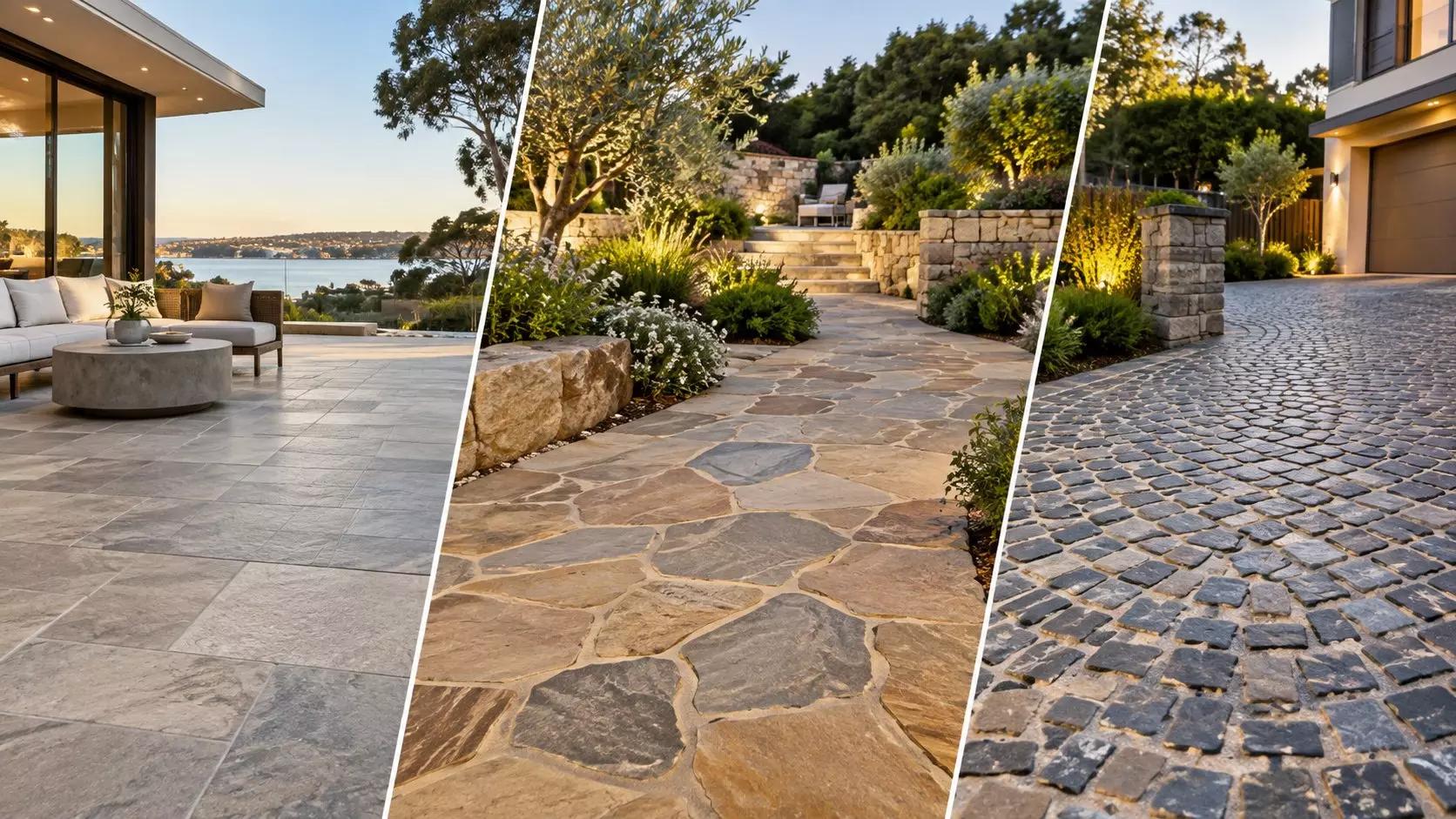
Travertine, Sandstone, Limestone and Granite are some of the natural stones commonly considered for outdoor projects. Each has its own appearance and characteristics, so the individual product should be checked for its intended application.
What Are Crazy Pavers?
If you want something less formal than a standard grid layout, Crazy pavers can create a more organic and individual look.
Instead of using uniform rectangular or square pieces, crazy paving uses irregularly shaped stone pieces arranged to create a natural-looking pattern.
This style can work particularly well for:
- Courtyards
- Garden pathways
- Patios
- Pool areas
- Feature spaces
- Landscaping projects
The finished appearance depends heavily on the stone colour, shape, joint spacing and installation. It can be a good option if you want your paving to become part of the visual character of the garden rather than simply acting as a flat surface.
Add Character With Cobblestone Pavers
For homeowners looking for a more traditional appearance, Cobblestone pavers offer another option.
Cobblestone can work well for pathways, driveways, courtyards, garden edging and other suitable landscaping applications. Its smaller format and natural texture can give an outdoor space a more detailed appearance.
It can also be used to create borders around larger paving areas. For example, a cobblestone edge can provide a visual frame around a patio or driveway.
As with other natural stone products, check the particular cobblestone product for its recommended application and installation requirements.
Choose a Colour That Works With Your Home
The paving does not need to exactly match your house. In fact, a little contrast can make the overall design more interesting.
For a contemporary Sydney home, neutral grey or lighter stone can create a clean appearance. Warmer beige and earthy tones can work well with gardens, timber and traditional landscaping.
Think about your:
- Exterior walls
- Roof and fencing
- Garden plants
- Pool coping
- Outdoor furniture
- Existing paving
Try to look at the whole space rather than choosing paving in isolation.
Texture Can Change the Whole Look
Two pavers in a similar colour can look completely different because of their surface texture.
A smooth finish can create a more refined appearance, while a naturally textured surface can make a patio or pathway feel more relaxed.
Texture can also affect how the surface looks under different lighting conditions. Sunlight and shadows can highlight natural variations in the stone, particularly on more textured products.
For areas exposed to water, always check the specific product's characteristics and suitability rather than assuming every finish will be appropriate.
Think About Sydney's Conditions
Outdoor paving in Sydney is exposed to sunshine, rain and changing weather throughout the year.
This does not mean you need a particular stone for every Sydney property. Instead, consider the conditions of your specific site.
Look at:
- Sun exposure
- Water drainage
- Expected traffic
- Pool or water exposure
- Existing ground conditions
- Cleaning requirements
Good installation is also important. Proper preparation, drainage and installation can have a major impact on the finished result.
Don't Choose Only From a Photograph
Natural stone can look different depending on lighting and surroundings.
A sample that looks beige online might appear warmer or cooler beside your home's exterior. Similarly, a textured stone may look more pronounced in direct sunlight.
If possible, get samples before ordering. Place them near your paving area and view them at different times of the day.
This is particularly useful when comparing several stones or deciding between standard paving and a more irregular style such as Crazy pavers.
Maintenance Should Be Considered Early
Natural stone needs appropriate care, but maintenance requirements vary between materials and finishes.
Regular sweeping can help remove leaves, dirt and loose debris. For deeper cleaning, use products recommended for the particular stone.
Some products may also benefit from sealing depending on the stone, finish and application. Ask your supplier about maintenance before installation so you know what to expect.
Think About the Long-Term Design
Outdoor paving is not something most homeowners want to replace frequently, so think beyond current trends.
A natural stone with a colour and texture that complements your home can continue to work even if you later change your outdoor furniture, plants or landscaping.
This is one reason neutral natural stone can be useful. It gives you flexibility to change other parts of the backyard without having to redesign the entire space.
Finding the Right Stone Supplier
Once you have decided on the style and application, choose a supplier that can provide clear information about the products you are considering.
Ask about:
- Available sizes
- Thickness
- Finishes
- Recommended applications
- Maintenance
- Sealing
- Samples
- Delivery options
If you are comparing Outdoor Stone Pavers, having access to samples and product information can make the selection process much easier.
Reliant Stones can be considered when exploring natural stone options for residential and landscaping projects in Australia. Discussing your requirements with a supplier can help you narrow down suitable products for your space.
Which Paving Style Is Right for You?
There is no single paving style that works for every outdoor area.
If you prefer a clean and organised appearance, standard-format natural stone pavers may suit your project.
If you want something more organic and artistic, Crazy pavers can create an irregular pattern with plenty of character.
If you prefer a traditional or detailed appearance, Cobblestone pavers can be considered for pathways, driveways, borders and suitable landscaping areas.
The best option ultimately depends on your property's design, the intended use and the characteristics of the particular product.
Final Thoughts
Choosing new paving is easier when you start with the space rather than the product. Think about how you will use the area, how it connects with your home and garden, and what level of maintenance you are comfortable with.
Whether you choose Outdoor Stone Pavers for a patio, Crazy pavers for an organic courtyard design, or Cobblestone pavers for a traditional pathway or driveway, take time to compare samples and product specifications.
The right natural stone can give your Sydney outdoor space a distinctive look while creating a practical surface that fits naturally into the overall design.