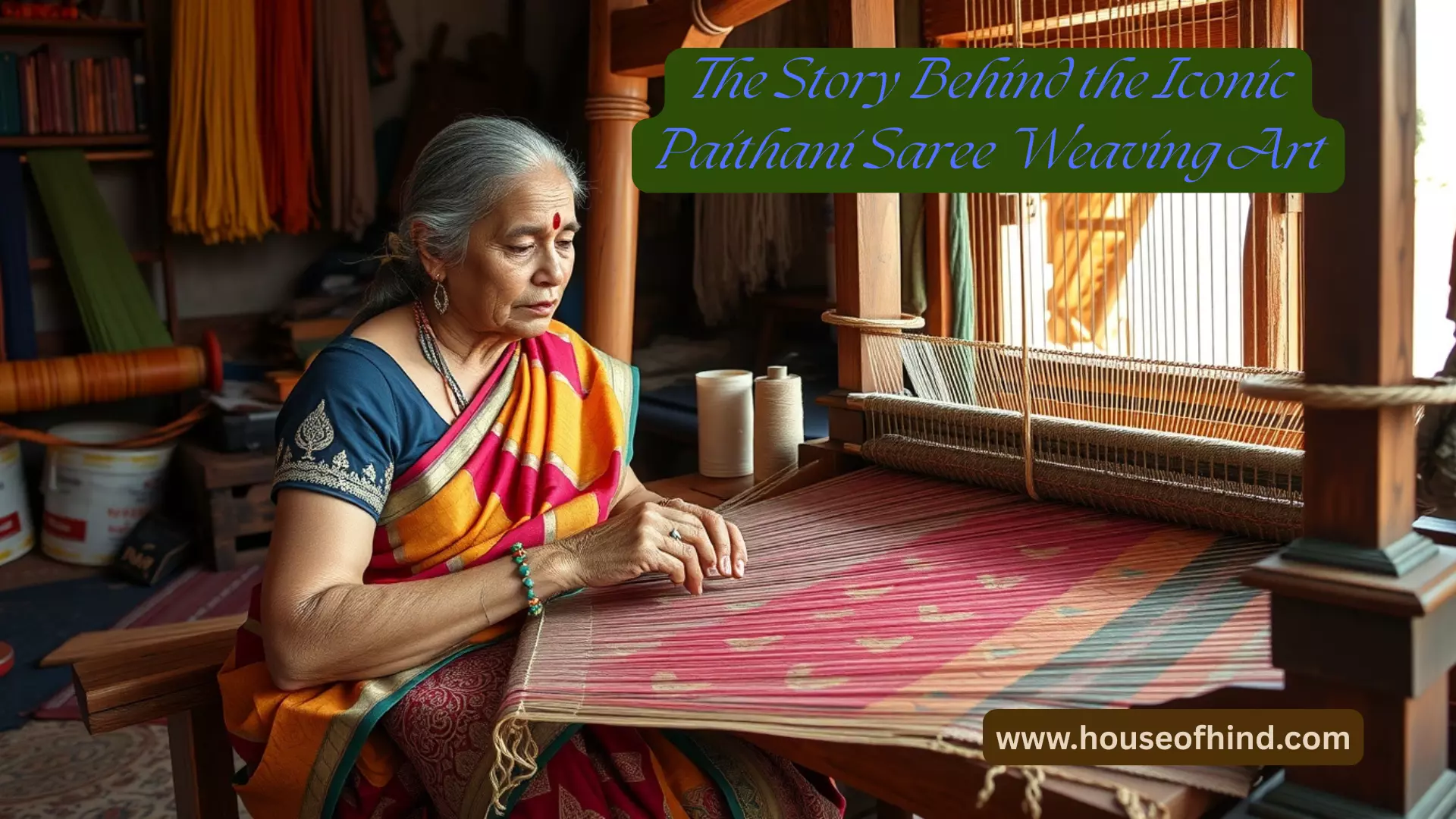
The Story Behind the Iconic Paithani Saree Weaving Art
Few traditional textiles can rival the timeless charm and grandeur of the Paithani saree. Known as the “Queen of Silks,” this masterpiece from Maharashtra is more than just an outfit — it’s a living tradition, a story woven in golden threads, and a proud symbol of Indian craftsmanship. The Paithani saree represents centuries of heritage, artistry, and cultural legacy that continues to captivate women across generations.
In this detailed article, let’s dive deep into the story behind the iconic Paithani saree weaving art, its history, craftsmanship, designs, and how modern India is keeping this legacy alive — even through Paithani saree online stores today.
1. The Glorious Origins of the Paithani Saree
The origin of the Paithani saree dates back over 2,000 years to the ancient town of Paithan, located on the banks of the Godavari River in Maharashtra. Known historically as Pratisthana, this town was a major center of trade during the Satavahana dynasty (around the 2nd century BCE).
Paithan was famous for its luxurious silk textiles, which were traded as far as Rome and Persia. Roman traders were said to exchange gold for these exquisite silks — a testament to the value and craftsmanship that the Paithani saree represented even back then.
Over time, Paithani weaving evolved into a royal tradition. The sarees became a favorite among the nobility — especially during the reign of the Peshwas in the 18th century. Each Paithani saree symbolized prestige, wealth, and cultural refinement.
2. The Art of Weaving: Where Magic Meets Skill
The weaving of a Paithani saree is a true labor of love and patience. It takes anywhere from 18 days to several months to create a single piece, depending on the intricacy of the design. What makes it extraordinary is that every saree is handwoven on a traditional loom, without the use of modern machinery.
Silk and Zari — The Perfect Blend
The foundation of a Paithani saree lies in two elements:
- Pure silk threads for the base fabric.
- Zari threads made from fine silver coated with gold for the borders and motifs.
These threads are skillfully interlaced to create the stunning effect of shimmering gold against the richness of silk.
The Loom and the Technique
Unlike printed or embroidered sarees, every design in a Paithani saree is woven into the fabric itself using a tapestry technique. Each motif is crafted with colored threads, often one thread at a time, ensuring both sides of the saree look identical — a hallmark of authentic craftsmanship.
The weavers follow a meticulous process, working for hours to align every thread. It’s not uncommon for a single Paithani saree to take six months or even a year to complete, especially those with intricate peacock or lotus motifs.
3. Symbolism in Every Thread: The Traditional Motifs
Every Paithani saree tells a story through its motifs, inspired by nature, architecture, and Indian mythology. These designs are not merely decorative — they hold cultural meanings that connect the wearer to centuries of tradition.
Common Motifs in Paithani Sarees:
- Peacock (Morpankh): Symbol of grace, beauty, and pride.
- Lotus (Kamal): Represents purity and divine energy.
- Parrots (Tota-Maina): Symbolizes love and companionship.
- Creepers (Asawalli): Denotes growth and prosperity.
- Bangadi Mor: Two peacocks facing each other — one of the rarest and most loved motifs.
These motifs, combined with rich zari borders and contrasting pallu designs, give the Paithani saree its signature look that is instantly recognizable.
4. The Royal Connection: From the Peshwas to Modern Icons
During the Maratha Empire, Paithani sarees were considered royal treasures. The Peshwas of Pune and the queens of the royal families proudly adorned them on special occasions. Each saree was custom-made, reflecting the status and taste of its wearer.
Legend has it that Queen Ahilyabai Holkar, one of India’s most respected rulers, was a great patron of Paithani weavers. Under her support, the craft flourished, and new weaving techniques were introduced, making the sarees even more luxurious.
Even today, Paithani sarees are worn by brides during Maharashtrian weddings as a symbol of tradition and prosperity. They are often handed down as heirlooms, carrying with them stories of generations past.
5. The Modern Revival: Paithani Saree Online and Beyond
In the 21st century, the Paithani saree has found new life through modernization and digital innovation. Once limited to select weavers and high-end boutiques, these exquisite sarees are now available through Paithani saree online stores, connecting artisans directly with global customers.
The Digital Marketplace
Online platforms have become a boon for the weavers of Paithan and Yeola (a town near Nashik known as the modern hub for Paithani weaving). Through digital reach, customers can now explore a wide variety of authentic Paithani sarees online — from traditional handwoven pieces to contemporary interpretations that blend heritage with modern fashion sensibilities.
Paithani Saree Price and Value
The Paithani saree price varies widely depending on factors like silk quality, zari purity, and design intricacy.
- Basic Paithani sarees start around ₹15,000–₹25,000.
- Mid-range Paithanis with semi-pure zari range from ₹40,000–₹80,000.
- Pure zari handwoven masterpieces can cost anywhere between ₹1 lakh to ₹5 lakh or more.
While the price may seem steep, it reflects the immense craftsmanship and time invested in each piece — making it not just a purchase but an investment in art and heritage.
6. Yeola – The Modern Heart of Paithani Weaving
Though Paithan gave birth to the art, the town of Yeola has emerged as the leading center for Paithani weaving today. Generations of artisans in Yeola have preserved traditional techniques while embracing innovation to meet the evolving tastes of customers.
Government and private initiatives have helped promote Paithani sarees online and support the weavers through exhibitions, training programs, and e-commerce collaborations. Many women weavers have also entered the trade, ensuring the craft’s continuity and empowering local communities.
7. Identifying an Authentic Paithani Saree
In a market filled with machine-made imitations, it’s essential to know how to identify an authentic Paithani saree.
Here are a few expert tips:
- Both sides are identical: The design appears the same on the front and back.
- Handwoven irregularities: Slight variations in weave or motif placement indicate hand craftsmanship.
- Pure zari test: Genuine zari threads are made with silver and gold, not synthetic materials.
- Soft luster: Authentic silk Paithanis have a natural shine, not an artificial gloss.
- Origin certification: Trusted sellers and Paithani saree online portals often provide authenticity certificates from weaver clusters in Yeola or Paithan.
Buying from verified weavers or government-backed online stores ensures you get true value for your Paithani saree price.
8. The Colors of Paithani: A Symphony in Silk
The color palette of the Paithani saree is as mesmerizing as its weave. Traditionally, natural dyes derived from plants, flowers, and minerals were used to create rich hues like:
- Magenta (Firozi)
- Bottle green (Paarijaat)
- Sky blue (Neelambari)
- Wine red (Kalimati)
- Golden yellow (Pophali)
Modern Paithanis now come in a broader range, blending pastel tones, ombré shading, and dual-tone silk for a contemporary appeal. Yet, the charm of the traditional combinations — like purple with gold or green with pink — remains unmatched.
9. From Loom to Legacy: The Life of a Paithani Weaver
Behind every Paithani saree online listing is a story of an artisan who dedicates months of precision, patience, and artistry to a single piece.
Weavers often start young, learning the craft from their parents. Their daily routine involves long hours on the loom, carefully aligning each thread to maintain symmetry. It’s a job that requires not only skill but also deep devotion.
Despite challenges like fluctuating raw material costs and limited market exposure, the spirit of the weavers remains unbroken. Their commitment to preserving the legacy of the Paithani saree keeps this art alive — and every purchase supports their livelihoods and sustains Indian heritage.
10. Styling the Paithani Saree for Modern Times
While the Paithani saree remains a traditional attire for Maharashtrian weddings and festive events, it has also evolved into a style statement in contemporary fashion.
Here’s how today’s women are reinventing Paithani styling:
- Pairing the saree with modern blouses — halter necks, crop tops, or statement sleeves.
- Draping it in innovative styles like the dhoti or pre-pleated look.
- Accessorizing with minimal gold jewelry to let the saree’s elegance shine.
- Combining a Paithani dupatta with a lehenga or anarkali for fusion wear.
Whether worn at weddings, cultural events, or red-carpet occasions, the Paithani saree effortlessly bridges tradition and trend.
11. Preserving the Heritage: Efforts to Keep the Weaving Art Alive
Recognizing the cultural value of Paithani weaving, various organizations and government bodies have initiated programs to protect and promote this heritage craft.
- Geographical Indication (GI) Tag: The Paithani saree holds a GI tag under Indian law, safeguarding its authenticity and regional identity.
- Weaver cooperatives: Help artisans get fair prices for their work.
- Skill development programs: Train young weavers in modern business and digital marketing to sell Paithani sarees online.
- Fashion collaborations: Designers are integrating Paithani motifs into modern silhouettes — keeping the art relevant for new generations.
These efforts ensure that the Paithani saree price reflects not just fabric and labor but centuries of artistry and tradition.
12. Why the Paithani Saree Will Always Remain Iconic
The Paithani saree is more than just six yards of silk — it’s a cultural legacy woven by hand and heart. Its intricate designs, vibrant colors, and shimmering zari tell stories of royalty, spirituality, and feminine grace.
In a world where fast fashion dominates, owning a Paithani saree means owning a piece of history — a symbol of timeless elegance that celebrates the essence of India’s craftsmanship. Whether purchased from a boutique or through a Paithani saree online platform, each piece remains a testament to beauty, patience, and tradition.
Conclusion
The story of the Paithani saree is a beautiful journey — from the ancient looms of Paithan to the digital storefronts of today. It embodies the resilience of Indian artisans and the enduring charm of handcrafted luxury.
So, the next time you admire the glimmering gold and rich hues of a Paithani saree, remember that you are not just looking at a garment — you are witnessing centuries of art, culture, and devotion woven into every thread.
Whether you are a collector, a bride-to-be, or someone exploring Paithani saree online for your first purchase, know that each saree you buy helps preserve a precious legacy — one that continues to shine as brightly today as it did in the palaces of the Peshwas centuries ago.