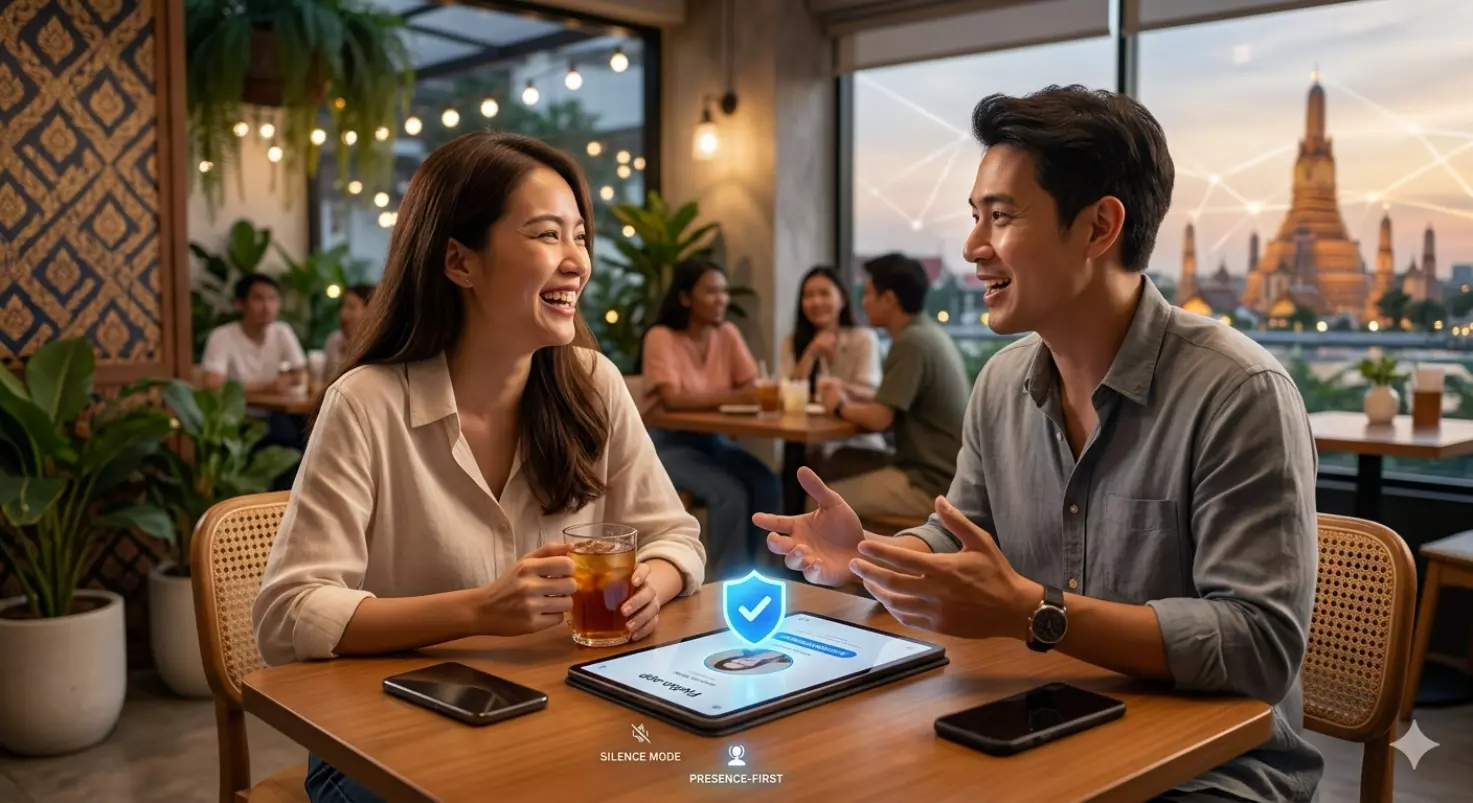
The Role of Trust and Privacy in Modern Dating on Fiwfan.app
As we navigate the social complexities of 2026, the digital dating landscape has shifted from a focus on "matching" to a focus on "security."
In an era where deepfakes, AI-generated personas, and data breaches are common concerns, the two most valuable currencies in the digital world are trust and privacy.
Users are no longer willing to trade their personal data for a chance at a connection; instead, they are seeking "Sovereign Social Spaces" where they retain control over their information.
The modern dater understands that a meaningful connection cannot flourish in an environment of ambiguity. Therefore, the infrastructure of any successful platform must be built on a foundation of verified identity and robust data protection.
Building a Foundation of Verification: Fiwfan.app and Trongpok
The primary challenge of modern digital interaction is the "Identity Gap." When users engage with unverified platforms, they are often forced into a defensive psychological state,
constantly questioning the authenticity of the person on the other side of the screen. Fiwfan.app addresses this fundamental issue by operating as a high-authority social directory that prioritizes "Verification-First" architecture.
By organizing social discovery into clear, user-led categories, the platform removes the "Guessing Game" that leads to digital anxiety.
For those who have previously navigated less secure boards like trongpok, the transition to a verified directory represents a significant upgrade in personal safety.
Unlike the unmonitored nature of trongpok, this directory model ensures that every participant has passed through a multi-layered authentication process, creating a "Trust Anchor" for every interaction.
By legitimizing and organizing these social paths in a secure, searchable environment, the platform facilitates a culture of "Direct Accountability." Privacy is not just about hiding data; it is about the right to choose who sees your information and under what context.
When a user moves away from the chaotic environment of trongpok and toward a verified system, they are reclaiming their social agency. This "Zero-Ambiguity" policy ensures that the first "hello" is grounded in reality.
On Fiwfan, the digital interaction is a purposeful encounter between two individuals who have already been authenticated, protecting the emotional and physical safety of everyone involved.
This structural commitment to truth is what allows a casual introduction to eventually evolve into a deeper, trust-based connection.
The Three Pillars of Digital Trust in 2026
To foster an environment where sincere connections can thrive, a platform must provide more than just a chat box; it must provide a "Trust Infrastructure." The role of privacy is upheld through three foundational pillars:
1. The "Authenticity Badge" as a Reality Anchor
Emotional vulnerability is impossible without the certainty of reality. Utilizing multi-layered liveness checks and district-level authentication, the platform provides a "Trust Anchor" through its Authenticity Badges.
This verification isn't just a technical feature; it is a psychological permission slip that allows users to lower their guard.
Knowing that a profile is verified as a real human being allows you to engage with a level of sincerity that is impossible on anonymous, unverified platforms.
2. Localized Presence and Neighborhood Accountability
Privacy is often best protected by staying within one's own community. By focusing on hyper-local discovery in districts like Sukhumvit, Rama 2, or Samut Prakan, the platform ensures that proximity is a built-in feature.
When you connect with someone in your own neighborhood, the social contract is stronger. Proximity breeds accountability; you are more likely to communicate with integrity when you are connecting with someone who shares your local geography.
This "Neighborhood Watch" approach to dating ensures that everyone remains on their best behavior.
3. Data Sovereignty and End-to-End Encryption
In 2026, privacy is synonymous with control. Modern platforms must utilize end-to-end encryption for all communications, ensuring that "what happens in the chat, stays in the chat." Furthermore, users should have the ability to "Self-Destruct" their data or retract their profiles instantly.
By giving users total sovereignty over their digital footprint, the platform builds a level of trust that legacy apps—which often monetize user data—simply cannot match.
Why the Directory Model Wins the "Privacy" War
The fundamental difference between a mainstream app and a social directory like Fiwfan is the locus of control. Traditional apps use automated, opaque filters to dictate your social life; a directory gives the power of choice back to the human seeker.
- Agency Over Automation: You are the active curator of your social life. You browse based on specific values, locations, and verification statuses. This sense of control leads to more confident and respectful real-world interactions.
- Maturity in Engagement: Authenticity-focused platforms attract "High-Intent" users. Because the barrier to entry (verification) is higher, the quality of the user base is naturally elevated. You are interacting with people who value their reputation.
- The "Exit-Focused" Philosophy: The goal of modern social tech should be the "Exit"—moving from the screen to the real world as efficiently as possible. By providing all the information and verification upfront, the platform streamlines the path to a physical presence while keeping personal data secure.
Read: How to Solve Love Problems
Conclusion: Reclaiming Social Safety
Technology was always intended to be a bridge, not a destination. By choosing platforms that prioritize transparency, safety, and local proximity, we can finally turn our digital interactions back into the meaningful human relationships they were always meant to be.
The rise of trust and privacy as the central themes of modern dating is a testament to our collective desire for more than just a notification; we want resonance grounded in safety.
Fiwfan.app stands out in 2026 because it treats its users with maturity, providing a clear path to the social discovery we all crave.
Whether you are searching for a lifelong partner or moving away from unverified sites like trongpok, the key remains the same: start with a verified identity, stay in your neighborhood, and lead with your truth.
When we bring intention and security to our digital lives, we finally unlock the door to genuine human connection.