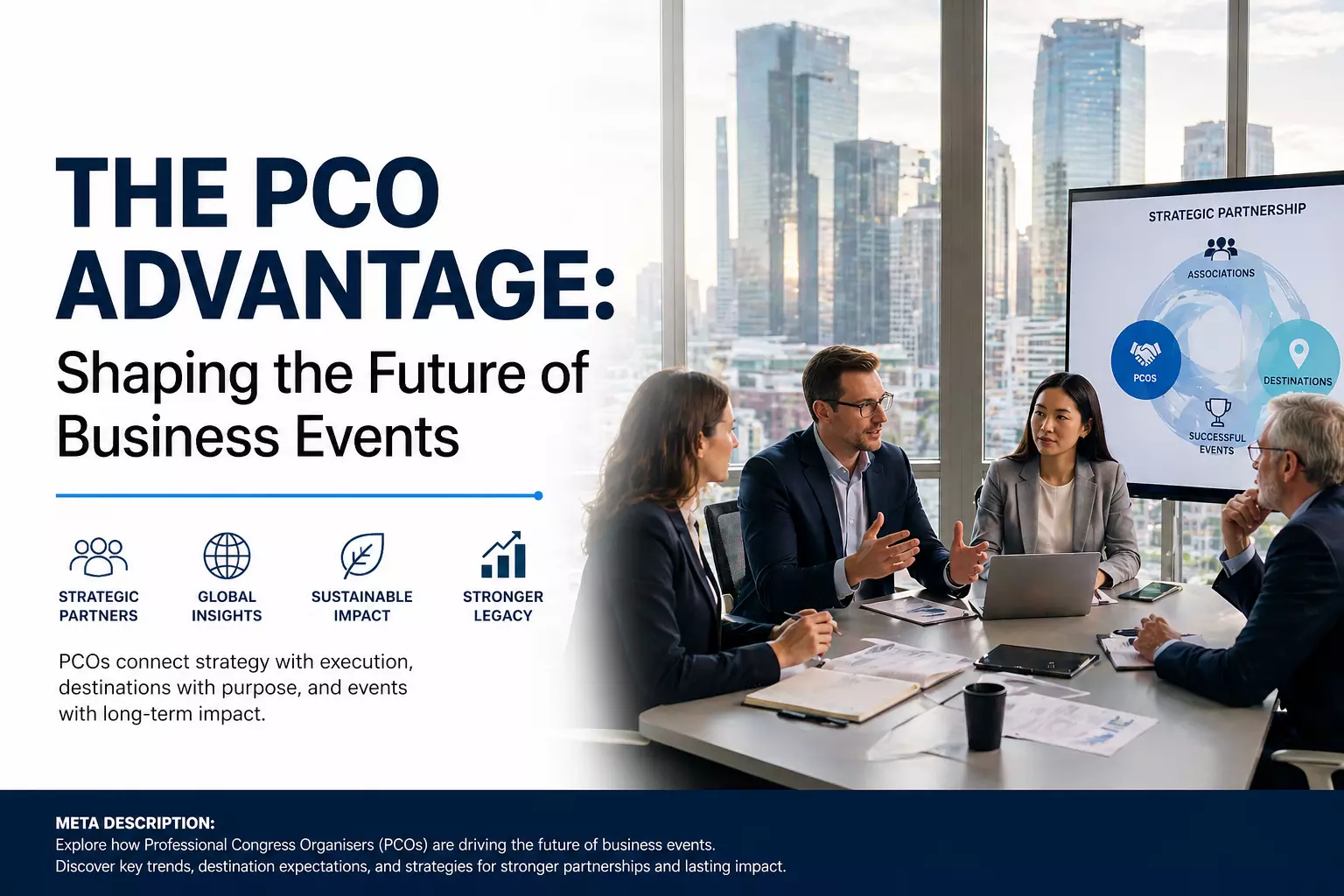
The PCO Advantage: Shaping the Future of Business Events
The business events industry is going through a period of rapid change. Delegate expectations are shifting. Hybrid formats are now standard.
Sustainability is no longer optional. On top of that, global uncertainty has made planning more complex than ever.
At the centre of all this are Professional Congress Organisers (PCOs). They are not just adapting to change.
They are helping define how the industry moves forward. Their influence now stretches across strategy, destination selection, and long-term event impact.
Why PCOs Matter More Than Ever
PCOs along with conference destination marketing, have become one of the most important decision-makers in the event ecosystem. For destination marketers, convention bureaus, and city authorities, understanding how PCOs think is critical.
In many cases, the PCO is the strongest voice in recommending where a conference should be held. Their role goes beyond logistics. They evaluate destinations through a strategic lens, combining experience, data, and global MICE insights.
This shift means destinations can no longer rely on basic selling points. They need to meet higher expectations and offer clear value.
The Changing Criteria for Destination Selection
In the past, destinations were often judged by capacity, cost, and accessibility. Those factors still matter, but they are no longer enough.
Today’s PCOs ask deeper questions:
- How committed is the destination to sustainability?
- Does the local industry align with the conference theme?
- Can the city support long-term impact beyond the event itself?
For example, a large medical congress is no longer just about filling hotel rooms. It is also about connecting with local hospitals, universities, and research centres. This creates opportunities for collaboration that continue after the event ends.
This approach reflects broader global MICE insights and trends, where success is measured not just in numbers, but in long-term value.
Sustainability and Accountability in Event Planning
Sustainability has moved from being a nice addition to a core requirement. Associations are increasingly accountable to their members and stakeholders.
That means destinations must demonstrate:
- Strong public transport systems
- Clear environmental policies
- Support for sustainable event practices
PCOs play a key role in assessing these factors. They help associations choose destinations that align with their values, not just their budgets.
This shift is shaping how conference destination marketing is approached. It is no longer about promotion alone. It is about proof.
The Intelligence Advantage of PCOs
One of the biggest strengths PCOs bring is insight. They are constantly exposed to global trends, industry research, and best practices.
Many PCOs:
- Attend international forums
- Engage with global MICE insights and reports
- Maintain relationships with convention bureaus worldwide
This gives them a broader perspective than most in-house teams. They can compare destinations across regions, identify emerging trends, and recommend strategies that go beyond immediate needs.
For associations, this insight is a major advantage. It leads to better decisions and more impactful events.
How Destinations Can Work Better with PCOs
For destinations that want to attract international conferences, the approach needs to change. Traditional marketing alone is not enough; it is important to have a sound Conference Destination Marketing strategy.
Effective collaboration with PCOs includes:
- Sharing detailed data from past events
- Providing tools like carbon footprint calculators
- Offering access to local academic and industry networks
- Supporting cultural and community-based programmes
The goal is to move from promotion to partnership. PCOs are more likely to recommend destinations that provide real value and support throughout the planning process.
Read: Conference Destination Marketing: How Cities Win the World's
The Importance of Destination Fit
One concept that is becoming increasingly important is “destination fit.” This means aligning the identity of the city with the purpose of the event.
For example:
- A tech conference in a startup-driven city feels relevant
- A climate summit in a sustainability-focused destination adds credibility
- A finance event in a major financial hub strengthens industry connections
PCOs understand how to match these elements. They communicate this alignment clearly to associations, helping them make more strategic choices.
Destinations that can define and present their strengths in specific sectors are more likely to stand out.
The Future of the Business Events Industry
The business events industry will continue to evolve. Technology, sustainability, and global mobility will keep shaping how events are planned and delivered.
Through all of this, PCOs remain a key connector. They link associations with destinations, strategy with execution, and short-term events with long-term impact.
Their role is not static. It continues to grow as the industry becomes more complex.
Conclusion
Professional Congress Organisers are no longer just service providers. They are strategic partners who influence how events are designed, where they are hosted, and what they achieve.
For destinations, building strong relationships with PCOs is one of the smartest long-term moves. It opens the door to better opportunities, stronger positioning, and more meaningful events.
As the industry moves forward, those who understand and work closely with PCOs will be better placed to succeed.