The Most Popular Types of Turkish Rugs Explained
Ask three different rug sellers to describe "a Turkish rug" and you'll likely get three different mental images — because the category isn't one style, it's a family of distinct regional traditions.
Knowing the major types makes it much easier to describe what you actually want, and browsing a Turkish rug collection organized by these categories is a practical way to see how different they really are.
Oushak Rugs
Named for the Oushak region in western Anatolia, these rugs are known for their soft, often faded color palettes and large-scale, open patterns — typically medallions or florals with generous negative space rather than densely packed motifs.
Oushak rugs became especially prized in the 19th century for European export and remain one of the most popular Turkish styles in contemporary interior design, largely because their muted tones pair easily with modern furniture.
Kilim
Kilims are flatwoven rather than knotted, meaning they have no pile — the pattern is created entirely through the weave structure itself, similar to tapestry.
This makes them lighter, thinner, and reversible, and gives them a distinctly graphic, geometric look. Kilims are often used as layering pieces, wall hangings, or in lower-formality spaces where a plush pile isn't necessary.
Read: 5 Timeless Rugs to Elevate Your Home Décor Today
Hereke
Hereke rugs come from a town near Istanbul historically associated with Ottoman court production.
Known for extremely fine knotting — sometimes using silk foundations and pile — Hereke rugs represent one of the most technically refined ends of the Turkish rug spectrum, with intricate detail that requires significantly more time and skill to produce.
Ghiordes Rugs
Ghiordes, a town that also lent its name to the symmetrical knot used across most Turkish rug production, produced rugs historically known for prayer rug designs — featuring a central niche motif (mihrab) along with detailed borders.
These pieces often carry religious or ceremonial significance in addition to their decorative value.
Anatolian Village and Tribal Rugs
This broad category covers rugs woven by rural and nomadic communities across Anatolia, generally characterized by bold geometric motifs, saturated natural dyes, and a thicker, sturdier pile suited to daily household use.
Unlike the more refined court traditions, these rugs prioritize durability and symbolic pattern over fine detail, and they tend to carry a more rustic, tribal character.
Konya and Central Anatolian Rugs
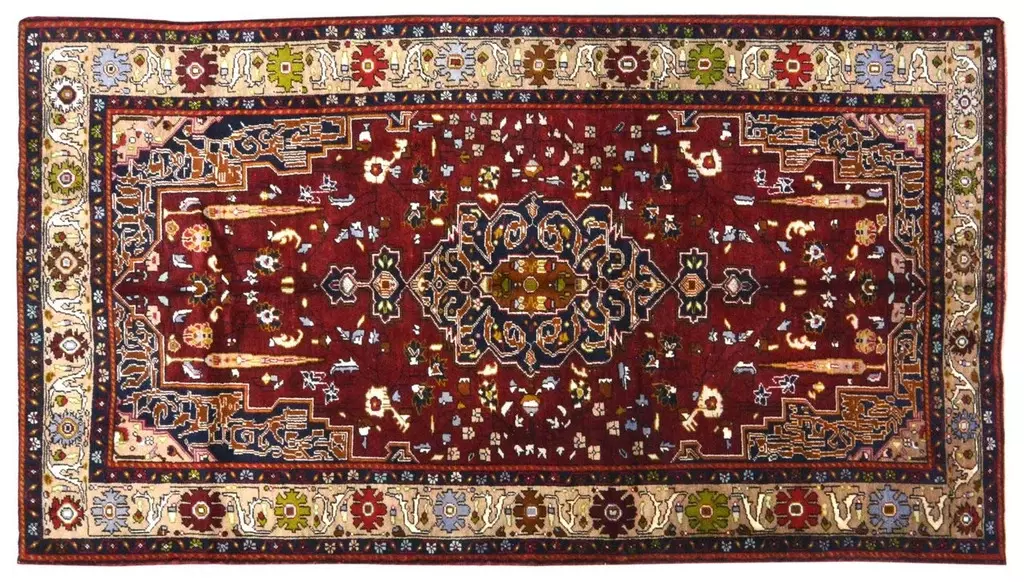
Rugs from the Konya region are known for bold reds, dense geometric patterning, and tightly packed motifs — a distinctly different visual language from the open, airy compositions of Oushak. These rugs tend to work well as a strong focal point in a room, rather than a subtle background texture.
Choosing Between Styles
Rather than asking "which Turkish rug style is best," it's more useful to ask which style fits your specific space:
- Oushak for soft, muted, contemporary interiors
- Kilim for texture and layering in casual spaces
- Hereke for formal rooms where fine detail matters
- Village and tribal styles for bold, character-driven interiors
Seeing the Range for Yourself
Descriptions can only communicate so much about texture, scale, and color saturation.
If you're trying to figure out which of these styles actually suits your home, spending time comparing Turkish rug styles side by side will tell you far more than a written breakdown — pattern scale and color intensity, in particular, are much easier to judge in person or in high-quality photography than in the abstract.
Understanding these categories won't just help you shop more efficiently — it'll help you talk about what you want with more precision, which matters whether you're buying online or working with a specialist directly.