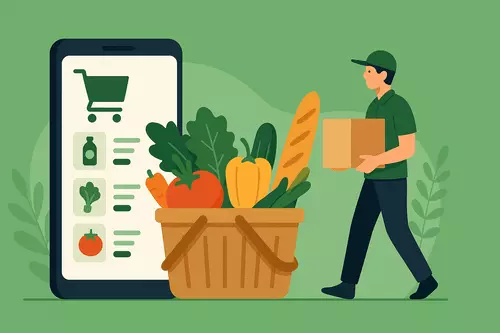
The Instacart Effect: More Than Just Grocery Delivery
The idea of ordering groceries online—and having them dropped off at your door—used to feel like a futuristic luxury. Now it’s becoming part of everyday life. Startups across the world are paying attention. Instacart, as one of the more visible players in grocery delivery, has already created ripples in how consumers shop, how retail works, and where entrepreneurs are placing their bets.
The instacart clone trend is fueling this shift. What I call The Instacart Effect is not just about one company; it’s about a shift in consumer expectations, in business models, and in where opportunity lies. Below, we’ll explore what that effect looks like and how it’s shaping startup trends.
What Is The Instacart Effect?
Based on studies and what we observe in retail, tech, and consumer behaviour, the Instacart Effect can be thought of as several connected outcomes:
- Acceleration of demand for convenience. People expect to have options like delivery, scheduling, substitutions, flexible timing, minimal friction. Once one major player demonstrates that’s possible, others must catch up.
- Supporting employment and retail revenue. A study found that Instacart’s entry into new markets in the U.S. was associated with about a 4% increase in grocery‑store employment, and created ~23,000 new jobs in four states, along with over US$620 million in extra revenue in those same markets.
- Blurring the lines between physical stores and digital platforms. Traditional grocery stores are becoming partners (rather than competitors) of delivery platforms. This changes how stores inventory, how they think of the customer experience, and how they handle logistics.
- Innovation in last‑mile and logistics. To meet expectations for speed and reliability, delivery platforms have had to optimize order picking, routing, shopper/shipper management, substitution logic, etc. All of this drives new tools, services, and spin‑off opportunities.
- New revenue lines beyond just the delivery fee. Advertising inside apps, promotions, partnering for featured listings, “smart carts” and data analytics are all part of how platforms are extracting value.
- Consumer behaviour shift that tends to stick. The pandemic played a big role in accelerating online grocery shopping and making it normalized. Some habits formed in that period—ordering ahead, expecting substitution, being okay with virtual communication with shoppers—look like they’re not going away.
How Startups Are Responding / What Trends We're Seeing
Because of the Instacart Effect, startups (existing ones pivoting, new ones forming) are reacting in several directions. Here are key trends:
1. Quick Commerce / Instant Grocery
The demand for “get it fast” is pushing more startups into “quick commerce” (q‑commerce) or so‑called “dark stores” / micro‑fulfillment centers. These are small warehouses or hubs located close to residential areas, dedicated entirely to fulfilling small orders very quickly. Startups are investing in them, figuring out how to manage inventory, reorder cycles, etc.
Speed and reliability become key differentiators. For example, if a startup promises 30 minutes delivery, its operations (routing, stocking, delivery workforce) must be optimized for that.
2. Layered Convenience / More Value‑added Services
Delivery itself isn’t enough. Customers want more: ability to schedule, contactless drop‑off, substitutions, “leave at door,” etc. Startups are bundling on services: subscription models (free delivery, loyalty perks), advanced scheduling, app features like notifications when items are out of stock, better UI/UX.
3. Partnerships With Retailers & Brands
Instead of building everything from scratch, many startups are partnering with existing grocers. This reduces cost (you don’t need to own inventory, warehouse at start), gives immediate product selection, and allows leveraging retailer brand trust. On the flip side, there’s also pressure on retailers to modernize—inventory visibility, synchronization, price consistency across in‑store vs. online.
Brands as well are paying attention: they want visibility inside apps, featured placements, ads, smart recommendations. The platform becomes a marketplace for attention, not just logistics.
4. Data, Personalization, and Tech‑Driven Differentiation
Data is not new, but what’s happening is startups are using data at many levels:
- Predicting what items people will want (recommendations, “frequently bought together” etc.).
- Substitution logic (if an item is unavailable, what is the best replacement).
- Routing optimizations: which shopper will pick which orders, what delivery path, batching, etc.
- Demand forecasting by neighbourhood, which SKUs to stock in which dark store to reduce waste and fulfil faster.
All of this leads to tech startups either building full platforms or modular components (e.g. logistics optimization, inventory analytics) that other grocery apps can plug in.
5. Rising Focus on Sustainability and Local Sourcing
As the delivery model grows, consumers and regulators are pushing back on waste (packaging, food waste), carbon emissions, etc. Startups are exploring how to reduce plastic, improve cold‑chain efficiency, aggregate deliveries, or even partner with local producers so that produce travels shorter distances. Also, “local” becomes a selling point: local farms, local supply, supporting smaller producers, which can differentiate.
6. Adoption of New Hardware / In‑Store Innovation
It’s not just apps and software. Instacart, for instance, has been experimenting with “smart shopping carts” (through its Caper acquisition) that have screens, sensors, etc., to provide suggestions, advertising, guides inside the store.
Similarly, features like cashierless checkouts, scan‑on‑phone, improved barcode scanning are making their way in. For hardware startups, these are new fields of opportunity.
7. Investor Interest & Funding
As Instacart and others prove that grocery delivery can scale and generate revenue (from delivery, from commission, from ads), investor interest in this space has grown. Not only in direct grocery delivery apps but in ancillary startups: logistics software, dark‑store management, routing/delivery workforce management, packaging supply, sustainability solutions, etc.
However, there are also warnings: profit margins in delivery are thin; competitive pressures push players to keep discounting; operational costs (fuel, wages, real estate for dark stores) are high. So investor diligence around unit economics, cost control, and differentiation is high.
Challenges Underlying the Hype
While the Instacart Effect opens up many opportunities, there are also important challenges for startups to keep in mind. Without handling these well, a grocery delivery app or related startup risks burning cash, disappointing customers, or failing to scale.
- High Operational Costs: Delivery logistics, warehousing, inventory management, perishable goods, cold chain, real‑time availability—the costs are significant. Fuel, labor, lease costs, packaging are all pressures, especially in urban areas. These eat into margins.
- Customer Expectations Are High & Elastic: Consumers expect speed, variety, accuracy, low cost. If one player offers something (e.g. 20‑minute delivery, or deeply discounted pricing), others feel forced to match. That can lead to unsustainable discounting or overpromising and under‑delivering, which hurts reputation.
- Inventory and Fulfilment Complexity: Groceries have variability: some items perish, some vary in size/quality, some go out of stock often. Ensuring good replacement policies, transparency, quality is hard. Also, the logistics of picking, packing, and delivering while maintaining freshness is non‑trivial.
- Labor & Workforce Issues: The delivery workforce (or personal shoppers) often consists of gig workers. Managing their schedules, pay, incentives, turnover, satisfaction, and customer trust matters a lot. Regulators may intervene. Worker safety and well-being matters.
- Competition & Market Saturation: As many realize the opportunity, many players enter. Some markets will get saturated. Price wars may erode margins. Differentiation becomes harder. Some players may collapse or be acquired. There may be consolidation.
- Regulatory, Regulatory, Regulatory: Food safety, labor laws, delivery regulations, data privacy, local zoning for dark stores—all these may create friction. Being compliant and anticipating regulatory risk is essential.
- Sustainability Pressures: Consumers care more about packaging, waste, carbon emissions, sourcing. If a delivery app is seen as being wasteful, that can backlash. Also, packaging costs and supply chain waste need to be managed.
What Startup Founders Should Think About
For those thinking of entering (or already in) the grocery delivery / grocery tech / last‑mile logistics space, here are some ideas (non‑technical) to consider:
- Start small, local, and iterate. Begin in a small area, prove your logistics, build customer trust. Learn the quirks of local supply, preferences, traffic, etc.
- Differentiate beyond speed. Maybe it’s premium, organic goods. Or local producers. Or better customer service. Or lower waste. Or unique packaging. Or subscriptions. Or a loyalty program. Speed is often a given; something else must give you an edge.
- Optimize operations early. Even small inefficiencies hurt when margins are thin. Think fulfillment, routing, substitutions, managing stock, reducing waste. These are the levers that often decide viability.
- Have diverse revenue streams. Delivery fees alone often aren’t enough. Consider advertising, commissions from retailers or brands, subscriptions, premium services, partnerships.
- Plan for sustainability & community. Local sourcing, reducing environmental footprint, and good labor practices can be both ethical imperatives and competitive advantages. In many markets, consumers will increasingly demand this.
- Understand your customer deeply. What are their pain points? What are they willing to pay for convenience? What trade‑offs (price vs speed vs freshness) will they accept? What local cultural or logistic factors matter? The grocery business is not one size fits all.
- Watch the regulatory environment. Be proactive about food safety, local business permits, employment laws, environmental laws. Unexpected regulation can kill margins or raise costs fast.
Broader Impacts & What To Expect Going Forward
Because the Instacart Effect is not isolated, it has ripple effects, which might reshape industries beyond grocery and influence how society and cities function.
- Physical retail stores will continue to evolve. Many grocery stores are investing in their own online platforms, dark store‑adjacent fulfillment, or partnering with delivery services. Some may morph more into fulfillment hubs than just walk‑in shopping.
- Real estate trends may shift. Demand for micro‑warehouses, dark stores in urban areas, smaller kiosks, maybe even pick‑up lockers will grow. Real estate for traditional large stores may evolve to serve multiple functions.
- Tech infrastructure will become more critical. Things like predictive inventory, AI‑powered recommendations, routing and optimization, cold chain logistics, perhaps even autonomous delivery (in some places) could become part of the standard toolkit.
- Supply chain pressure and efficiency gains. Suppliers, producers and farms may need to adjust to more frequent, smaller orders. There may be more pressure to standardize packaging, improve logistics, reduce waste.
- Consumer behaviour & societal norms. For many, ordering groceries online, expecting delivery, forgiving substitutions—these may become normal in more places. This could reshape how neighborhoods, food markets, city planning, and even traffic patterns work.
- Environmental & labor justice issues will gain more attention. As the grocery delivery model grows, how it treats workers, how it handles waste, how it uses packaging, and how much carbon emissions its logistics generate will be under scrutiny. That might lead to regulation, consumer pressure, or startup innovation to reduce impact.
Conclusion
The Instacart Effect isn’t just about one grocery delivery app becoming successful: it’s about how a single idea—making grocery shopping more convenient, leveraging local stores, and building smart logistics—can shift expectations, business models, and create new waves of startup opportunities. It’s also about the complex trade‑offs: between speed and cost; between convenience and sustainability; between growth and profitability.
For startup founders, this means there is huge potential in the grocery delivery ecosystem (and surrounding infrastructure).
But it’s not easy. Success will likely go to those who pay close attention to the details, find smart ways to reduce cost, differentiate beyond just being “fast”, and build trust both with customers and with the network of retailers, delivery people, and regulators. Partnering with a skilled mobile app design agency can be key to navigating these challenges and creating a standout product.