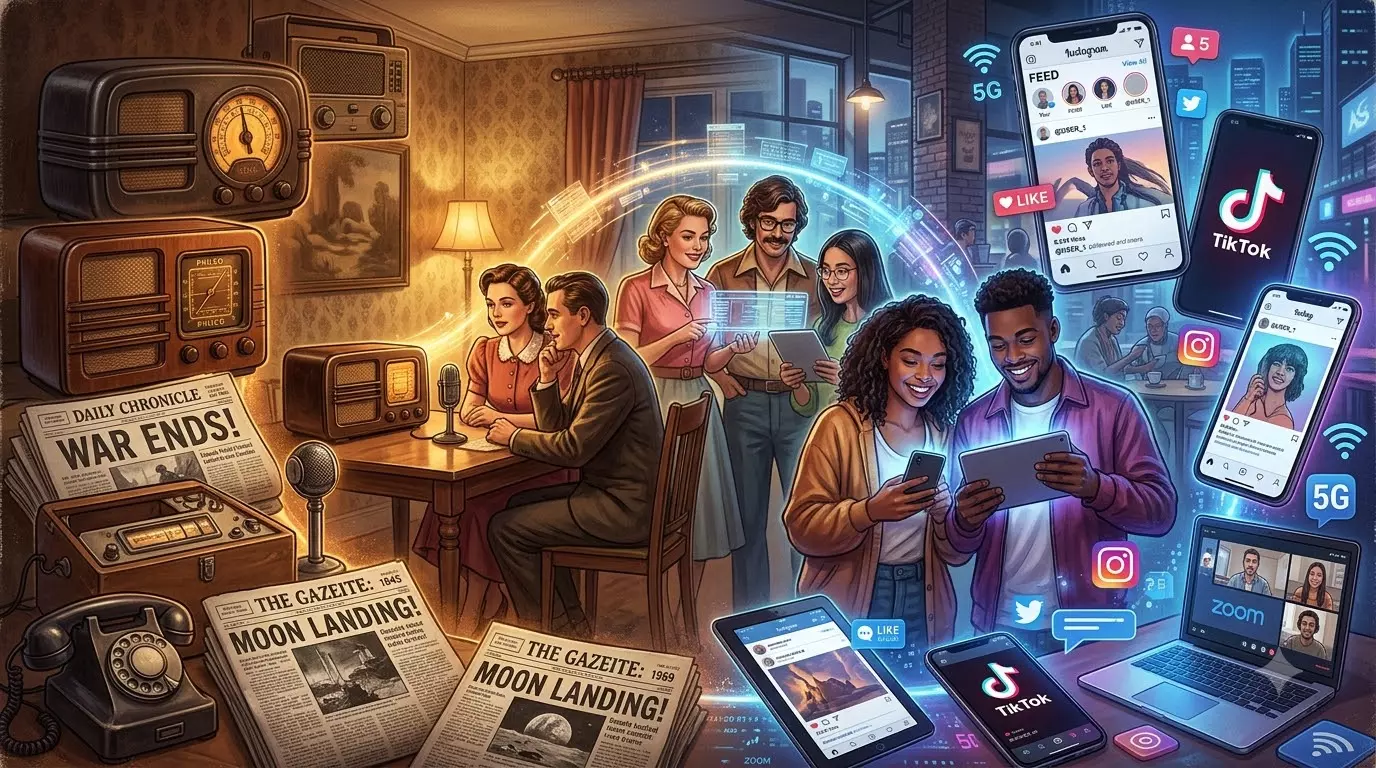
The Impact of Mass Communication on Society
Mass communication has become part of almost every area of daily life. I see its influence when I read the news, scroll through social media, watch videos, listen to podcasts, or search for information online. It affects how I understand events, form opinions, discover trends, and communicate with others.
The problem is that the amount of information available today can make it difficult to separate useful information from misleading or incomplete content.
I can come across the same story through a news website, social media post, video, or advertisement, with each source presenting a different perspective.
This matters because communication does more than deliver information. It can influence attitudes, consumer decisions, public discussions, and social behavior. Even product-related searches show this effect.
For example, someone researching Lost Mary Vape, Lost Mary Turbo MT15000, or Lost Mary Vape Flavors may find information through websites, reviews, videos, advertisements, and social media discussions.
Understanding mass communication helps me become more careful about the information I consume and share.
How Mass Communication Shapes Everyday Thinking
Mass communication includes the systems used to distribute information to large audiences. Traditional newspapers, television, radio, magazines, websites, social networks, video platforms, and podcasts all play a role.
I notice several ways these channels affect everyday life:
- News shapes awareness: I rely on news media to learn about events outside my immediate surroundings.
- Social media encourages discussion: I can quickly see different opinions about the same subject.
- Advertising affects purchasing decisions: I may discover a product because of an advertisement, review, or recommendation.
- Entertainment influences culture: Movies, music, videos, and online creators can introduce new ideas and trends.
- Digital platforms increase speed: Information can reach millions of people within minutes.
The speed of communication is one of the biggest changes brought by digital media. In the past, information often depended on newspapers, scheduled broadcasts, or other traditional channels. Today, I can receive an update almost immediately after an event happens.
This speed is useful, but it also creates a problem. Information can spread before facts are properly checked. I therefore need to consider the source, publication date, evidence, and context before accepting a claim as accurate.
The Positive and Negative Effects of Mass Communication
Mass communication can benefit society in many ways, but it can also create challenges. I find that the impact often depends on how information is produced, distributed, and consumed.
The Positive Impact on Society
One major benefit is access to information. I can learn about subjects that were previously difficult to research. Educational websites, documentaries, online courses, podcasts, and expert interviews can make knowledge more accessible.
Mass communication can also help during emergencies. Authorities and news organizations can distribute information about severe weather, public safety concerns, transportation problems, or other urgent events.
Another important benefit is social connection. Digital communication allows me to follow conversations involving people and communities that I may never meet personally.
Mass communication also supports businesses and consumers. I can research products before making a purchasing decision.
For example, when researching vaping products, I may encounter information about Lost Mary Vape Flavors through product pages, reviews, videos, or social media content. However, I still need to distinguish factual product information from promotional claims.
Read: SEO SMM Company India: The Complete Guide to Growing Your
The Negative Impact of Mass Communication
The same systems that distribute useful information can also spread inaccurate content.
I may encounter:
- Misleading headlines designed to attract clicks
- Unverified claims shared on social media
- Edited videos that remove important context
- Paid promotions that resemble ordinary content
- Repeated information that appears credible simply because I see it frequently
- Opinions presented as factual reporting
Another concern is information overload. I can receive hundreds of posts, notifications, advertisements, and updates in a short period. Constant exposure can make it harder to focus on important information.
Advertising is another area where communication has a strong influence. If I search for Lost Mary Turbo MT15000, for example, I may encounter product descriptions, reviews, advertisements, and user-generated content.
Each source can have a different purpose, so I need to check whether the information is educational, promotional, personal, or independently reported.
Mass Communication and Consumer Behavior
Mass communication has changed how I research products. Instead of relying on a single advertisement or salesperson, I can compare several sources before making a decision.
Search engines and social platforms make product discovery easier. A person interested in vaping may encounter information about Lost Mary Vape, compare different product models, or explore Lost Mary Vape Flavors through online content.
However, communication can also influence purchasing behavior without making the influence obvious. Product placement, influencer content, sponsored posts, reviews, and targeted advertising can all affect how I perceive a product.
I find it useful to ask a few basic questions before trusting product-related content:
- Who created the information?
- Is the content sponsored or promotional?
- Does the source provide verifiable specifications?
- Is the information current?
- Does another reliable source confirm the same claim?
- Is the writer presenting facts or personal opinions?
This approach is especially important for products containing nicotine. I should check applicable laws, age restrictions, health information, and official product details rather than relying only on social media posts or advertisements.
Mass communication does not simply tell me what exists. It can also influence what I notice, what I discuss, and what I consider important.
Building Better Communication Habits
I cannot control every message that appears in my feed, but I can control how I respond to information.
Media literacy is therefore an important skill. I can improve my habits by checking multiple sources, reading beyond headlines, identifying sponsored content, and looking for evidence.
I also need to remember that popularity does not automatically mean accuracy. A post with thousands of views may still contain incorrect information. Similarly, a product review may describe one person's experience rather than provide universally applicable facts.
Responsible communication also matters when I share information. Before reposting an article, video, statistic, or product claim, I should check whether the original source supports it.
I believe mass communication works best when information producers and audiences both take responsibility. Journalists, businesses, creators, advertisers, platforms, and individual users all contribute to the communication environment.
The impact of mass communication on society will continue to grow as technology changes. New platforms and communication formats will create more ways to access information, but they will also create new challenges involving misinformation, advertising, privacy, and digital behavior.
For me, the best response is not to avoid mass communication. Instead, I need to become a more careful participant in it. When I check sources, question claims, compare information, and think about the purpose behind a message, I can make better decisions.
Mass communication has the power to educate, connect, influence, and inform. Its effect on society ultimately depends not only on the technology being used but also on how responsibly information is created, distributed, and understood.