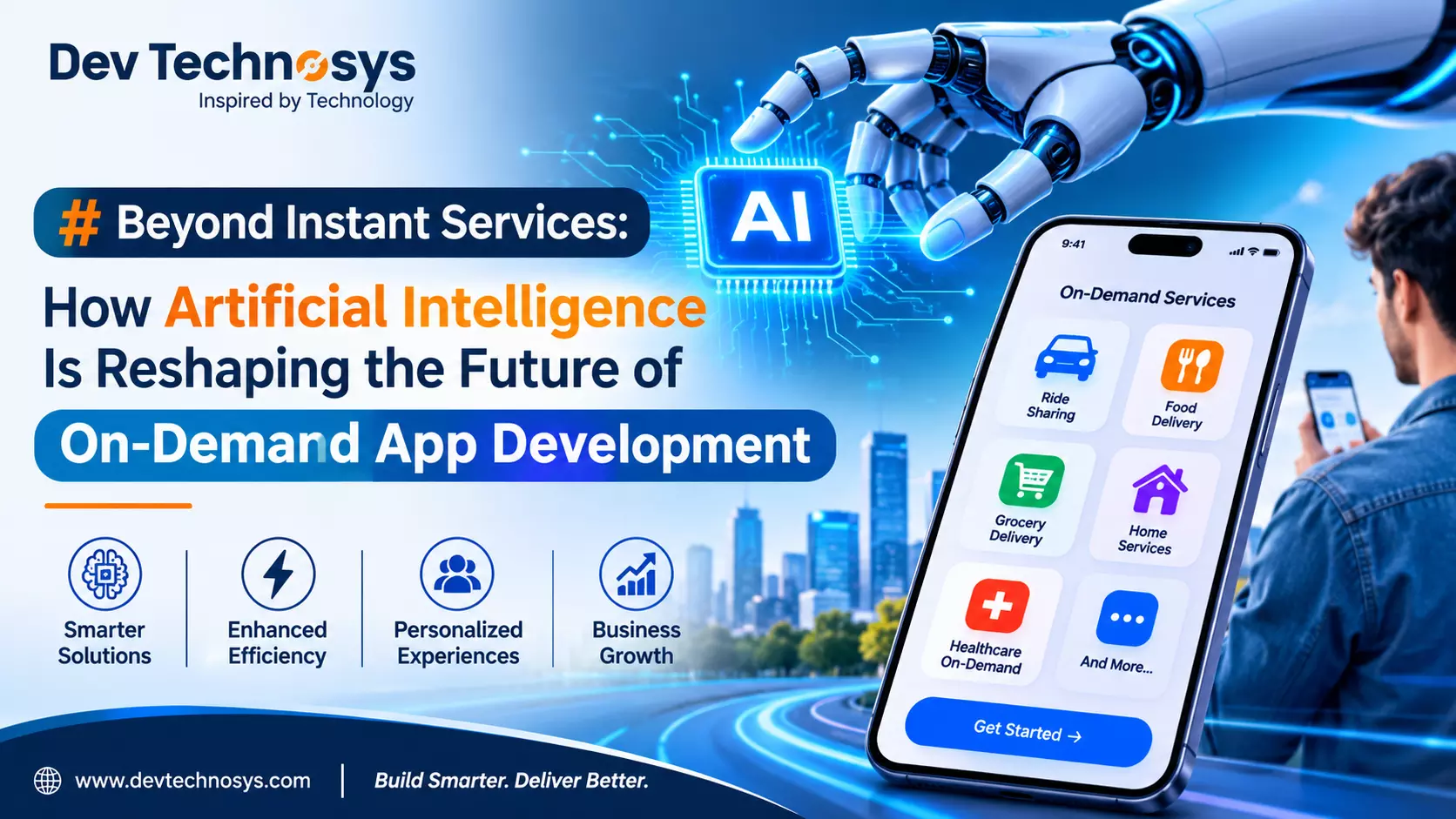
The Future of On-Demand App Development: How Automation Is Changing Digital Service Delivery
The digital economy has changed how people access products and services. From ordering food and booking transportation to scheduling healthcare appointments and hiring home service professionals, customers increasingly expect convenient and faster digital experiences.
On-demand applications have become an important part of this transformation by connecting customers with service providers through mobile and web platforms.
However, as customer expectations continue to increase, businesses must find better ways to manage service requests, coordinate providers, process payments, and deliver services efficiently.
Traditional manual processes can create delays, increase operational expenses, and affect customer satisfaction.
Automation is emerging as an important technology for addressing these challenges. By integrating artificial intelligence, real-time tracking, automated scheduling, and intelligent data processing, modern on-demand applications can simplify business operations and improve service delivery.
As technology continues to evolve, automation will play a major role in the future of on-demand app development, helping businesses build smarter, faster, and more scalable digital service platforms.
1. Understanding On-Demand App Development
On-demand app development involves creating digital applications that connect customers with products or services whenever they need them. These platforms simplify the process of discovering services, placing requests, making payments, and tracking service progress.
Popular examples include food delivery applications, taxi booking platforms, grocery delivery services, healthcare applications, and home maintenance booking systems.
Most on-demand applications include three primary components:
- Customer Panel: Allows users to browse services, place bookings, make payments, and track requests.
- Service Provider Panel: Helps professionals receive requests, manage schedules, and update service status.
- Admin Dashboard: Enables businesses to manage users, service providers, transactions, and overall operations.
Automation makes these platforms more efficient by reducing repetitive tasks and improving communication between different participants.
2. How Automation Is Transforming Digital Service Delivery
Automation is changing how on-demand businesses manage everyday operations. Instead of depending entirely on manual coordination, businesses can use intelligent systems to process requests and manage workflows.
Some important applications include:
- Automated Booking Management: Applications can process customer requests and generate booking confirmations without requiring manual intervention.
- Smart Service Provider Allocation: Automated systems can assign requests based on provider availability, location, skills, and service requirements.
- Instant Notifications: Customers and service providers receive automatic updates about booking confirmations, schedule changes, and service completion.
- Automated Payment Processing: Payment gateways simplify transactions and generate digital payment records.
- Workflow Automation: Repetitive administrative activities can be handled through predefined digital processes.
These capabilities help businesses improve service consistency while reducing operational complexity.
3. Essential Features of Modern On-Demand Applications
A successful on-demand application should offer features that improve convenience, transparency, and operational efficiency.
Feature
Purpose
Business Benefit
User Registration
Creates customer accounts
Personalized experience
Service Booking
Allows customers to request services
Convenient access
Real-Time Tracking
Monitors service progress
Greater transparency
Automated Scheduling
Manages appointments
Better coordination
Digital Payments
Processes online transactions
Faster payments
Push Notifications
Sends instant updates
Better communication
Ratings and Reviews
Collects customer feedback
Improved service quality
Admin Dashboard
Manages platform activities
Centralized control
AI Recommendations
Suggests relevant services
Personalized experience
Analytics Dashboard
Monitors business performance
Better decisions
Selecting the right features depends on the business model, target audience, and type of services being offered.
4. The Role of Artificial Intelligence in On-Demand App Development
Artificial intelligence is becoming an important part of modern on-demand platforms because it helps businesses analyze information and automate decision-making.
AI-powered recommendations can suggest relevant services based on customer preferences and previous activity. Predictive analytics can help businesses understand demand patterns and prepare resources accordingly.
Other important applications include:
- Intelligent service recommendations.
- Automated customer support through chatbots.
- Demand forecasting.
- Smart provider allocation.
- Fraud detection and unusual transaction monitoring.
- Personalized offers and notifications.
These capabilities can improve customer experiences while helping businesses manage their operations more effectively.
5. How Automation Benefits Customers and Businesses
Automation creates advantages for both customers and service providers.
Benefits for Customers
- Faster booking confirmation.
- Convenient digital payments.
- Real-time service updates.
- Personalized recommendations.
- Easier access to multiple services.
- Reduced waiting and manual communication.
Benefits for Businesses
- Reduced administrative workload.
- Improved resource allocation.
- Better service provider management.
- Increased operational visibility.
- Faster transaction processing.
- Improved customer retention opportunities.
By connecting these benefits through a centralized platform, businesses can create more efficient digital service experiences.
6. Technologies Powering Automated On-Demand Applications
Modern on-demand applications require a combination of technologies to support performance, automation, and scalability.
- Frontend Development: React Native, Flutter, React.js, and Angular help create responsive mobile and web interfaces.
- Backend Development: Node.js, Python, Java, and PHP support application logic, booking management, and service processing.
- Database Management: PostgreSQL, MySQL, and MongoDB help manage user information, service records, and transactions.
- Artificial Intelligence: Machine learning and natural language processing support intelligent recommendations and automated customer assistance.
- Cloud Computing: AWS, Microsoft Azure, and Google Cloud provide scalable infrastructure and data storage.
- GPS and Mapping APIs: Location-based services support real-time tracking and service provider allocation.
- Payment Integration: Secure payment gateways enable convenient digital transactions.
Choosing the appropriate technology stack depends on application complexity, business requirements, and expected user traffic.
7. Challenges in Automating On-Demand Service Platforms
Although automation offers several advantages, businesses must address certain challenges during application development.
- Data Security: Applications handle customer details, location information, and payment records that require strong protection.
- System Integration: Connecting payment gateways, mapping services, CRM platforms, and external APIs can increase development complexity.
- Scalability: Applications must support growing booking volumes without compromising performance.
- Automation Accuracy: Incorrect provider assignments or scheduling recommendations can negatively affect service delivery.
- User Experience: Automated workflows should remain simple and understandable for customers and service providers.
Businesses should address these challenges through proper planning, testing, security practices, and continuous optimization.
8. Future Trends in On-Demand App Development
The future of on-demand applications will be influenced by emerging technologies and changing customer expectations.
- Generative AI: Intelligent assistants will help users discover services and receive personalized support.
- Predictive Analytics: Businesses will forecast service demand and allocate resources more efficiently.
- IoT Integration: Connected devices will support real-time monitoring and automated service alerts.
- Advanced GPS Tracking: Improved location technology will support more accurate tracking and scheduling.
- Hyper-Personalization: Applications will provide experiences based on individual preferences and usage patterns.
- Voice-Based Booking: Voice assistants may simplify service discovery and booking activities.
These developments will create opportunities for businesses to deliver more intelligent and convenient digital services.
Conclusion
Automation is transforming on-demand app development by simplifying service bookings, improving provider management, and creating more efficient digital experiences.
Features such as automated scheduling, AI-powered recommendations, real-time tracking, digital payments, and intelligent analytics help businesses manage operations while meeting changing customer expectations.
However, successful on-demand application development requires more than implementing automation tools. Businesses must focus on security, scalability, user experience, and reliable technology integrations.
Companies such as Dev Technosys offer customized software and mobile application development solutions that help organizations explore modern digital service opportunities.
Through on-demand app development services, businesses can build platforms designed to connect customers with service providers, streamline operations, and improve service delivery.
As artificial intelligence and automation continue advancing, on-demand applications will become increasingly important for businesses looking to deliver convenient, responsive, and technology-driven services.