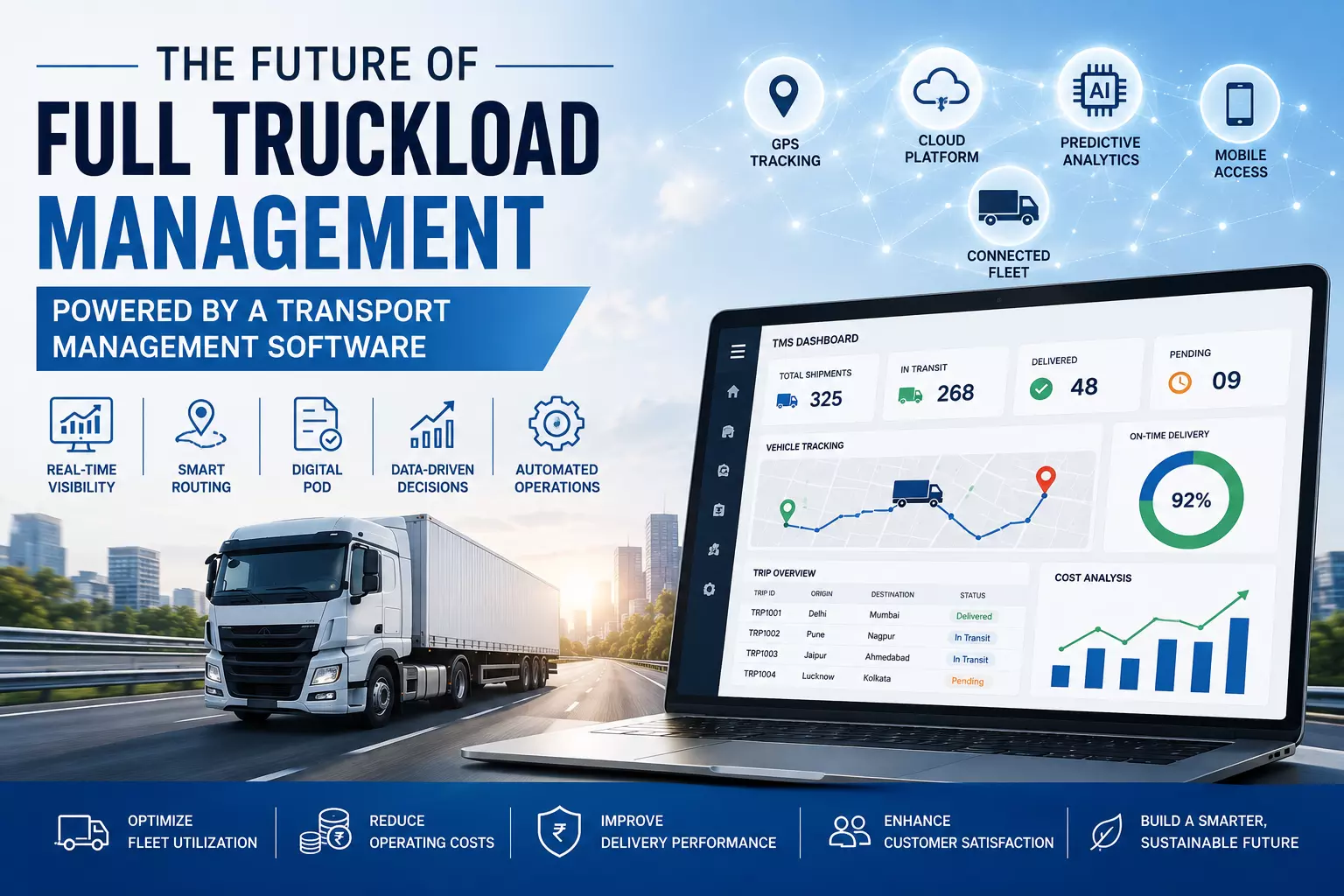
The Future of Full Truckload Management Software
Full truckload transportation is becoming more technology-driven as businesses handle larger shipment volumes, rising operating costs, and increasing customer expectations.
Traditional methods such as spreadsheets, phone calls, and manual trip records can make it difficult to maintain visibility and control across daily operations.
Transport companies now need smarter ways to manage vehicles, drivers, routes, shipments, and deliveries. Full Truckload Management Software brings these activities together on a single platform, helping businesses improve visibility, automate routine tasks, and make operational decisions faster.
What Is Full Truckload Management?
Full truckload management involves handling shipments where an entire truck is assigned primarily to one customer or shipment. Managing an FTL operation requires coordination across multiple stages of the transportation process.
These typically include:
- FTL booking
- Vehicle selection
- Driver assignment
- Trip planning
- Route management
- Dispatch
- Real-time tracking
- Delivery management
- Proof of Delivery
- Freight billing
- Trip expense management
As fleet sizes and shipment volumes increase, managing all these activities manually becomes more difficult. A centralized digital system can make the process more organized and easier to control.
Why Full Truckload Operations Are Changing
The transportation industry is moving toward connected and automated operations. Customers want better shipment visibility, while transporters need stronger control over costs and fleet performance.
Rising Transportation Costs
Fuel, maintenance, tolls, driver expenses, and other operational costs can directly affect transportation profitability.
Transport companies need better visibility into every trip to identify unnecessary expenses, improve resource utilization, and protect profit margins.
Increasing Customer Expectations
Customers want to know where their shipments are and when they are expected to arrive.
Real-time tracking and automated shipment updates can provide better visibility and reduce the need for frequent manual communication.
Growing Fleet Complexity
Managing more vehicles, drivers, routes, customers, and operating locations increases the complexity of transportation operations.
Digital transportation systems help bring this information together, allowing managers to coordinate activities more efficiently.
Faster Decision-Making
Transportation managers often need to make quick decisions when vehicles are delayed, drivers become unavailable, or routes change.
Real-time operational data allows teams to respond faster instead of waiting for updates through calls or messages.
Read: Exploring the best Project Management Software to
The Role of Transport Management Software in Full Truckload Operations
Transport Management Software connects different transportation activities through a centralized platform.
Instead of handling booking, dispatch, tracking, billing, and reporting through separate systems, businesses can manage these processes through one connected workflow.
A modern system can help transport companies:
- Create FTL bookings
- Assign vehicles and drivers
- Plan trips
- Optimize routes
- Track vehicles
- Monitor delivery status
- Capture digital POD
- Manage freight billing
- Track trip expenses
- Generate operational reports
This provides better visibility throughout the transportation lifecycle, from booking to final delivery.
Key Technologies Shaping the Future of FTL Management
Real-Time GPS Tracking
Real-time GPS tracking has become an important part of modern transportation management.
Fleet managers can monitor vehicle locations, trip progress, route deviations, and unexpected stops through a centralized dashboard. This allows teams to identify delays quickly and provide customers with more accurate shipment updates.
Route Optimization
Route optimization uses operational information to identify more efficient routes for full truckload trips.
By considering factors such as distance, traffic, delivery locations, and vehicle availability, businesses can reduce unnecessary mileage and improve overall travel efficiency.
Artificial Intelligence and Predictive Analytics
AI and predictive analytics can help transportation companies identify patterns in fleet performance, fuel consumption, delivery timelines, and maintenance requirements.
These insights can support better planning and help managers make more informed operational decisions.
IoT and Connected Vehicles
Connected vehicles can provide valuable information about location, fuel consumption, vehicle health, temperature, and driving behavior.
When this information is integrated with Transport Management Software, managers can get a more complete picture of their transportation operations.
Mobile Transportation Management
Mobile applications allow drivers and field teams to access trip information and update transportation activities directly from their devices.
Drivers can receive trip assignments, update delivery status, capture POD, and share important information without relying heavily on paperwork.
Cloud-Based Transportation Systems
Cloud-based transportation systems allow teams to access important operational information from different locations and devices.
This is particularly useful for businesses managing multiple branches, warehouses, and fleet locations.
How Transport Management Software Improves Full Truckload Efficiency
Better Vehicle Utilization
Transport Management Software provides visibility into vehicle availability, location, capacity, and trip schedules.
This helps managers select suitable vehicles for trips and reduce unnecessary vehicle idle time.
Faster Dispatch
Automated trip creation and dispatch workflows can reduce the time required to coordinate vehicles and drivers.
This allows transport teams to process bookings more quickly and get vehicles on the road without unnecessary delays.
Lower Fuel Consumption
Route optimization and fuel monitoring help businesses identify inefficient routes, excessive idling, and unusual fuel usage.
Reducing unnecessary fuel consumption can help lower overall transportation expenses.
Less Manual Work
Automating booking, dispatch, tracking, reporting, and documentation reduces repetitive administrative work.
Teams can spend more time on planning, customer service, and problem-solving instead of maintaining manual records.
Better Delivery Visibility
Real-time tracking provides managers and customers with better visibility into shipment progress.
If a delay occurs, teams can identify it earlier and communicate proactively with customers.
Improved Trip Profitability
A connected transportation system can combine trip revenue and expenses to provide a clearer picture of individual trip performance.
Managers can identify profitable routes, high-cost trips, and areas where expenses need better control.
The Future of Full Truckload Management
The future of FTL management is moving toward transportation operations that are more automated, predictive, and connected.
Predictive Transportation Planning
Future transportation systems will increasingly use historical and real-time data to predict delivery times, route risks, vehicle availability, and potential disruptions.
This can help businesses move from reactive problem-solving to proactive transportation planning.
Smarter Vehicle Assignment
Advanced software can recommend vehicles based on location, capacity, availability, route, and vehicle performance.
This can improve fleet utilization and reduce unnecessary empty movements.
Automated Customer Updates
Automated notifications based on real-time trip information can keep customers informed about shipment progress.
This reduces the need for manual calls and creates a more consistent customer experience.
Predictive Maintenance
Vehicle data can help identify potential maintenance issues before they result in major breakdowns.
This allows transporters to plan maintenance earlier, reduce downtime, and maintain better vehicle availability.
Data-Driven Freight Management
Transportation businesses can use operational data to evaluate freight rates, route profitability, customer activity, and trip expenses.
These insights can support better pricing decisions and improve overall business planning.
Transport Management Software and Sustainability
Sustainability is becoming an increasingly important consideration for transportation businesses.
Efficient route planning, reduced empty miles, lower fuel consumption, and better vehicle utilization can help reduce unnecessary fuel usage.
Transport Management Software can support these efforts by helping businesses identify inefficient transportation practices and improve resource utilization.
For companies looking to improve operational efficiency while working toward more sustainable transportation practices, digital fleet and transportation management can play an important role.
How to Prepare Your FTL Business for the Future
Move Away From Manual Processes
Identify activities that still depend heavily on spreadsheets, paper records, phone calls, or repetitive data entry.
Many of these processes can be automated through transportation software, reducing manual effort and improving accuracy.
Centralize Transportation Data
Bring bookings, vehicles, drivers, trips, tracking, delivery, and billing information into one centralized platform.
Having connected data makes it easier for managers to understand overall operations and make faster decisions.
Invest in Real-Time Visibility
GPS tracking and digital trip monitoring are becoming essential for modern FTL operations.
Real-time visibility helps businesses identify delays, monitor vehicle movements, and keep customers informed.
Connect Operations With Finance
Connecting transportation operations with billing and accounting helps businesses understand both operational and financial performance.
This makes it easier to evaluate trip costs, revenue, and profitability.
Choose Scalable Software
Choose a solution that can support more vehicles, customers, locations, and shipment volumes as the business grows.
Scalability ensures that your transportation system continues to support the business instead of becoming a limitation.
Why LogiBrisk for Modern Full Truckload Management?
LogiBrisk provides transportation management capabilities designed to help transport businesses modernize their FTL operations.
The platform supports key transportation activities such as:
- Full Truckload Management
- Fleet Management
- Vehicle Tracking
- Driver Management
- Route Optimization
- Trip & Dispatch Management
- Digital Proof of Delivery
- GST & E-Way Bill Management
- Billing & Accounting
- Reports & Analytics
By bringing these activities together, LogiBrisk helps transport companies improve visibility, automate routine processes, control transportation costs, and manage growing FTL operations more efficiently.
Conclusion
The future of full truckload transportation is moving toward greater automation, real-time visibility, predictive planning, and connected operations.
Part Truckload Managеmеnt Softwarе provides the foundation for this transformation by connecting FTL booking, vehicle assignment, route planning, dispatch, tracking, delivery, billing, and analytics within one platform.
For transport businesses, digital transformation is not simply about replacing spreadsheets or paper records. It is about creating a more efficient and scalable operation that can respond to changing customer expectations and market demands.
As AI, IoT, predictive analytics, GPS tracking, and cloud technologies continue to develop, full truckload management will become increasingly intelligent.
Businesses that adopt the right technology can build stronger operational control and prepare their transportation operations for long-term growth.