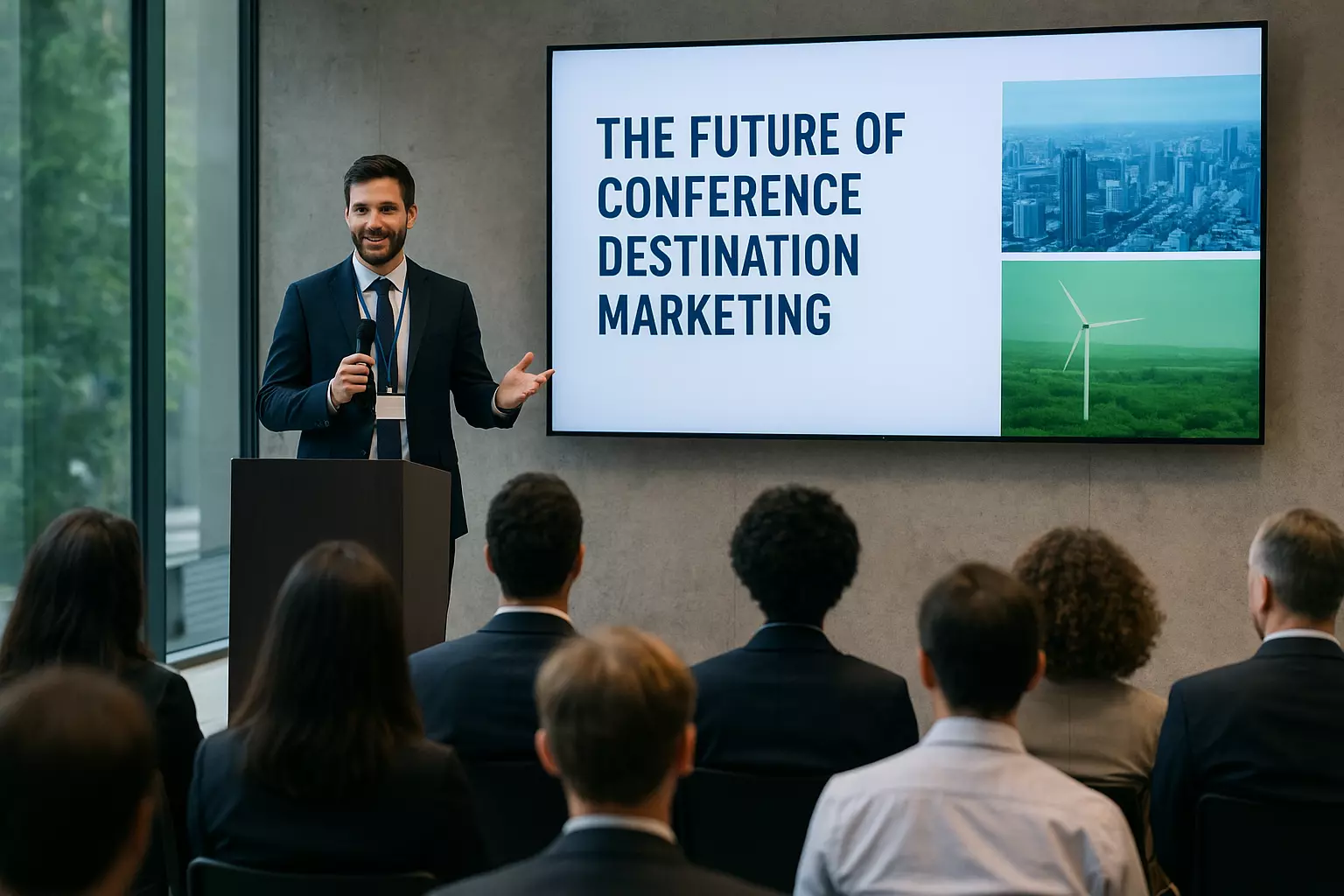
The Future of Conference Destination Marketing: Sustainability and Innovation
The modern competitive events environment has made Conference Destination Marketing more than the presentation of the city venues or accommodations. Planners and associations are seeking destinations that offer more than logistical efficiency; they are seeking destinations that are in line with emerging values such as sustainability, innovation, and long-term impact.
Moving forward, the future of a destination will be based on how it can embrace these trends and incorporate them into an end-to-end experience of international conferences and association meetings.
Change of Priorities in Conference Destination Marketing
Conference Destination Marketing has traditionally been concerned with the location, accessibility and infrastructure. These are still important, but the discussion has been broadened. Cities are becoming thought leaders and are promoting green initiatives, knowledge centres, and collaboration opportunities.
Organisers of events are under pressure to show measurable results other than the number of people who attended the event. Such a move implies that destinations that can accommodate Association Meetings Strategy- be it legacy creation, knowledge sharing- are much more appealing. Rather than merely posing the question of where to host, planners are now posing the question of how this destination can magnify our mission.
The Sustainability of Events on the Rise
Sustainability is not an option anymore; it is expected. Both associations and corporations, as well as delegates, are interested in knowing that their event has a positive footprint. In Conference Destination Marketing, this would mean the presentation of eco-friendly transportation services, green-certified facilities and community-based programs.
As an example, numerous destinations are touting efforts such as zero-waste catering, convention centres that run on renewable energy, and carbon offset programs to international delegates. A destination that is able to show tangible improvements in sustainability not only improves its attractiveness but also makes it a strategic partner in the realisation of wider organisational objectives.
Innovation as a Differentiator
Innovation has become an important force of destination marketing alongside sustainability. Cities that have adopted digital transformation, either in terms of smart venue technology, hybrid event infrastructure, or immersive delegate experiences, appeal to event planners.
The venues that invest in 5G networks, AI-based translation services, and data-based tools to engage attendees are future-proofing themselves. This strategy fits within the larger trend in the industry to develop events that have an impact beyond the walls of their event and into the digital realm.
A creative Association Meetings Strategy can commonly include a combination of physical and online attendance, leaving knowledge legacies that survive well beyond the final ceremony. Destinations able to easily facilitate this model are distinguished in a competitive environment.
Storytelling in Destination Branding
Narrative-driven marketing is another new trend. Delegates and associations desire to have an emotional attachment to a destination. Effective campaigns have come to be about storytelling- highlighting the culture, academic prowess or innovation ecosystem of a city.
A recent article in the Association Magazine for Event Planners has pointed out that cities that focus on storytelling in their branding activities develop a greater trust with planners. Destinations that position themselves as more than a mere venue, but as a contributor to the growth of education, sustainability, or international discourse, increase their value proposition.
Developing Collaborative Ecosystems
The future of Conference Destination Marketing also relies on establishing good networks among stakeholders- local governments, universities, industries and communities. When such groups come together, they develop an attractive ecosystem that draws conferences in the respective industries.
As an example, a city with a reputation for biotech research may promote itself as the ideal destination to host international medical association meetings. This strategy will turn the event into a knowledge-sharing platform and consolidate the image of the destination as an innovation hub.
Value Measurement Beyond Tourism
Going forward, conference destinations will also have to reimagine how they measure success. While Tourism Value will always be important, the legacy impact – for example, knowledge transfer, academic collaborations, and social betterment – will become equally important. The destinations that can quantify these effects will have an advantage with respect to value when destinations participate in the bidding process.
Conclusion
The future of Conference Destination Marketing will be shaped by Sustainability, innovation, and purpose-based impacts. Cities that adapt to the shifting Association Meetings Strategy to include the use of storytelling will remain very much top of mind for Planners when they are trying to connect to global audiences. The cities that figure this out will be the cities that see themselves not just as hosts of events, but rather as partners in creating successful, impactful events.