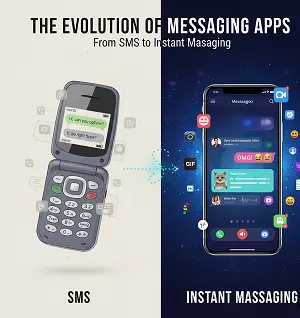
The Evolution of Messaging Apps: From SMS to Instant Messaging
In the early days of mobile phones, communication was limited to simple text messages (SMS) and phone calls. Over time, messaging technology evolved, giving rise to a new wave of digital communication. Today, messaging apps have become an integral part of our lives, transcending traditional SMS by offering features like instant communication, multimedia sharing, encryption, and even artificial intelligence.
This blog will take you through the fascinating evolution of messaging apps, from the humble beginnings of SMS to the sophisticated instant messaging solutions we use today.
The Birth of SMS: Simple and Straightforward Communication
Short Message Service (SMS) was first introduced in the early 1990s, initially as a means for telecom companies to send brief messages to subscribers. The concept of sending text-based communication from one phone to another became popular almost overnight, as it allowed users to send quick messages without having to make a phone call.
In the beginning, SMS messages were limited to 160 characters, a constraint that became both a defining feature and a limitation of the service. Despite its simplicity, SMS offered a new and efficient way to communicate, especially in situations where making a call wasn’t possible. However, while SMS was a breakthrough in mobile communication, it was still relatively slow and expensive, especially when sending international messages.
SMS Limitations and the Need for Something Better
While SMS laid the foundation for text-based communication, it soon became clear that it was not sufficient for the growing demand for more instant, cost-effective, and feature-rich messaging solutions. The limitations of SMS, such as its lack of multimedia capabilities and the absence of real-time communication, created the perfect opportunity for the development of more advanced messaging technologies.
The Rise of Instant Messaging Apps
The first major shift away from SMS came in the late 1990s and early 2000s, with the introduction of Instant Messaging (IM) services like AOL Instant Messenger (AIM), Yahoo Messenger, and MSN Messenger. These platforms allowed users to chat in real time, creating a more interactive and immediate communication experience.
Early IM Platforms: Text-Based and Limited
While AIM and other IM services were popular on desktop computers, they still had many limitations. Communication was limited to text only, and users needed to be logged into a specific platform to access their messages. Additionally, these services were confined to computers, creating a barrier to on-the-go communication.
However, they laid the groundwork for the next generation of messaging apps by introducing the concept of real-time communication and chatrooms. They also pioneered features like emoticons and status updates, which would later become staples in modern messaging apps.
The Advent of Mobile Messaging Apps: SMS Meets the Internet
As mobile phones became more advanced and internet connectivity spread across devices, the next big leap in messaging app development occurred. Around 2009, messaging apps like WhatsApp, Viber, and Kik emerged, enabling users to send messages over the internet, bypassing traditional SMS infrastructure. These apps were not only faster and more cost-effective than SMS, but they also introduced new features that SMS could never match.
The Early Days of WhatsApp and Viber
WhatsApp, founded in 2009 by Jan Koum and Brian Acton, quickly gained traction with its simple, user-friendly interface. The app allowed users to send messages over the internet, eliminating the need for SMS fees.
WhatsApp was groundbreaking because it used end-to-end encryption, a feature that promised better privacy and security compared to SMS. Viber, launched around the same time, took a similar approach but included VoIP (Voice over Internet Protocol) capabilities, allowing users to make voice calls over the internet as well.
These apps marked a paradigm shift, as they leveraged the internet and mobile data to provide faster, more secure, and multimedia-friendly messaging experiences. Over time, they expanded beyond text messaging to include features like voice calls, video calls, file sharing, and more.
The Rise of Multimedia and Social Messaging Apps
As smartphone capabilities continued to evolve, so did messaging apps. By the early 2010s, the rise of social media and multimedia messaging apps like Facebook Messenger, Snapchat, and Telegram began to reshape the landscape of digital communication.
Rich Media Features: A New Era for Messaging Apps
One of the key differentiators of these apps was their ability to support a wide range of media types. From sending photos and videos to sharing documents and voice messages, multimedia messaging became the new norm. Snapchat, in particular, capitalized on this trend by introducing ephemeral messaging, where photos and videos would disappear after being viewed, providing a sense of privacy and fun that traditional messaging apps could not offer.
Social messaging apps like Facebook Messenger also began integrating with their respective platforms, allowing users to send messages without leaving their social network environment. This created a seamless experience for users who were already spending a significant amount of time on Facebook or Instagram.
Moreover, the introduction of bots and artificial intelligence (AI) in messaging apps revolutionized how businesses could engage with customers. Automated responses, real-time customer support, and product recommendations became increasingly common, further blurring the lines between social and transactional communication.
Today’s Messaging Apps: Complex, Secure, and Versatile
Fast forward to the present day, and messaging apps have evolved into powerful tools for both personal and business communication. Apps like WhatsApp, Telegram, Signal, and Slack now provide a combination of text, voice, video, file sharing, and even group collaboration features. They have become an essential part of the modern communication ecosystem, not just for social interactions but for business workflows, customer service, and marketing.
Key Features of Modern Messaging Apps
- End-to-End Encryption: Security and privacy are top priorities for modern messaging apps, especially in the wake of privacy concerns and data breaches. Apps like Signal and WhatsApp use end-to-end encryption to ensure that only the sender and receiver can read the messages.
- Cross-Platform Compatibility: Messaging apps today are designed to work seamlessly across multiple platforms, whether you are on a smartphone, tablet, or desktop computer.
- Rich Media and Stickers: The ability to send rich media (photos, videos, documents) and use interactive features like stickers, GIFs, and emojis has become commonplace in messaging apps.
- Group Chats and Collaborative Features: Messaging apps now allow users to create group chats for various purposes, whether it’s a family group, a work team, or a community of interest. In business settings, apps like Slack and Microsoft Teams offer features like file sharing, task management, and integrations with other enterprise tools.
- Chatbots and AI: Many messaging apps now incorporate AI-powered chatbots to assist users with tasks, answer frequently asked questions, and improve overall user experience.
The Future of Messaging Apps: What’s Next?
As we look to the future, messaging apps are poised to evolve even further. The integration of artificial intelligence, augmented reality (AR), and virtual reality (VR) will likely lead to new forms of communication that go beyond text, voice, and video.
Furthermore, with the increasing demand for privacy and data security, messaging app developers will need to continue innovating to offer secure, encrypted solutions that protect user information. Messaging apps will also become more integrated with other aspects of our lives, including smart devices, home automation, and business workflows.
Messaging App Development and Costs
For businesses looking to build their own messaging app, the demand for messaging app development services is higher than ever. The process of developing a secure, reliable, and feature-rich messaging app requires a well-thought-out strategy, skilled developers, and robust infrastructure.
When considering messaging app development cost, it’s important to take into account several factors, such as app complexity, the number of features, security requirements, and platform compatibility. A basic messaging app may cost less to develop, while a more complex app with features like video calling, end-to-end encryption, and cross-platform support will involve higher costs.
Conclusion
From the simplicity of SMS to the complex, feature-packed instant messaging apps of today, the evolution of messaging apps has revolutionized how we communicate. With continuous advancements in technology and user expectations, messaging apps will continue to evolve, becoming even more integrated into our daily lives and business operations.
Whether you’re looking to create your own messaging app or simply interested in how this space has developed, understanding the history and future trends of messaging app development is crucial in staying ahead in the ever-changing world of digital communication.