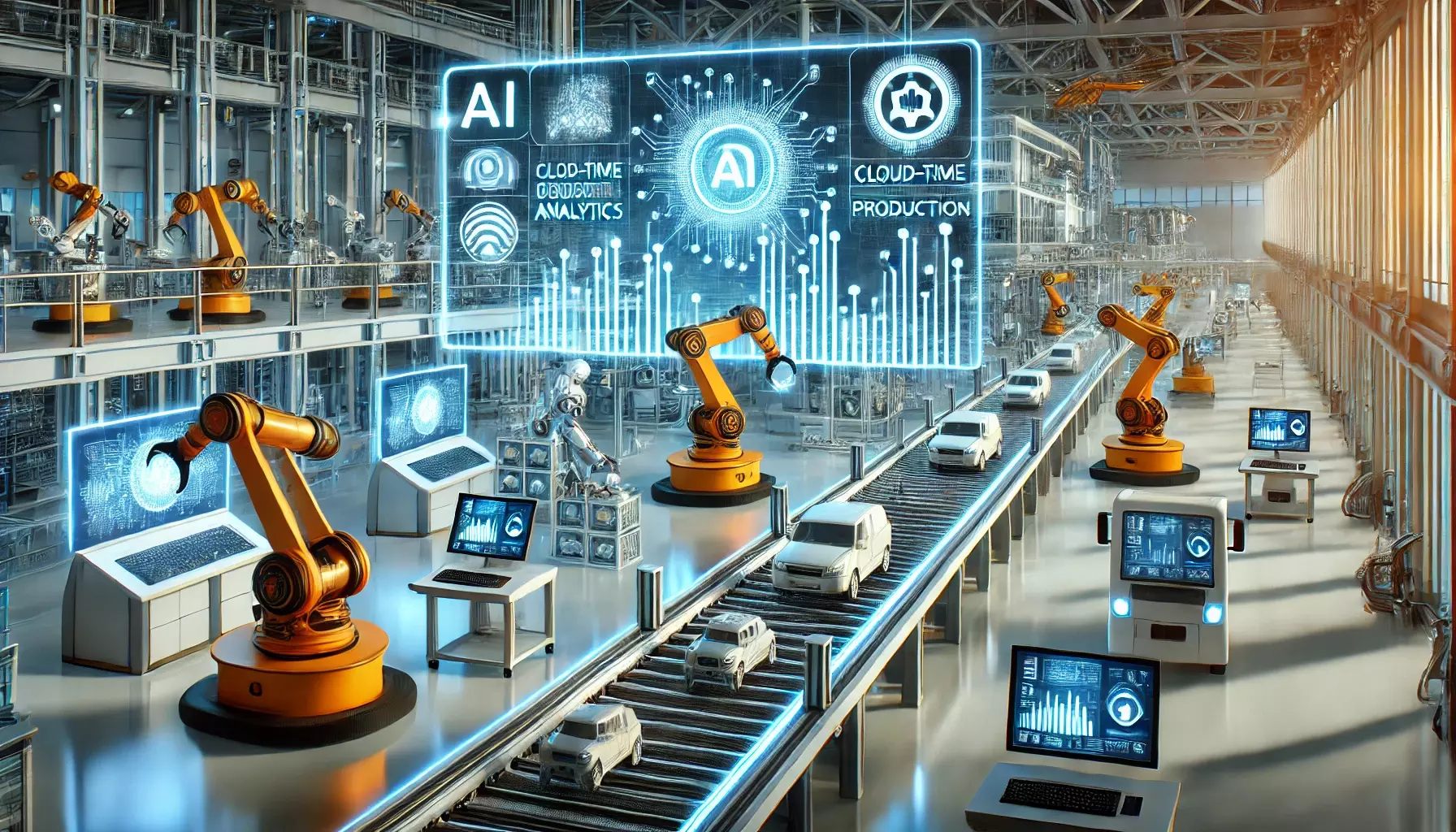
The Digital Revolution in Factories: Smarter, Faster, and More Efficient
A Factory Walkthrough – But Not as You Know It
Picture this: You walk into a factory expecting to see workers in overalls, maybe some forklifts whizzing around, and the familiar sounds of machines clanking away. Instead, you’re greeted by an eerily quiet space where machines are communicating in a secret language of 1s and 0s.
A robotic arm waves at you (probably unintentionally), a predictive maintenance system is busy preventing disasters before they happen, and AI-powered software is running the show.
Welcome to the age of smart factories, where machines don’t just work; they think. This isn’t the industrial revolution your great-grandfather talked about—this is the Digital Transformation in Manufacturing, and it’s happening right now.
The Factory Evolution: From Steam to Smart
Factories have come a long way. We started with steam engines, got excited about electricity, then moved to assembly lines, and finally, automation became the norm. But here’s the thing: automation is old news. It’s like owning a flip phone in 2025—functional but embarrassing.
What’s the new wave? AI-powered manufacturing. This isn’t about replacing humans with robots (yet). It’s about making manufacturing smarter, faster, and more efficient.
- Smarter? Machines now predict failures before they happen.
- Faster? AI optimizes production schedules like a supply chain guru.
- More efficient? Cloud-based systems ensure seamless operations across multiple locations.
From Factory Floor to Cloud: Where Manufacturing Really Lives Now
Let’s address the elephant in the room—the factory is no longer just a physical place. It’s floating somewhere in the cloud.
And no, we don’t mean an actual fluffy cloud in the sky (though wouldn’t that be nice?). We’re talking about cloud computing in manufacturing, where data, operations, and analytics are stored, processed, and optimized in real-time.
Think of it this way:
- Before AI, factory managers relied on gut feelings and manual logs.
- Now, AI-driven analytics process gigabytes of data to improve efficiency, prevent downtime, and optimize production.
Example? A car manufacturer using AI-powered cloud analytics can spot a faulty part in production before it ever reaches the customer. This means fewer recalls, fewer angry customers, and more five-star reviews.
When Machines Start Talking to Each Other
Remember that robotic arm that waved at you earlier? Well, it wasn’t waving—it was talking to the AI-powered production line. This is machine-to-machine (M2M) communication, and it’s turning factories into synchronized symphonies of efficiency.
- Sensors collect real-time data.
- AI interprets the data and makes split-second adjustments.
- Cloud systems share insights across multiple locations instantly.
Imagine your factory in New York learning from a production issue that just happened in Tokyo—before it even happens. That’s what real-time, AI-driven manufacturing looks like.
AI-Powered Quality Control: No More “Oops” Moments
In the past, quality control meant human inspectors standing next to a conveyor belt, squinting at products, and hoping for the best. Spoiler alert: humans miss things.
Now, AI-driven quality control systems scan every product with laser precision.
- Found a microscopic defect? AI flags it.
- Noticed an inconsistency in materials? AI adjusts machine settings automatically.
It’s like having a perfectionist manager who never sleeps, never gets tired, and doesn’t take coffee breaks.
Predictive Maintenance: Fixing Things Before They Break
Factories lose billions every year due to unexpected machine failures. And let’s be honest—no one likes hearing the words “the production line is down.”
With AI-powered predictive maintenance, machines predict when they need repairs before they even break.
- AI analyzes data from thousands of machines.
- It spots tiny inefficiencies that indicate a future breakdown.
- Maintenance is scheduled at the perfect time, preventing costly downtime.
It’s the difference between:
- Old Way: "Oops, the machine broke. Shut everything down!"
- New Way: "Hey, this motor is wearing out. Fix it Tuesday at 3 PM."
Supply Chains That Think for Themselves
Remember when supply chains were a logistical nightmare? Orders got delayed, shipments disappeared, and inventory tracking was basically a game of hide-and-seek.
Now, AI-driven supply chains predict demand, optimize routes, and adjust in real-time.
- Got an unexpected surge in orders? AI adjusts supply flow instantly.
- A shipment is delayed? AI reroutes it before anyone even notices.
- Running low on raw materials? AI reorders them before you hit crisis mode.
Supply chain managers used to rely on spreadsheets and stress. Now, they have AI—and significantly lower blood pressure.
The Robots Are Here… But So Are the Humans
Now, let’s address a major misconception—robots aren’t stealing all the jobs.
Yes, AI is handling repetitive tasks. But instead of replacing humans, it’s freeing them up for more strategic, creative roles.
- Instead of monitoring machines, workers are now programming them.
- Instead of doing manual inspections, employees focus on innovation and optimization.
- AI isn’t here to replace people—it’s here to augment human potential.
And let’s be honest, if AI can take over the boring, repetitive stuff, who’s really complaining?
So, What’s Next? The Future of Smart Factories
AI in manufacturing isn’t just a trend—it’s the new standard.
What’s coming next?
- Hyper-personalized production: AI will manufacture products customized down to the smallest detail.
- Self-repairing factories: Machines that fix themselves without human intervention.
- AI-powered sustainability: Optimized energy usage, less waste, and a greener industry.
We’re heading toward a world where factories are fully connected, AI-driven, and nearly self-sufficient.
And let’s face it—if AI can handle manufacturing better, faster, and with fewer errors, we should probably let it.
Final Thought: It’s Time to Embrace the Revolution
The digital revolution isn’t coming—it’s already here. Factories that adapt will thrive, and those that resist will be left in the dust (or, worse, running on Excel spreadsheets forever).
So, whether you’re a factory owner, an industry expert, or just someone fascinated by how technology is reshaping the world, one thing is clear—manufacturing has entered a new era, and AI is leading the charge.
And if a robotic arm ever waves at you, wave back—you never know what it’s trying to say.
FAQs: The Future of Smart Factories
1. How is AI improving factory efficiency?
AI optimizes workflows, predicts equipment failures, enhances quality control, and automates repetitive tasks, leading to faster and more cost-effective manufacturing.
2. What is predictive maintenance, and how does it work?
Predictive maintenance uses AI and sensor data to identify potential equipment failures before they happen, reducing downtime and repair costs.
3. How does AI enhance quality control in manufacturing?
AI-powered vision systems detect product defects with greater accuracy than humans, ensuring consistent quality and reducing waste.
4. Will AI replace human workers in factories?
AI is not replacing humans but augmenting their roles by taking over repetitive tasks, allowing workers to focus on strategic decision-making and system management.
5. What is cloud manufacturing, and why is it important?
Cloud manufacturing allows factories to store and analyze data in real-time, improving collaboration, scalability, and supply chain efficiency.
6. How does AI impact supply chain management in manufacturing?
AI predicts demand, optimizes inventory, and automates logistics to reduce waste and improve delivery timelines.