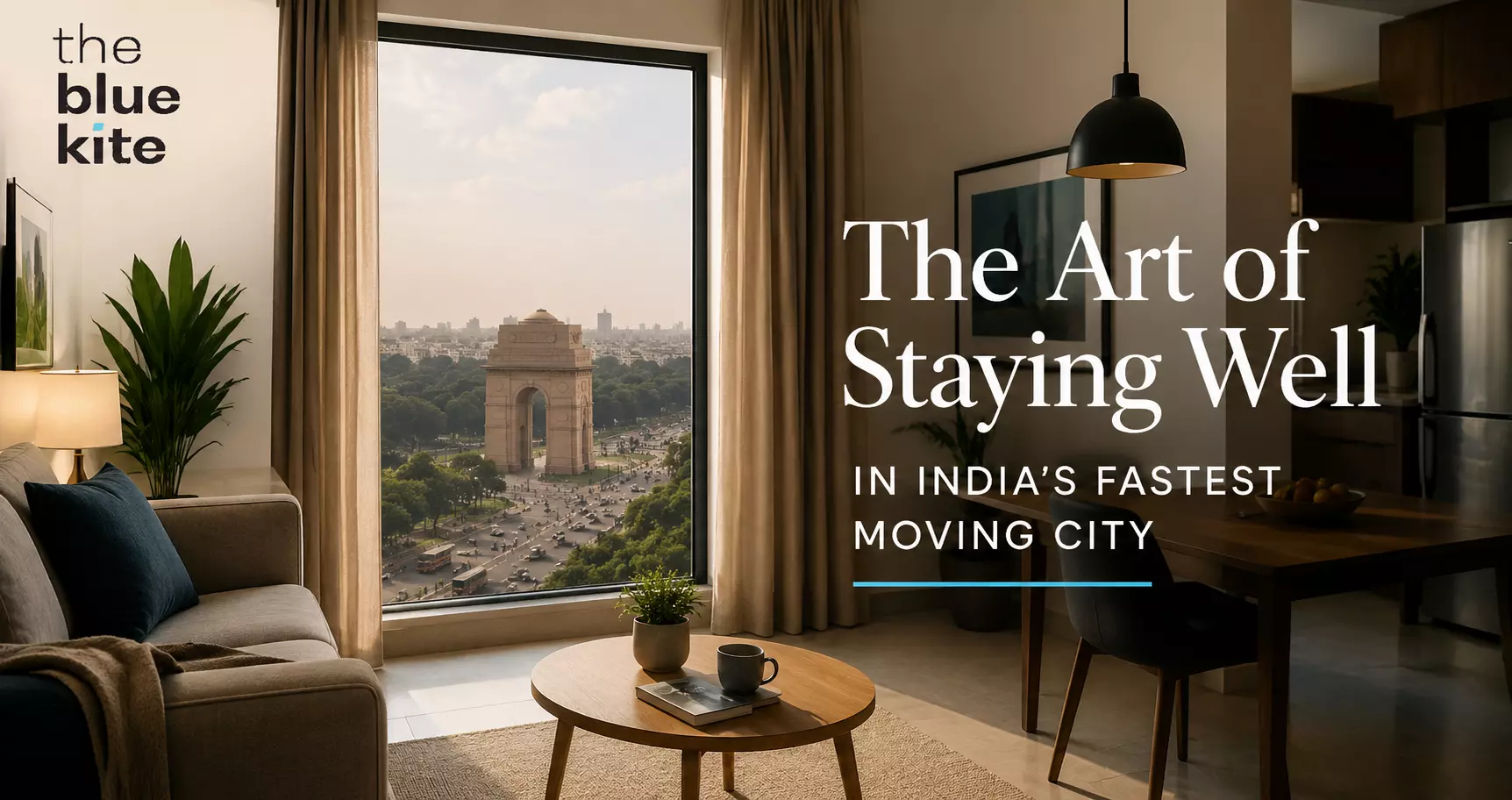
The Art of Staying Well in India's Fastest Moving City
Delhi doesn't slow down for anyone. Traffic moves in constant motion, markets stay busy well into the evening, and the sheer scale of the city — spread across more than 1,400 square kilometres and home to tens of millions of people — can be genuinely overwhelming for a visitor.
Staying well here isn't about avoiding that energy; it's about having a way to step out of it when you need to.
The Case for a Deliberate Retreat
A trip to Delhi without any downtime tends to catch up with travellers by day three or four — a kind of low-grade exhaustion from constant noise, traffic, and stimulation.
This isn't unique to Delhi; it's true of most dense, fast-moving cities. What makes the difference is whether your accommodation gives you a genuine way to recover, or whether it simply adds to the sensory load.
A thin-walled hotel room facing a busy road offers very little recovery. A quiet, well-insulated apartment set back from traffic noise offers considerably more — a space where the city's energy stays outside the door until you're ready to re-engage with it.
Sleep Is the First Casualty of a Bad Stay
Nothing undermines a trip faster than poor sleep, and Delhi's constant background noise — traffic, construction, the general hum of a massive city — makes sleep quality a genuine concern for many visitors.
Thoughtful stays address this directly: better window insulation, quieter neighbourhoods, and rooms positioned away from street-facing noise all make a measurable difference to how rested travellers feel each morning.
This is a strong argument for choosing accommodation in genuinely residential pockets of the city rather than commercial districts that stay loud well into the night — a factor worth weighing as heavily as location convenience when booking apartments in Delhi.
Eating Well Without Losing Control
Delhi's food is one of its greatest pleasures and, for many visitors, one of its biggest challenges — rich, flavourful, and easy to overindulge in across back-to-back restaurant meals.
Having access to a kitchen changes this dynamic considerably. Even simple things — a home-cooked breakfast, a basic salad, control over portion sizes — help travellers enjoy the city's food culture without feeling depleted by it after a few days of exclusively eating out.
Read: Discover the Best Guest House Experience in Noida with The AP
Green Spaces as a Reset Button
Despite its density, Delhi has genuinely excellent green spaces — Lodhi Garden, Deer Park, the Garden of Five Senses — that offer real relief from the city's pace.
Staying within walking distance of one of these parks makes it far easier to build small moments of calm into a busy itinerary: a short walk before breakfast, an hour with a book in the shade, a slow evening stroll after a day of sightseeing or meetings.
Managing Delhi's Climate
Delhi's weather swings dramatically across the year — intense summer heat, a genuinely pleasant winter, and a monsoon season that brings its own challenges.
Staying well here means planning around this rather than fighting it: scheduling outdoor exploration for cooler parts of the day in summer, layering appropriately for winter mornings and evenings, and having accommodation with reliable climate control regardless of the season.
Why Apartment Stays Support Wellness Better Than Hotels
Hotels, by design, offer limited control over your environment — you get the room you're given, on the floor you're assigned, with whatever noise level comes with it.
Apartments tend to offer more consistency and control: a specific unit, in a specific building, in a neighbourhood you've chosen deliberately. That control — over noise, over food, over daily rhythm — is a meaningful contributor to actually feeling well during a trip, rather than simply surviving it.
This is increasingly why travellers researching stays in Delhi are prioritising serviced apartments over traditional hotels, particularly for trips longer than a few days, where the cumulative effect of a well-chosen environment becomes far more noticeable.
A Few Practical Habits
- Build at least one unscheduled hour into each day, ideally outdoors.
- Choose accommodation set back from major roads where possible.
- Keep basic breakfast supplies on hand rather than relying entirely on restaurants.
- Pace sightseeing around the day's heat, especially between April and June.
Final Thoughts
Staying well in Delhi isn't about escaping the city's intensity — it's about having a genuine place to step back from it each day.
The right accommodation does more of this work than most travellers expect, quietly shaping how rested and well you feel by the end of a trip.
The Blue Kite designs its stays with exactly this in mind — quiet, comfortable spaces that give visitors a genuine retreat from one of the world's most energetic cities.